Trump Demands Influence Over Iran's Future Leadership Amid Escalating Middle East Conflict
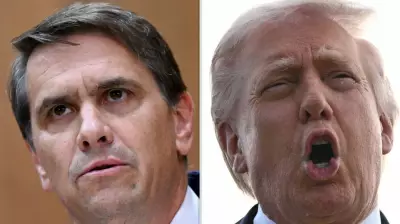
Former U.S. President Donald Trump has made a bold assertion that he should play a significant role in selecting Iran's next supreme leader, following the killing of Ayatollah Ali Khamenei. In a striking statement, Trump dismissed Khamenei's son as a "lightweight" and insisted on his involvement in the appointment process.
Trump's Controversial Comments on Iranian Succession
Trump drew a direct comparison to Venezuela, where interim president Delcy Rodriguez has cooperated with him under threat of violence after the United States ousted her boss, Nicolas Maduro. "I have to be involved in the appointment, like with Delcy," Trump declared, emphasizing his belief in exerting influence over foreign leadership transitions.
The former president's remarks come as Iran faces a critical juncture in its leadership, with Mojtaba Khamenei, one of the slain supreme leader's children, emerging as a potential successor. Trump's characterization of him as unacceptable underscores the deep tensions between the U.S. and Iran.

Israel Intensifies Military Campaign Against Iran
In a significant escalation of the regional war, Israel announced it had launched a wave of strikes on Tehran early Friday, targeting what it described as "regime infrastructure." Israeli officials framed this as a "new phase" in the conflict, with AFP journalists in Tehran reporting loud blasts and Iranian media confirming heavy strikes across parts of the city.
Plumes of smoke were seen rising over Tehran as the U.S.-Israeli military campaign intensified, marking a direct attack on Iranian soil and signaling a dramatic shift in the conflict's dynamics.
Regional Attacks Target Saudi Arabia and Qatar
Saudi Arabia reported that its air defenses destroyed three drones east of Riyadh on Friday, along with three missiles launched toward an air base. Diplomatic sources revealed that some Western embassy staff in Riyadh were instructed to shelter in place following an earlier attack on the U.S. embassy compound.
Similarly, Qatar stated that its air defenses successfully foiled a drone attack targeting the U.S. air base at Al-Udeid, which serves as Washington's largest military facility in the Middle East. These incidents highlight the expanding scope of the conflict beyond Iran's borders.
Trump Rules Out U.S. Ground Troops in Iran
Despite the escalating violence, Trump asserted that sending U.S. ground troops into Iran would currently be a "waste of time." In a telephone interview with NBC, he argued, "They've lost everything. They've lost their navy. They've lost everything they can lose." Trump dismissed Iranian Foreign Minister Abbas Araghchi's remark about Tehran's readiness for a U.S. or Israeli ground invasion as a "wasted comment."
International Involvement and Regional Impact
Prime Minister Anthony Albanese of Australia confirmed that three Australian military personnel were on board an American submarine that sank an Iranian navy ship off Sri Lanka this week. The personnel were participating as part of training arrangements under the AUKUS defense pact with Britain and the United States.
Bahrain corrected an earlier announcement, stating that Iran had struck a hotel and two residential buildings in the capital Manama, not two hotels as initially reported. Meanwhile, the Lebanese health ministry reported the death toll from Israeli strikes has risen to 123 since Lebanon was drawn into the regional war earlier this week.
Trump Expresses Support for Kurdish Fighters
In another notable development, Trump voiced support for any offensive by Iranian Kurdish fighters, stating, "I think it's wonderful that they want to do that, I'd be all for it." This endorsement adds another layer of complexity to the already volatile regional situation.
The conflict continues to unfold with multiple fronts, from direct strikes on Tehran to attacks across the Gulf region, as international players position themselves in what has become one of the most significant Middle East conflicts in recent years.