Former President Donald Trump ignited a fiery political debate on Monday by publicly identifying Defense Secretary Pete Hegseth as the "first" among his advisors to push for a military strike against Iran. The remarks have sparked intense speculation about whether Trump was complimenting his defense chief or subtly setting him up as a scapegoat for the controversial and ongoing war.
Trump's Revealing Comments on Iran Strategy
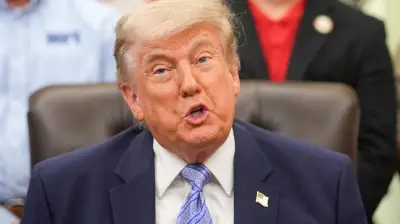
During a public address, Trump recounted a high-stakes meeting with his national security team. "I called a lot of our great people," Trump stated. "We have great people, and I said, 'Let's talk. We got a problem in the Middle East. We have a country known as Iran that, for 47 years, has been just a purveyor of terror, and they're very close to having a nuclear weapon.'"
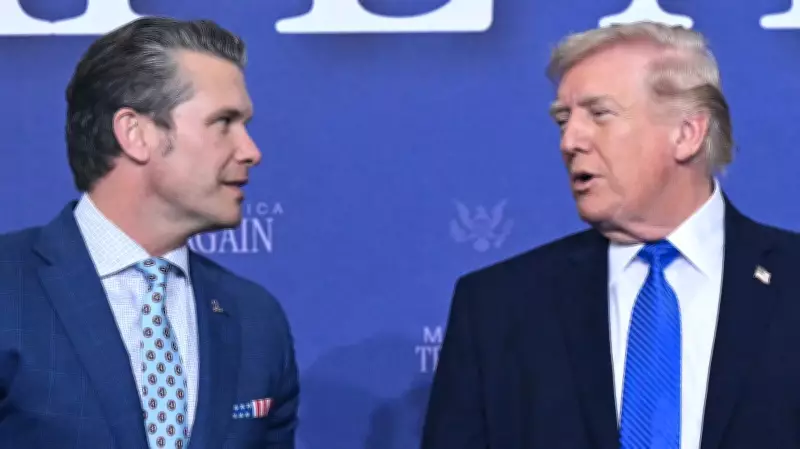
The former president then described proposing "a little journey in the Middle East and eliminate a big problem." He directly turned to Hegseth, stating, "And Pete, I think you were the first one to speak up. And you said, 'Let's do it, because you can't let them have a nuclear weapon.'"

Immediate Fallout and Media Interpretation
The political and media reaction was swift and divided. The New Republic published a sharp editorial asserting, "President Trump is already trying to throw Defense Secretary Pete Hegseth under the bus for the fruitless war on Iran." This sentiment was echoed on social media by former Obama speechwriter Jon Favreau, who quipped, "Hegseth about to give his next briefing from under the bus."
Rolling Stone ran with the headline "Trump Tries To Spread Blame For Iran War," while Mediaite offered a more nuanced analysis. "The remark could be viewed either as Trump giving praise or laying the groundwork for an eventual shakeup at the Pentagon, depending on subsequent events in the Middle East," the outlet wrote, highlighting the ambiguous nature of the president's statement.
Broader Context of Denials and Disputes
Trump later reiterated a claim that he was engaged in peace discussions with Iran, a assertion that Iranian officials have firmly and repeatedly denied. This comes amid growing reports contradicting the administration's public declarations of success in the conflict. The president has faced increasing scrutiny over the war's objectives and progress.
Trump recently launched a fierce attack on The New York Times and reporter David Sanger over an article that suggested the administration was scaling back its combat goals, particularly the ambitions to topple the Iranian regime and completely dismantle its nuclear fuel capabilities. Trump dismissed Sanger as a "lightweight analyst" from a "Failing" newspaper "that always gets it wrong."
In a robust defense, Times spokesperson Charlie Stadtlander countered, "His piece is a fair and thorough analysis of what the U.S. military and American diplomats have and have not accomplished so far, and helps the country understand the state of the war and the president's choices going forward."
Analysis: Praise or Prelude to a Fall Guy?
The core question dominating political circles is whether Trump's identification of Hegseth as the first proponent of military action constitutes genuine recognition or a strategic maneuver. Observers note the president's history of publicly shifting blame during controversies. By naming Hegseth specifically, Trump may be attempting to:
- Share responsibility for a politically costly war.
- Test public and institutional loyalty within his administration.
- Create a narrative buffer should the conflict deteriorate further.
This incident underscores the volatile and highly charged atmosphere surrounding U.S. foreign policy in the Middle East, where public statements are often dissected for hidden meanings and future political implications.