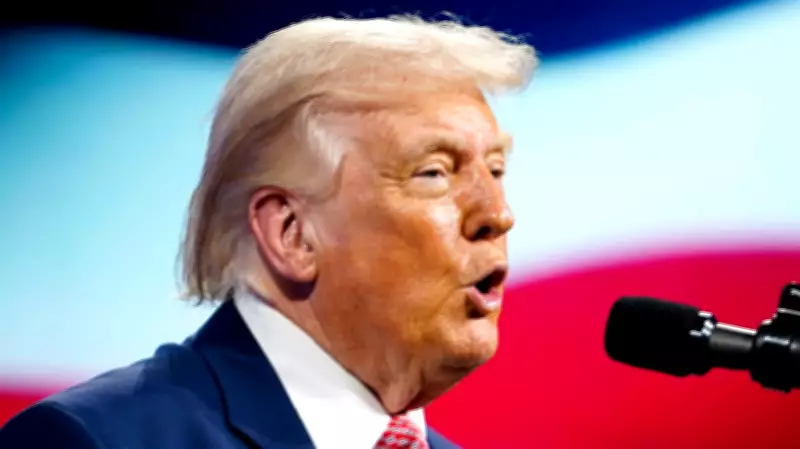
In a revealing keynote speech at the Future Investment Initiative Priority Summit in Miami, former President Donald Trump openly discussed the deliberate linguistic choices surrounding U.S. military engagements with Iran. Trump acknowledged there are specific "legal reasons" for his administration's preference to label the conflict as a "military operation" instead of a "war."
The Legal Distinction in Terminology
"We call it a military operation. We don't call it a war," Trump stated during his address. He elaborated that this terminology is not merely semantic but carries significant legal implications. According to Trump, designating actions as a "military operation" allows for greater executive flexibility without requiring congressional approvals, whereas a formal "war" would necessitate such oversight.
Contradictions and Clarifications
Interestingly, Trump momentarily slipped into using the term "war" himself during the speech, only to quickly correct his phrasing. "See, I get into a war — of course, they call it a war, I call it a military conflict," he said. "But there's a legal reason for that." He further explained, "I say 'military' because as a military operation, I don't need any approvals. As a war, you're supposed to get approval from Congress. Something like that."

Criticism of International Allies
Beyond the terminology debate, Trump used the platform to express strong dissatisfaction with key U.S. allies. He specifically called out French President Emmanuel Macron, German Chancellor Friedrich Merz, and U.K. Prime Minister Keir Starmer, accusing them of hesitating to assist the United States or help secure the strategic Strait of Hormuz before the cessation of bombing campaigns.
Disappointment with NATO's Response
The former president admitted to being "very disappointed" that NATO did not provide aid during the conflict. However, he added a paradoxical twist by claiming he did not "try too hard" to secure NATO's assistance because he aimed to "prove a point" about the alliance's reliability. This statement underscores ongoing tensions in transatlantic relations during his tenure.
Acknowledgment of Saudi Support and Casualty Figures
Trump extended gratitude to "the entire Kingdom of Saudi Arabia" for their involvement in what he termed the "military conflict." This acknowledgment comes amid reports of significant casualties, with at least 13 U.S. military service members and more than 1,400 Iranians killed in the hostilities. The mention of these figures highlights the human cost of the ongoing tensions in the region.
The speech in Miami provided a rare glimpse into the strategic and legal considerations behind U.S. foreign policy language, while reinforcing Trump's critical stance on international cooperation in military matters.