Trump Set for High-Stakes NATO Meeting with Rutte as Alliance Future Hangs in Balance
U.S. President Donald Trump is poised to hold a critical meeting with NATO Secretary General Mark Rutte, an encounter that comes amid escalating speculation about the president's musings on pulling the United States out of the longstanding military alliance. This anticipated dialogue underscores the deepening uncertainties surrounding America's commitment to NATO, a cornerstone of global security since its inception.
Oval Office Encounter Follows Previous Diplomatic Engagement
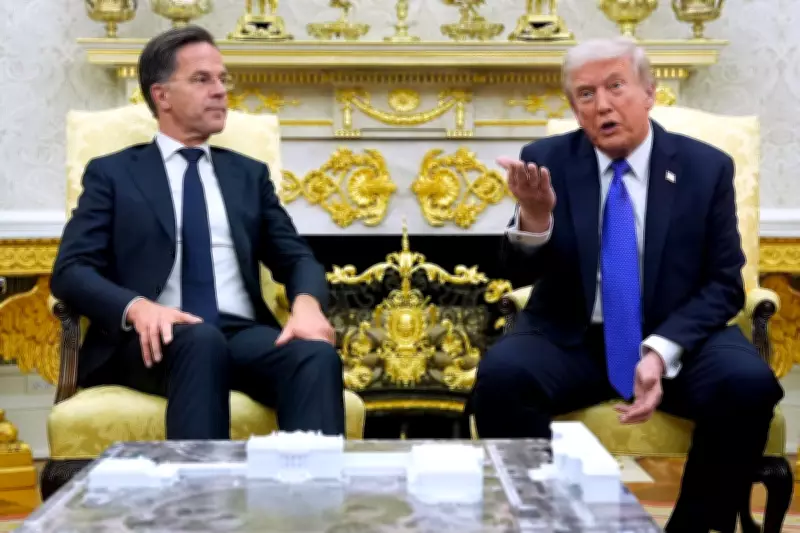
The upcoming meeting follows a prior engagement between the two leaders in the Oval Office on October 22, 2025, where they discussed alliance matters against a backdrop of shifting geopolitical dynamics. That session, documented in official photographs, highlighted the formal yet tense nature of U.S.-NATO relations under the current administration. Observers note that Trump's rhetoric has often questioned the value of the alliance, particularly focusing on defense spending contributions from member nations.
Withdrawal Speculation Intensifies Amid Political Calculations
President Trump's public and private comments have repeatedly hinted at a potential U.S. exit from NATO, arguing that the alliance places disproportionate burdens on American resources. This stance has alarmed European allies and defense experts, who warn that such a move could destabilize international security frameworks. The meeting with Rutte is seen as a pivotal moment, potentially clarifying Trump's intentions or further muddying the waters regarding America's role in collective defense.

Analysts suggest that the timing of this meeting is crucial, as it occurs against a complex global landscape marked by conflicts and strategic rivalries. NATO, with its 32 member countries, relies heavily on U.S. military capabilities and leadership. A withdrawal would not only reshape the alliance's operational capacity but also signal a dramatic shift in U.S. foreign policy, with ripple effects across diplomatic and economic spheres.
Broader Implications for Global Security and Diplomacy
The prospect of a U.S. exit raises profound questions about the future of transatlantic cooperation and deterrence strategies. Key concerns include:
- The potential weakening of NATO's collective defense mechanism, particularly in Eastern Europe.
- Increased vulnerability to aggression from adversarial states seeking to exploit alliance fractures.
- Strains on diplomatic relations with long-standing allies who depend on U.S. security guarantees.
- Possible realignments in global power dynamics, with other nations stepping into the void left by reduced American engagement.
As President Trump and Secretary General Rutte prepare to convene, the international community watches closely, aware that the outcomes could redefine military alliances for decades to come. The meeting is expected to address not only withdrawal rumors but also ongoing NATO missions, defense budgeting, and strategic priorities in an increasingly volatile world.