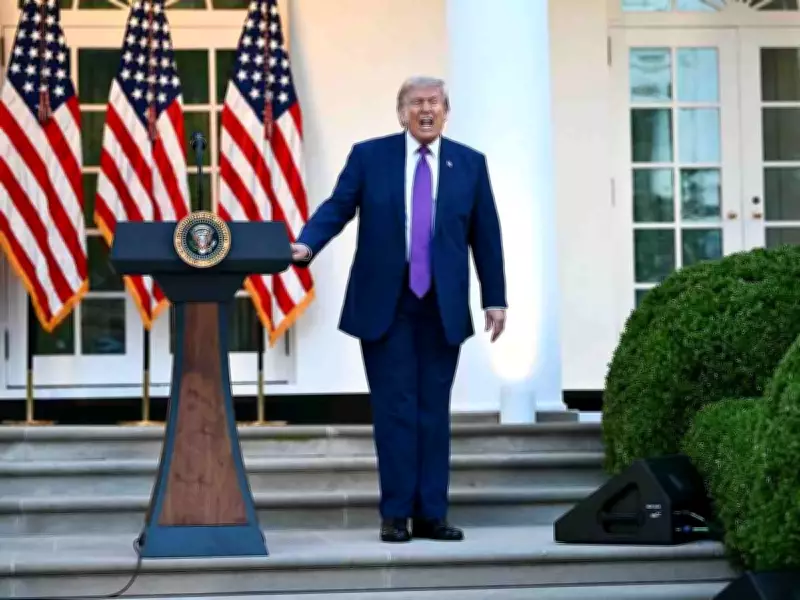
When Donald Trump threatened tariffs against the United States’ NATO allies in a dispute over Greenland in January, London was rattled, the European Union held emergency meetings and thousands took to the streets in Denmark. Just three months later, when he announced 50 per cent duties against countries selling arms to Iran, his comment was quickly brushed aside. The difference was down to a judicial decision about presidential power.
Supreme Court Ruling Undermines Tariff Authority
By ruling against his “liberation day” tariff announcements for overstepping his authority, the U.S. Supreme Court undermined what in many ways was Trump’s superpower — his preferred means of pressuring other countries into bending to his will. “The president has lost something important to him, which is the ability to threaten tariffs on a Friday and impose them on a Monday,” says Michael Smart, managing director at Rock Creek Global Advisors, an advisory firm in Washington.
Another U.S. court compounded the misery for the president last week by slapping down global tariffs of 10 per cent he announced in February to replace the duties thrown out by the Supreme Court. The government is appealing against the decision.

Rebuilding Tariff Power Amid Resistance
Now, as he prepares to meet China’s President Xi Jinping in a long-awaited summit, Trump and his administration are trying to rebuild his power to impose tariffs on imports from around the globe. The problem for the U.S. president is that resistance is building in Congress, the tariffs are unpopular ahead of already challenging midterm elections and replacement measures may fall far short of providing him with the room for manoeuvre he seeks on the world stage.
Myron Brilliant at the Albright Stonebridge Group, a global strategy firm, says other countries are already treating Washington with less deference after the Supreme Court ruling. He argues that, while they are not reneging outright on their trade deals with Trump, such states are “rethinking, recalibrating, revising.”
An Asian trade official concurs that many countries, particularly in south-east Asia, are looking again at the agreements they reached under the threat of the liberation day tariffs. EU diplomats express doubt that, with inflation rising in the U.S. and the midterms looming, Trump has the political leeway to raise tariffs by much again.
Trump Remains Pro-Tariff Despite Setbacks
But people familiar with the president’s thinking describe Trump as being more pro-tariff than ever. “His wings have been clipped,” says Brilliant. “But he’s not reversing course.” Trump is now relying on his trade representative, Jamieson Greer, to work at speed so that the president can reimpose all of his liberation day tariffs as soon as July.
The U.S. president appears undeterred by economic constraints, such as soaring petrol prices and the rise in inflation, which the International Monetary Fund predicts will reach 3.2 per cent this year, up from the 2.5 per cent it forecast before Trump launched the Iran war. Despite the Supreme Court ruling and growing opposition, Trump continues to view tariffs as a key tool for economic and foreign policy, even as his ability to wield them unilaterally has been significantly curtailed.