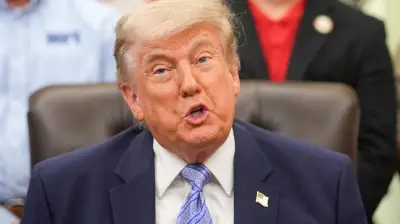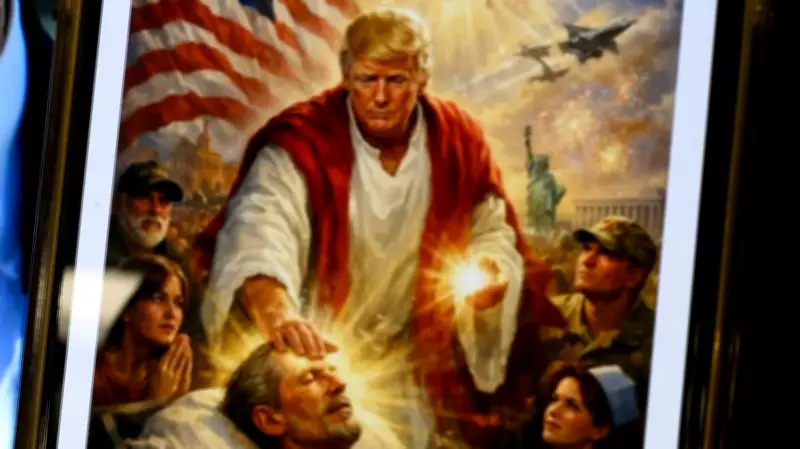
Former President Donald Trump has publicly admitted to personally posting an artificial intelligence-generated image that depicted him in a Christ-like manner, though he maintains the visual was intended to show him "as a doctor" rather than as Jesus Christ. The admission came during a press briefing at the White House on Monday, where Trump defended the controversial post that has since been removed from his Truth Social account.
The Controversial Image and Trump's Explanation
The AI-generated picture showed Trump wearing what appeared to be a white robe with a red sash, seemingly healing a man with his hands—a portrayal commonly associated with artistic depictions of Jesus Christ after his resurrection. Trump told reporters, "I did post it and I thought it was me as a doctor. Only the fake news could come up with that one." He elaborated further, stating, "I said, how did they come up with that? It's supposed to be me as a doctor, making people better, and I do make people better. I do make people a lot better."
Timing and Immediate Backlash
The image was posted on Orthodox Easter, a significant Christian holiday celebrating the resurrection of Jesus Christ, which amplified the controversy. It drew immediate outrage from some of Trump's own right-wing supporters, who accused him of blasphemy for the perceived comparison to a religious figure. The timing and content sparked widespread debate across political and religious circles.

Context: Ongoing Feud with Pope Leo XIV
This incident occurred shortly after Trump renewed his criticism of Pope Leo XIV, the first U.S.-born pope. In a social media post on Sunday, Trump called the pontiff "weak on crime" and repeatedly expressed that he does not want him leading the Roman Catholic Church due to their political differences. Trump commented, "Leo should be thankful because, as everyone knows, he was a shocking surprise. He wasn't on any list to be Pope, and was only put there by the Church because he was an American, and they thought that would be the best way to deal with President Donald J. Trump. If I wasn't in the White House, Leo wouldn't be in the Vatican."
Pope's Response to Trump's Comments
The personal attack follows Pope Leo XIV speaking out against the war in Iran, highlighting tensions between the two figures. On Monday, the pope addressed reporters, asserting he is "not afraid of the Trump administration or of speaking out loudly about the message of the Gospel." He added, "I will continue to speak out strongly against war, seeking to promote peace, promoting dialogue and multilateralism among states to find solutions to problems," when questioned about Trump's remarks.
Broader Implications and Public Reaction
The combination of the AI-generated image and the ongoing dispute with the pope has fueled discussions about the intersection of technology, politics, and religion. Critics argue that Trump's actions blur lines between personal expression and public responsibility, while supporters defend his right to free speech. The incident underscores the growing role of AI in political communication and the potential for misinterpretation in digital media.
As the story develops, it remains a focal point in analyzing Trump's approach to leadership and his relationships with religious institutions. The controversy highlights how modern technology can quickly escalate political tensions, especially when intertwined with sensitive religious symbolism.