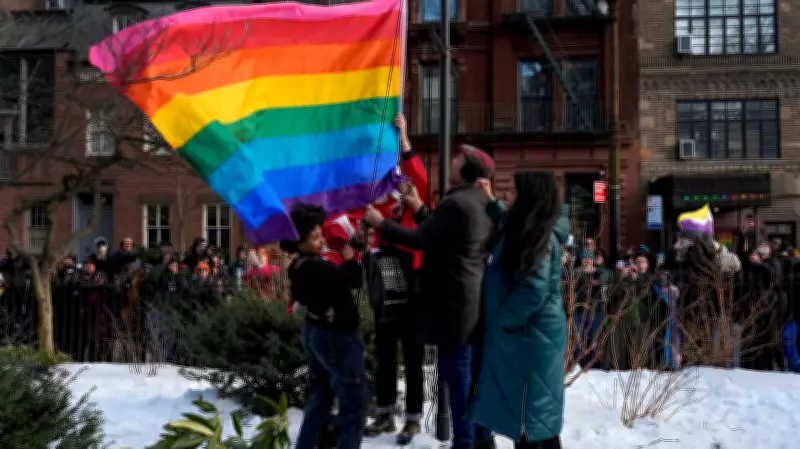
The Trump administration has made a significant reversal, agreeing on Monday to maintain the display of a rainbow Pride flag at the Stonewall National Monument in New York. This decision marks a notable shift from the administration's previous action in February, when the flag was removed, sparking controversy and legal challenges.
Legal Settlement and Flag Display Details
The government disclosed this change as it seeks to settle a lawsuit filed by LGBTQ+ advocacy groups and historic preservation organizations, who had sought to block the flag's removal. A federal judge must still approve the agreement for it to take full effect.
According to court documents, the Interior Department and the National Park Service have explicitly confirmed their intention to keep a Pride flag at Stonewall. The flag will not be removed except for necessary maintenance or other practical operational reasons.

Specific Arrangements Under the Agreement
Under the terms of the settlement, within one week, the National Park Service will hang three flags on the monument's flagpole. Each flag will measure three feet by five feet. The Pride flag will be positioned to fly between the United States flag and the National Park Service flag, creating a symbolic display of inclusion.
Historical Context and Political Flashpoint
The Pride flag had become a focal point for debates over President Donald Trump's approach to the Stonewall site, which holds the distinction of being the first national monument dedicated to LGBTQ+ history. The monument commemorates the 1969 Stonewall uprising, a pivotal event that helped catalyze the modern LGBTQ+ rights movement.
After years of campaigning by activists, the Pride flag was formally installed at the site in 2022 during Democratic President Joe Biden's administration. At that time, park service officials in New York described the display as a demonstration of the government's commitment to sharing the complex and diverse histories of all Americans.
Controversial Removal and Response
In February, the park service removed the flag, citing compliance with federal guidance on flag displays. A January 21 park service memo largely restricts the agency to displaying the U.S. flag, the Department of the Interior flag, and the POW/MIA flag, with limited exemptions for providing historical context.
The park service maintained that the monument remains dedicated to preserving and interpreting the site's history through various exhibits and educational programs. However, LGBTQ+ activists perceived the flag's removal as a targeted affront meant to diminish a location that symbolizes their ongoing struggle for rights and visibility.
Soon after the removal, advocates and several New York Democratic elected officials arrived with another rainbow flag. After some tense moments, they raised it alongside the U.S. flag that the park service had installed, demonstrating community resilience.
Broader Political and Cultural Implications
Democratic President Barack Obama established the Stonewall National Monument in 2016. The monument centers on a small park across from the Stonewall Inn, the historic gay bar where a police raid in 1969 sparked an uprising that became a cornerstone of LGBTQ+ activism.
Since returning to office last year, President Trump, a Republican, has targeted diversity, equity, and inclusion initiatives, as well as protections for transgender individuals. As a result of these policies, many references to transgender people were removed from the monument's website and related materials.
The Trump administration has similarly placed national parks, museums, and landmarks under increased scrutiny, aiming to eliminate or modify materials that the government deems divisive, partisan, or inappropriately critical of Americans. This broader context adds significance to the decision to reinstate the Pride flag at Stonewall, highlighting ongoing tensions between preservation of historical narratives and political messaging.