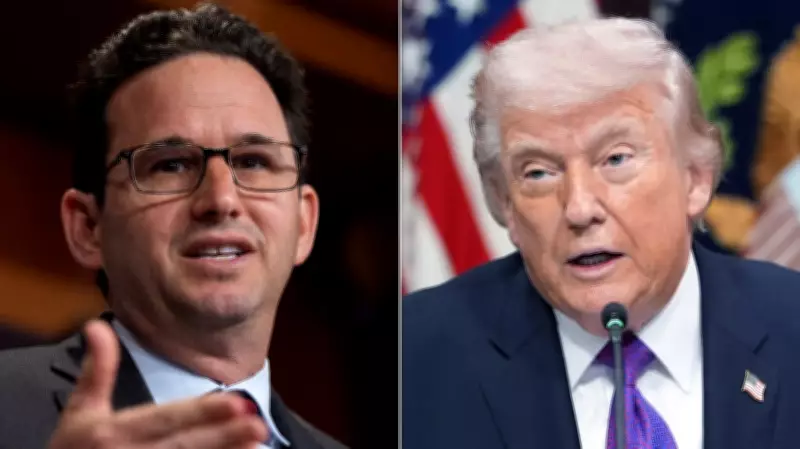
Senator Schatz Denounces Trump's "War of Choice" in Iran as Domestic Programs Face Cuts
Senator Brian Schatz, a Democrat from Hawaii, issued a forceful condemnation on Wednesday against President Donald Trump and his administration for initiating what he described as a costly "war of choice" in Iran. Schatz argued that the billions of taxpayer dollars allocated to military operations should instead be directed toward federal food programs and healthcare initiatives for Americans.
"This war is costing a billion dollars a day," Schatz stated in a post on the social media platform X. He elaborated, "In one month, we will spend more over there than we needed to save healthcare for more than 2 million Americans. They literally are taking away your food and your healthcare for this regime change war of choice."
Human and Financial Toll of the Conflict
The regional conflict has already resulted in significant casualties, with six U.S. service members killed and at least 1,000 people in Tehran dead, according to the Iranian Red Crescent Society. A recent airstrike on a girls' school on Saturday claimed the lives of at least 175 individuals, the majority of whom were children under the age of 12.

Schatz emphasized that while the Trump administration has readily found funds for the war in Iran, it has not pursued additional resources for critical domestic needs. This includes Medicaid recipients and the 42 million Americans who depend on the Supplemental Nutrition Assistance Program (SNAP). The president's "big, beautiful bill" signed last year incorporates cuts to Medicaid and SNAP that could impact millions of people across the nation.
Contradictory Statements from the Administration
President Trump addressed the situation on social media, writing, "Wars can be fought 'forever,' and very successfully." This statement contrasts with his previous criticisms of America's "forever wars," where he advocated for redirecting trillions in taxpayer dollars toward U.S. infrastructure projects.
The administration has provided a range of justifications for the war in Iran, some of which appear contradictory. In a video address on Saturday, Trump asserted that Iran "can never have a nuclear weapon," despite confirming last year that targeted U.S. strikes had "obliterated" Iran's nuclear facilities.
Secretary of State Marco Rubio added to the confusion by telling reporters on Monday that the U.S. conducted "preemptive" bombings because the administration "knew" impending Israeli strikes would trigger "an attack against American forces." Rubio later retracted this statement on Tuesday.
Criticism and Context of Schatz's Remarks
Critics on social media have accused Schatz of hypocrisy, noting his consistent support for costly aid packages to Ukraine while condemning the Iran war expenses. They point out that Russia invaded Ukraine, whereas Iran was engaged in negotiations with the U.S. prior to the attacks, omitting these key contextual differences.
President Trump indicated on Monday that combat operations are likely to continue for several weeks, yet his social media posts suggest a more prolonged engagement. The ongoing debate highlights the tension between military expenditures and domestic priorities, as lawmakers and the public grapple with the implications of foreign policy decisions on everyday American lives.