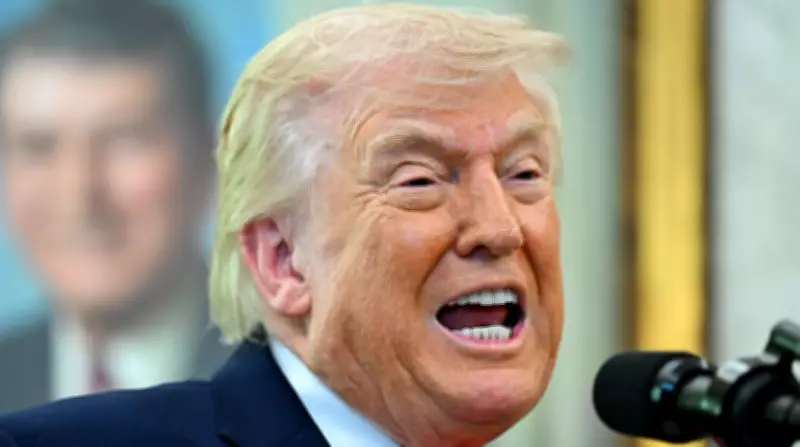
In a striking political commentary this week, Anthony Scaramucci, the former White House communications director who served briefly in Donald Trump's first administration, turned a favored presidential insult back on the commander-in-chief and his most devoted MAGA followers. The term in question is "Trump derangement syndrome," a phrase frequently employed by Trump to dismiss his detractors as irrational or unhinged.
Scaramucci's Rebuttal to Carville's Comments
Journalist Don Lemon recently presented Scaramucci with a clip featuring longtime Democratic strategist James Carville, who earlier this month embraced the mock diagnosis with a barrage of deeply personal insults directed at Trump. In the footage, Carville defiantly stated, "You're right, I've got Trump derangement syndrome. I hate the motherfucker." However, Scaramucci, infamous for his mere 10-day tenure under Trump in 2017, came to Carville's defense, suggesting that such provocative language effectively gets under the president's skin.
Redefining the Syndrome
Scaramucci articulated a nuanced perspective, asserting, "I don't think James Carville has Trump derangement syndrome. I think James Carville has Trump reality syndrome." He then pivoted the term, applying it not to critics but to Trump's most loyal adherents. In his view, those who continue to staunchly support the president are the ones truly suffering from derangement.

Elaborating further, Scaramucci explained, "The people that have Trump derangement syndrome are the ones that are with him still. Those are the people that are deranged. Those are the people that have lost touch with reality in terms of how much damage he and his cronies are causing the country and the world." This bold reframing challenges the narrative often propagated by Trump and his allies, shifting the focus from opposition figures to the core base of supporters.
Broader Implications
This exchange highlights the ongoing rhetorical battles in contemporary American politics, where labels and diagnoses are weaponized to discredit opposing viewpoints. Scaramucci's comments underscore a growing divide, with some former insiders now publicly critiquing the president and his movement. The conversation, as seen in the clip shared by Marco Foster on social media, continues to spark debate about loyalty, reality, and the health of democratic discourse in an era of heightened polarization.
Ultimately, Scaramucci's intervention serves as a reminder of the fluid nature of political alliances and the power of language in shaping public perception. By flipping "Trump derangement syndrome" on its head, he invites a reevaluation of who is truly out of touch with the realities of governance and global impact.