SAAQclic Inquiry Exonerates Politicians, Blames Agency Deception
Quebec's political landscape has been reshaped by the fallout from the SAAQclic digital modernization project, with several ministers already departed or announcing their exit. However, a comprehensive public inquiry has determined that elected officials were not at fault for the massive cost overruns and management failures that plagued the initiative.
Political Fallout and Ministerial Departures
The SAAQclic scandal has claimed significant political casualties. Quebec Premier François Legault announced his resignation in the wake of the controversy, while Transport Minister Geneviève Guilbault has decided not to seek re-election after being shuffled to municipal affairs. Former Transport Minister François Bonnardel was removed from cabinet last fall, and Cybersecurity Minister Éric Caire was forced to resign as the extent of the debacle became public.
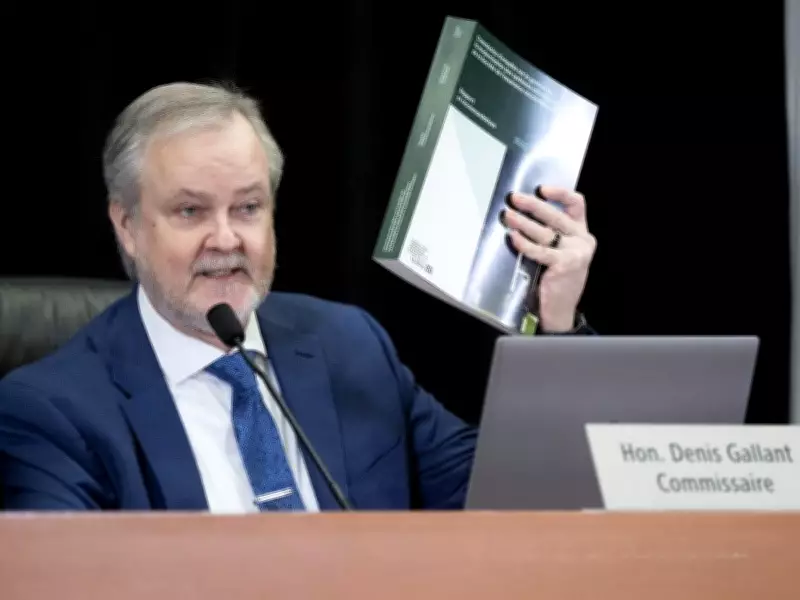
Despite this political upheaval, Commissioner Denis Gallant's 586-page report, released on February 16, 2026, concludes that politicians were "largely kept in the dark" about the true scope of the project's problems.

Agency Deception and Concealed Costs
The inquiry found that the Société de l'assurance automobile du Québec (SAAQ) actively misled government officials for years, hiding the fact that costs had ballooned to $1.1 billion from an original estimate of $682 million over a decade. Commissioner Gallant described the project as "too vast, too ambitious" and "too fast" in its implementation, with the agency lacking transparency and providing false information to oversight bodies.
The report reveals that SAAQ management repeatedly lied to conceal escalating expenses, only coming to light when Quebec's auditor general sounded alarms in 2025. This deception meant that ministers monitoring the project received partial and misleading information, making it impossible for them to grasp the full financial picture.
Concentration of Power and Governance Failures
The inquiry identified significant governance problems within the SAAQ, particularly around Karl Malenfant, who served as both head of digital services and project lead for the SAAQclic modernization. The report criticized this "concentration of power" as "incompatible with a healthy control environment." Malenfant had assembled a team from previous work sites, creating what the commission viewed as an insular management structure.
Despite Malenfant's preemptive claims that the inquiry represented a "smear campaign" and his denial that any "fiasco" occurred, the report documents systematic failures in transparency and accountability among agency administrators.
Broader Systemic Concerns
The SAAQclic case raises troubling questions about oversight mechanisms within Quebec's public sector. Testimony revealed attitudes among some administrators that suggested public funds were viewed as limitless resources, with one former board chair testifying that a several hundred million dollar overrun "didn't seem like the kind of thing that was going to make the Earth stop turning."
Commissioner Gallant's report highlights concerns about how easily decision-makers can be misled within Quebec's $165.8-billion budget apparatus and questions whether similar obfuscation occurs elsewhere in government operations.
Recommendations for Reform
The inquiry proposes 26 measures to prevent future debacles of this magnitude, including:

- Reinforcing governance rules to clarify administrator obligations and ministerial accountability frameworks
- Bolstering the powers of oversight bodies like the lobbying commissioner and Autorité des marchés publics
- Creating a centralized government entity to provide technological expertise on digitization projects
- Breaking major IT contracts into smaller components to prevent agencies from becoming captive to single consortiums
- Ensuring government communications are "simple, reliable, comprehensible and accessible" to improve transparency
These recommendations come as Quebec prepares for billions in upcoming IT projects amid rapid technological evolution. The report emphasizes that while politicians face electoral accountability every few years, public administrators often operate with greater obscurity and job security, creating different accountability dynamics.
The Unité permanente anticorruption continues to investigate the SAAQclic case, and Premier Legault has suggested exploring legal avenues against those responsible for the mismanagement. The inquiry's findings shift responsibility from the political sphere to administrative failures, though questions remain about whether sufficient consequences will follow for those who "pulled the wool over the government's eyes."