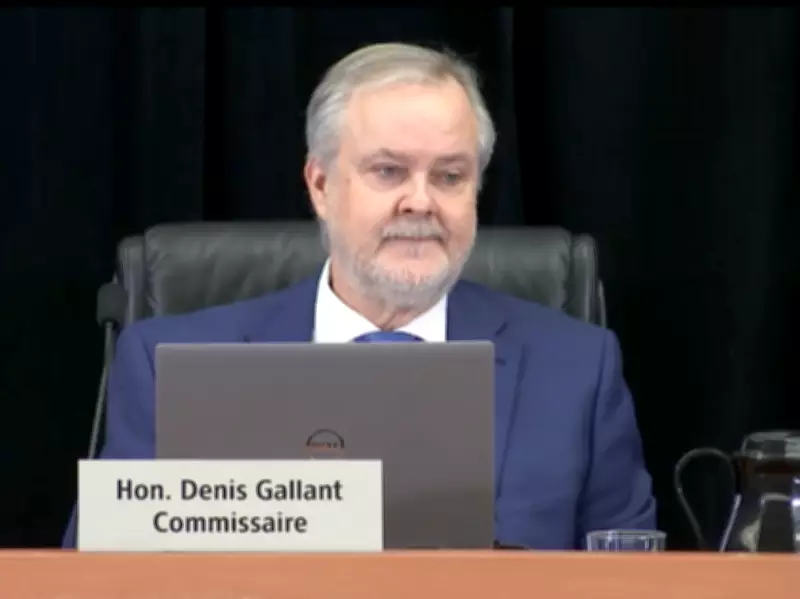
Quebec Inquiry Finds SAAQclic Management Lied About Costs and Progress for Years
A scathing commission of inquiry report has concluded that the management of Quebec's auto insurance board deliberately lied to the provincial government and members of the National Assembly for an extended period regarding the true costs and implementation status of the SAAQclic digital platform. The 826-page report, released by commissioner Denis Gallant, describes the project as fundamentally flawed from its inception.
A Project Doomed by Ambition and Deception
The report states that the SAAQclic initiative, officially known as the Carrefour des services d'affaires (CASA), was "too big, too much, too fast" in its conception and execution. Behind the scenes, IT experts employed by the Société de l'assurance automobile du Québec (SAAQ) adopted a "big bang" approach to the launch, driven by a determination to complete the project "at any cost." This methodology, combined with systematic misinformation, ultimately led to catastrophic failure and exponential cost increases.
"After weighing all the evidence, the commission finds that for much of the CASA program's duration, the SAAQ lied to all parliamentarians, ministers and their staff about the program's implementation status," the report unequivocally states. It further notes that the state-owned enterprise submitted multiple misleading reports to government authorities to conceal significant cost overruns, undermining democratic oversight mechanisms designed for accountability.

Political Figures Emerge Largely Unscathed
While the report is highly critical of SAAQ management, it is notably careful about assigning blame to specific political figures. Premier François Legault emerges from the inquiry without direct criticism. The commission found that government officials were "largely kept in the dark" about the mounting difficulties the SAAQ was experiencing with the platform's launch.
The report details how former transport minister François Bonnardel only learned about the project's total budget in the winter of 2021, and even then, the SAAQ failed to disclose that costs had ballooned by more than $300 million since the project's inception. Similarly, former transport minister Geneviève Guilbault testified that she only became aware of the overruns when Quebec's auditor-general, Guylaine Leclerc, revealed in March 2025 that the project would have a $500-million cost overrun.
Costs Skyrocket as Problems Multiply
The financial implications of the failed project are staggering. What was initially estimated to cost taxpayers $638 million over ten years is now expected to ultimately cost approximately $1.1 billion. The commission's investigation revealed that beginning in 2021, the government was informed the CASA program's budget would be $682 million, but this information was accompanied by reassuring statements from senior SAAQ management that mitigated concerns.
The report singles out Karl Malenfant, the SAAQ's former digital experience vice-president, for particular criticism. Gallant states that Malenfant had excessive power from the project's beginning and chose to surround himself with longtime associates, creating an unhealthy control environment. At one point, the commissioner accuses Malenfant of submitting documents to the government that were "brazenly misleading."
Catastrophic Launch and Widespread Consequences
SAAQclic was plagued with problems from its launch in February 2023. The platform experienced repeated failures, leaving citizens unable to access their accounts to pay registration fees or schedule driving tests. On some days, the system was completely paralyzed, forcing desperate clients to endure long lineups in winter conditions at SAAQ service outlets.
Commission investigator Michel Comeau outlined numerous technical issues: the SAAQ's inability to produce license plates or properly manage client files, erroneous information being sent to courts and municipalities, and vehicles incorrectly listed as stolen. These errors had serious real-world consequences, including one incident where police surrounded a family leaving a hospital with guns drawn because their vehicle was erroneously flagged as stolen in the SAAQ system.

Comprehensive Investigation Process
The Gallant commission, which cost approximately $7 million, conducted an extensive investigation over 75 hearing days, hearing testimony from 130 witnesses. A team of 60 people examined more than 200,000 pages of documents, while investigators under retired police officer Robert Pigeon interviewed 350 individuals. The commission's timeline was extended twice, with the final report presented to the government and made public after multiple delays.
Throughout the process, the commission heard from five sitting cabinet ministers, including former transport ministers Guilbault and Bonnardel, former digital technology minister Éric Caire, Premier Legault, and his chief of staff Martin Koskinen. The investigation struggled to determine precisely what happened and who within the government had knowledge of the project's true status at various stages.
The report represents a comprehensive condemnation of the management practices surrounding Quebec's ambitious but ultimately failed digital transformation of auto insurance services, highlighting systemic failures in transparency, planning, and accountability.