A Potential Political Alignment: Rubio and Poilievre Challenge Carney's Global Strategy
While still a speculative scenario, an intriguing political alignment appears to be emerging between Canadian Conservative Leader Pierre Poilievre and U.S. Secretary of State Marco Rubio. Both politicians have recently articulated positions that directly challenge Prime Minister Mark Carney's international approach and economic philosophy.
Carney's International Travels Under Scrutiny
Prime Minister Mark Carney recently concluded a visit to the United Kingdom, where he met with King Charles III and British Prime Minister Keir Starmer. This marked the latest stop in what has become a pattern of extensive international travel since Carney took office approximately one year ago. According to reports, Carney has visited 28 nations during this period, averaging one foreign trip every two weeks.
Critics argue these diplomatic missions have yielded minimal tangible results. University of Toronto economics professor Joseph Steinberg noted that Carney's primary focus should be on renegotiating the Canada-United States-Mexico Agreement (CUSMA) rather than extensive global photo opportunities. The meetings in London reportedly produced little beyond expressions of concern about the ongoing conflict in the Middle East.

Poilievre's Alternative Economic Vision
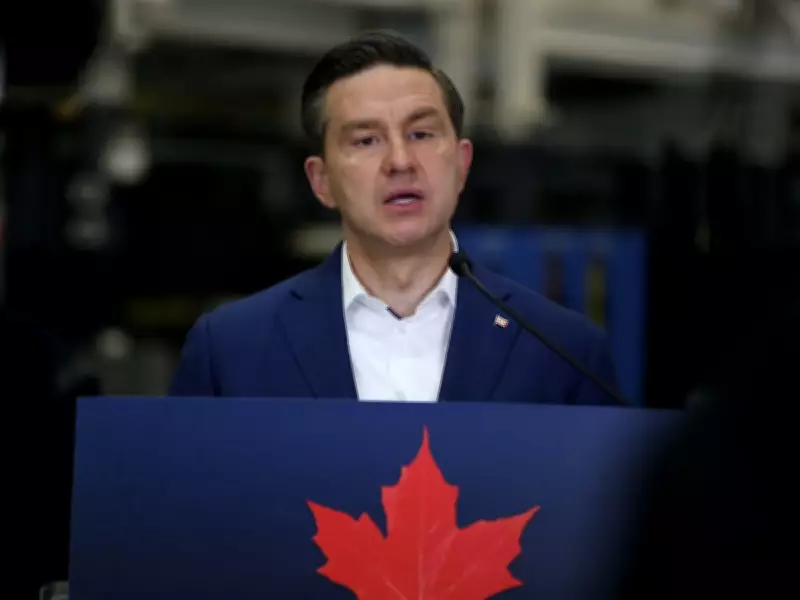
As Carney vacations in Europe, Opposition Leader Pierre Poilievre has been articulating a distinctly different economic agenda. During recent visits to the Detroit-Windsor region and Texas, Poilievre outlined Conservative approaches to auto industry policy and energy security that directly contrast with Carney's positions.
On automotive trade, Poilievre proposed a "tariff-free" auto trade plan with the United States and Mexico. His proposal includes allowing Canadian automakers to import vehicles from the U.S. or Mexico duty-free while maintaining 75 percent North American content requirements for vehicles manufactured in Canada. Poilievre criticized Carney's agreement to permit 49,000 Chinese-made electric vehicles into Canada as "a fantasy and dangerous illusion."
In Texas, Poilievre shifted focus to energy policy, promoting Canada as a source of stable and secure energy supplies. This stance directly contradicts Carney's stated plan to reduce Canadian reliance on the United States while building trading relationships with alternative partners.
Philosophical Foundations and Potential Inconsistencies
Poilievre's economic philosophy draws heavily from classical free-market principles. In a recent speech commemorating the 250th anniversary of Adam Smith's The Wealth of Nations, Poilievre emphasized Smith's core principles of "Free trade, free markets, free nations." However, some observers note potential inconsistencies between this free-market rhetoric and Poilievre's specific policy proposals, particularly regarding content requirements in his auto trade plan.
Despite these nuances, Poilievre's overall approach represents a significant departure from Carney's vision. The Conservative leader advocates for strengthened economic cooperation with the United States and a rejection of what he perceives as Carney's campaign to move beyond traditional market-based international structures.
Rubio's Parallel Critique
Significantly, Poilievre's criticisms appear to align with positions articulated by U.S. Secretary of State Marco Rubio. In a speech delivered last month in Munich, Rubio challenged the notion that the existing international order requires fundamental restructuring—a position Carney has advocated in forums like Davos.
Rubio argued for renewing trust in the international system rather than abandoning it, stating that some nations have "imposed energy policies on ourselves that are impoverishing our people" to appease climate concerns. While not mentioning Carney by name, Rubio's remarks clearly targeted the type of middle-power coalition building and climate-focused policy shifts that characterize Carney's international agenda.
The Emerging Political Dynamic
The convergence of views between Poilievre and Rubio creates an intriguing North American political dynamic. Both leaders:

- Advocate for maintaining strong economic ties between Canada and the United States
- Critique policies they perceive as undermining national economic interests for climate objectives
- Support traditional market-based approaches over what they view as Carney's experimental global restructuring
- Emphasize practical bilateral cooperation over abstract multilateral initiatives
While a formal political partnership between a Canadian opposition leader and a U.S. cabinet secretary remains unlikely in the immediate term, their shared critique of Carney's direction suggests potential for coordinated opposition to his international agenda. As Carney returns from vacation to domestic challenges, he faces not only Poilievre's refreshed policy platform but also international voices like Rubio's that question the fundamental premises of his global strategy.
The coming months will reveal whether this alignment of views translates into coordinated political pressure or remains merely parallel criticism from different sides of the border. What's clear is that Carney's vision for Canada's place in the world faces increasingly articulate and philosophically grounded opposition from multiple directions.