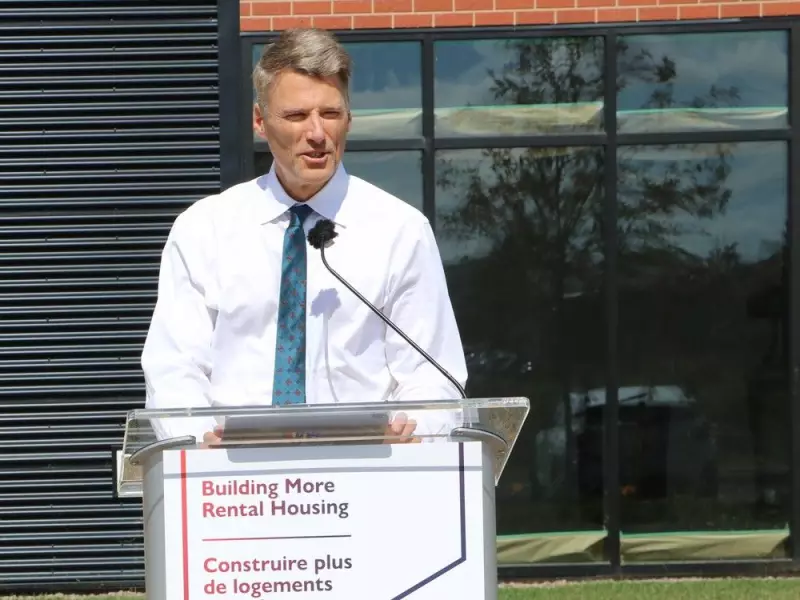
Gregor Robertson's Delicate Balancing Act on Pipeline Policy
Federal Housing Minister Gregor Robertson finds himself navigating a complex political landscape eight months into his cabinet role, balancing his previous environmental advocacy with current government energy initiatives. The former Vancouver mayor, once a vocal opponent of Trans Mountain Pipeline expansion, now operates within Prime Minister Mark Carney's administration that has taken a different approach to energy infrastructure.
From Municipal Opposition to Federal Responsibility
During his tenure as Vancouver mayor, Robertson expressed strong opposition to the Trans Mountain Pipeline expansion from Alberta's oilsands to Burnaby. In 2018, he told Bloomberg that "we have to get off fossil fuels" and characterized oil and gas as representing "such a tiny fraction of the overall economy and a job count." His environmentalist credentials were well-established through his municipal leadership and public statements.
Now as a federal cabinet minister, Robertson must reconcile these past positions with the Carney government's recent agreement with Alberta Premier Danielle Smith. This deal includes language supporting potential new bitumen pipeline development to British Columbia's northern coast, representing a significant shift from Robertson's previous stance.

Strategic Language and Political Positioning
When questioned about the federal government's efforts to diversify energy exports away from what officials describe as a volatile United States under President Donald Trump, Robertson has adopted carefully measured language. Speaking to Postmedia, he emphasized that no private sector proponent currently exists for such a pipeline project, nor is there a defined route established.
The minister pointed to specific conditions outlined in the Ottawa-Alberta agreement, noting that "the support of First Nations affected and provinces affected, in this case B.C., are needed for any proposal to advance." He further clarified that "there's no proponent, there's no financing, there's no project" at present, characterizing discussions as speculative rather than concrete.
Aligning with Provincial Counterparts
Robertson's current language closely mirrors that of British Columbia Premier David Eby and Energy Minister Adrian Dix, who have both emphasized focusing on projects already in development rather than hypothetical pipeline proposals. The minister highlighted existing initiatives including:
- The B.C. Hydro North Coast transmission line
- Expansions of critical mineral mines in British Columbia
- LNG projects like the Ksi Lsims terminal and LNG Canada
These "projects in the process" contrast with what Robertson describes as "potential projects" referenced in the federal-provincial agreement, allowing him to maintain focus on tangible developments while acknowledging broader policy discussions.
Political Analysis and Cabinet Dynamics
Andrew Reeve, a former press secretary for the B.C. Liberals and past president of a federal Liberal riding association in Victoria, observes that many British Columbia Members of Parliament face similar challenges in balancing personal views with government positions. He notes this is particularly true for cabinet ministers like Robertson, who must maintain political alignment while representing their constituents' interests.
The situation illustrates the complex transition municipal politicians often face when moving to federal roles, where broader national considerations sometimes conflict with previously held local positions. Robertson's approach demonstrates how experienced politicians navigate these tensions through strategic communication and careful emphasis on procedural requirements rather than substantive policy endorsements.

As the federal government continues to develop its energy and environmental policies, Robertson's positioning offers insight into how cabinet ministers with strong environmental backgrounds adapt to government priorities that may differ from their personal histories. His emphasis on consultation requirements and project viability provides a framework for discussing contentious energy infrastructure while maintaining political viability within both his cabinet role and his British Columbia political base.