

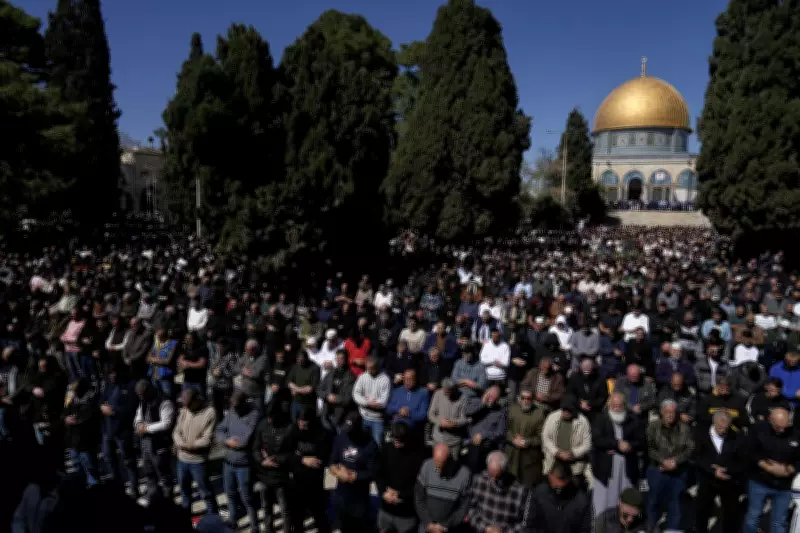
First Ramadan Friday Prayers Held at Jerusalem's Al-Aqsa Mosque Since Ceasefire
In a significant development following the recent Israel-Hamas ceasefire, Muslim worshippers gathered for the first Friday prayers of the holy month of Ramadan at the Al-Aqsa Mosque compound in Jerusalem's Old City. The event, which took place on Friday, February 20, 2026, marks a pivotal moment of religious observance and potential calm in a region that has experienced intense conflict.
A Symbolic Gathering Amidst Fragile Peace
The prayers were conducted peacefully, with worshippers filling the historic site to observe this important religious occasion. The Al-Aqsa Mosque, located in a highly sensitive area that is sacred to both Muslims and Jews, has often been a flashpoint for tensions. This gathering represents not only a religious milestone but also a test of the ceasefire's durability and the broader geopolitical stability in the region.
The timing is particularly noteworthy, as Ramadan is a month of fasting, prayer, and reflection for Muslims worldwide. The ability to hold Friday prayers at Al-Aqsa without incident underscores the tentative progress made since the ceasefire agreement was implemented. However, the situation remains delicate, with ongoing negotiations and regional dynamics posing challenges to lasting peace.

Context of the Israel-Hamas Conflict
The ceasefire that preceded this event came after months of hostilities between Israel and Hamas, which resulted in significant casualties and widespread destruction. The conflict has deep historical roots and involves complex issues such as territorial disputes, security concerns, and the status of Jerusalem. The Al-Aqsa Mosque compound, known to Muslims as the Haram al-Sharif and to Jews as the Temple Mount, is at the heart of these tensions.
International observers have emphasized the importance of maintaining calm during Ramadan to prevent a resurgence of violence. The successful holding of Friday prayers is seen as a positive step, but it also highlights the need for continued diplomatic efforts to address underlying grievances and ensure long-term stability.
Implications for Regional and Global Relations
This event has broader implications beyond the immediate religious context. It serves as a barometer for the effectiveness of the ceasefire and the potential for future peace initiatives. Key stakeholders, including regional powers and international organizations, are closely monitoring developments to assess whether this moment of relative tranquility can be sustained.
Challenges remain, including humanitarian issues, reconstruction efforts in Gaza, and political divisions among Palestinian factions. The peaceful prayers at Al-Aqsa offer a glimmer of hope, but they also underscore the fragility of the current situation. Moving forward, it will be crucial to build on this progress through dialogue and confidence-building measures.
In summary, the first Ramadan Friday prayers at Al-Aqsa Mosque since the ceasefire represent a critical juncture in the Israel-Hamas conflict. While the peaceful gathering is a welcome development, it is essential to recognize the ongoing complexities and work towards a comprehensive resolution that ensures lasting peace and security for all parties involved.






