

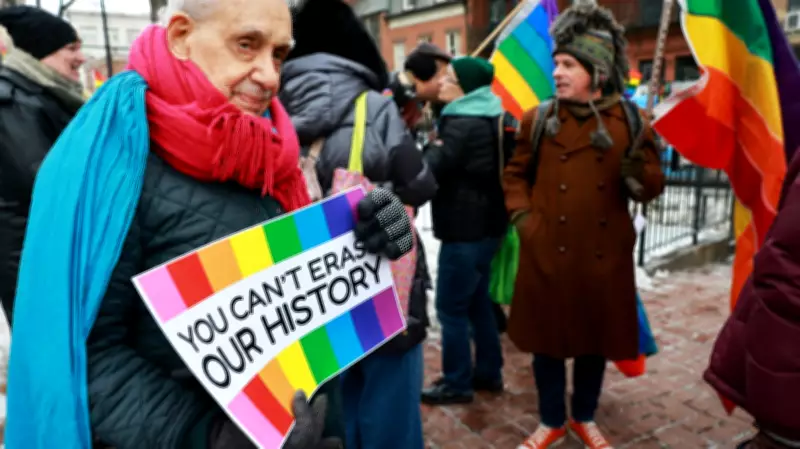
Trump Administration Enforces Flag Policy, Removing Pride Flag at Stonewall Monument
The recent Super Bowl halftime performance by Benito, featuring a powerful message of global unity, offered a moment of collective joy. However, that uplifting spirit has been sharply contrasted by developments under the current political landscape. This week, it was revealed that the Trump administration has compelled the Stonewall National Monument in New York City to take down its Pride flag.
New Federal Guidelines Restrict Flag Displays
According to a report from The New York Times, the flag's removal complies with a new rule established last month by the Department of the Interior. This federal guidance dictates which flags can be displayed on poles in national parks. Under these regulations, only the U.S. flag and flags approved by Congress are permitted, with what the policy describes as "limited exceptions."
This phrasing has raised concerns among advocates. The "limited exceptions" clause appears to create a potential loophole, allowing the government to selectively endorse flags aligned with certain political views. Given the historical significance of the Stonewall Inn as the birthplace of the LGBTQ+ rights movement, many argue that the Pride flag should unequivocally qualify as an exception.

Historical Context and Recent Targeting
In 2016, President Barack Obama designated the Stonewall Inn as a national monument, ensuring its protection. The site, a bar where trans and queer individuals protested police brutality in the 1960s, gained a new visitors center in 2024, just prior to the election. However, since the beginning of Trump's second term, there have been subtle yet persistent efforts to undermine the monument's legacy.
Last year, references to transgender people were erased from the National Park Service's Stonewall website, despite the pivotal roles played by trans leaders like Marsha P. Johnson and Sylvia Rivera in the historic protests. The removal of the Pride flag is seen as another targeted action against marginalized communities.
Cultural Significance of Flags as Symbols
The timing of this policy enforcement feels particularly resonant. Bad Bunny's Super Bowl halftime show, celebrated for its cultural impact, highlighted flags as symbols of resistance and unity. One of his guests, Lady Gaga, wore a dress in the baby blue hue of the original Puerto Rican flag. During the performance's climax, dancers waved the flags of every country in the Americas.
In an era where political divisions are emphasized, flags have become vital tools for communities to express solidarity and shared struggles. The Pride flag at Stonewall represents not just identity, but a legacy of resilience.
Personal and Community Impact
For many, including those who experienced their gay awakening at the Stonewall Inn, this action feels deeply personal. The West Village neighborhood, where the bar is located, has long been a sanctuary for queer and trans people, adorned with Pride flags well before its national landmark status. As gentrification alters the area, banning the Pride flag at Stonewall strikes at the heart of its cultural identity.
Despite these challenges, the spirit of New Yorkers remains undeterred. The city has historically served as a beacon of progress, and this flag ban is likely to inspire a stronger, more visible response. As one observer noted, a flag ban will be met with more flags, and a louder, more insistent expression of LGBTQ+ pride.






