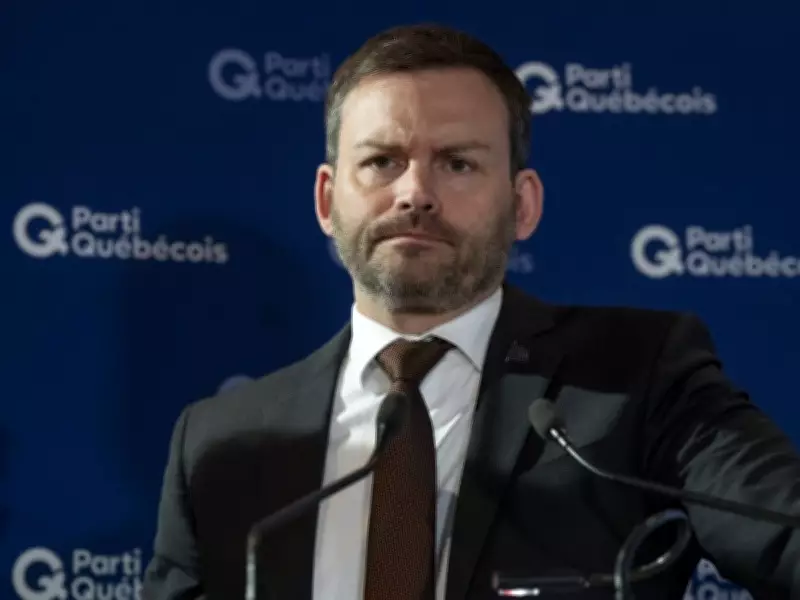
Political Analyst Condemns PQ Leader's Extreme Rhetoric as Divisive Strategy
Political commentator Raphaël Melançon has issued a sharp critique of Parti Québécois Leader Paul St-Pierre Plamondon's recent inflammatory statements, arguing that such divisive language represents a fundamental failure in political leadership that cannot unite Quebecers around the sovereignty project.
Historical Comparisons That Cross Ethical Lines
During the PQ's recent convention in St-Hyacinthe, St-Pierre Plamondon employed what Melançon describes as "enflure verbale" or verbal inflation, drawing inappropriate parallels between Quebec's current situation and historical slavery. The PQ leader quoted Gandhi to suggest Quebecers might be "slaves while believing themselves to be free," a comparison that Melançon finds both historically inaccurate and ethically problematic.
"Such language is deeply insulting to peoples around the world who endured actual slavery," writes Melançon, emphasizing that Quebec's democratic reality bears no resemblance to the brutal atrocities of historical enslavement. He notes that Quebec has been offered not once but twice the opportunity to democratically determine its future through referendums, a privilege never extended to enslaved populations.

Distorting History and Present Reality
The political analyst contrasts St-Pierre Plamondon's approach with that of former Prime Minister Mark Carney, who recently offered what Melançon calls a "rather romanticized interpretation" of Canada's history during a speech on Quebec City's Plains of Abraham. While Carney described the 1759 Conquest as the beginning of partnership and cooperation, St-Pierre Plamondon has taken historical interpretation to what Melançon considers dangerous extremes.
Melançon points out that even Jacques Parizeau, known for his hard-line sovereignist positions and sharp rhetoric, never descended to such levels of historical distortion to justify the independence project. The current PQ leader's approach represents what the analyst sees as a troubling escalation in political discourse.
Symbolic Battles and Political Maturity
Further demonstrating what Melançon characterizes as political immaturity, St-Pierre Plamondon recently launched what the analyst describes as a "childish rant" against Carney after the prime minister posed for photos with Bonhomme Carnaval. The PQ leader accused Canada of cultural appropriation for allegedly stealing Quebec's national symbols, including poutine and maple syrup.
"This is someone who could realistically become Quebec's premier in just a few months, reacting like a toddler because Canada's prime minister hugged a local mascot," writes Melançon with evident frustration. He reminds readers that as long as Quebec remains part of Canada through democratic choice, Quebec's national symbols are inherently Canadian as well.
Failing to Move Public Opinion
Despite the PQ's efforts to revive interest in sovereignty through the gradual release of chapters from their Livre bleu road map for independence, public opinion remains largely unmoved. Recent polling indicates that only about one-third of Quebecers would vote "Yes" in a referendum held today, with support for independence remaining stagnant.
More tellingly, a Pallas Data poll suggests that more than one in four PQ voters—28 percent—don't even want to hear about another referendum. This disconnect between leadership rhetoric and voter priorities represents what Melançon identifies as a fundamental strategic failure.
The Need for Positive Vision Over Division
Melançon argues that people don't vote based on events from two centuries ago, particularly during a time when many Quebecers are struggling with economic pressures like putting food on the table and keeping roofs over their heads. If the PQ leader hopes to convince Quebecers of sovereignty's merits, he will need what Melançon describes as "a positive message and a credible, unifying vision for the future."

"You don't build a country on hatred toward another," concludes the political analyst, suggesting that St-Pierre Plamondon's current approach of pushing divisive rhetoric to its limits represents no winning strategy. While the PQ leader claims Carney has "officially launched the third referendum campaign," Melançon warns that continuing down this path of extreme, exaggerated, and disconnected rhetoric may well bring that campaign to an end before it even properly begins.