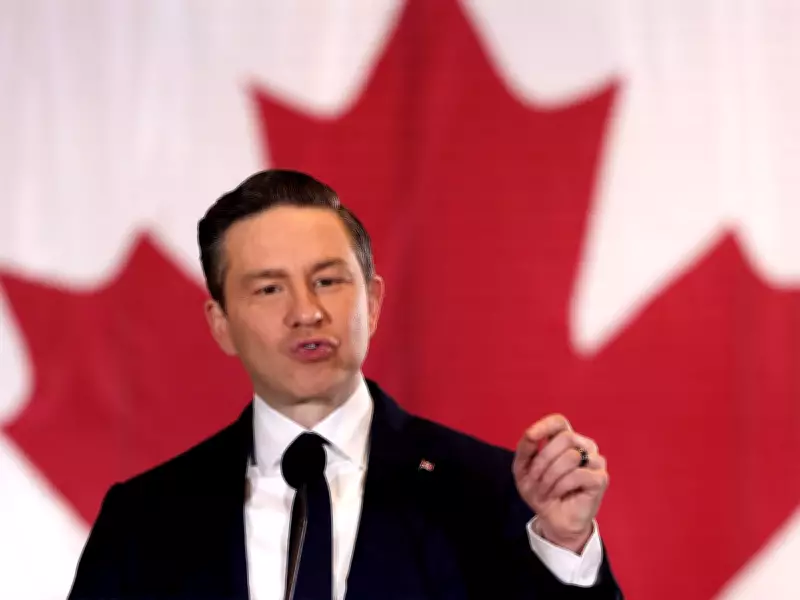
Poilievre's Conservative Leadership Review: Doubling Down on Familiar Agenda
As the Conservative Party of Canada convention commences at the BMO Centre in Calgary, federal Conservative Leader Pierre Poilievre is poised to face a crucial leadership review. The event, which began on Thursday, sets the stage for Poilievre's pivotal speech on Friday evening, followed by a vote that will assess his leadership.
An Unwavering Pitch
Poilievre is steadfastly adhering to the same platform that narrowly missed securing victory in the last election, yet significantly energized the party's base. This strategy involves a renewed emphasis on a Sovereignty Act motion in the House of Commons, aimed at dismantling legislation that he argues hinders economic development.
The proposed act targets several Liberal policies, including the B.C. north coast tanker ban, the Impact Assessment Act, the industrial carbon tax, and emissions caps. By invoking "sovereignty," Poilievre frames this as a push for greater independence from the United States, a theme that resonates with many party members.

Liberal Criticism and Conservative Confidence
Liberals have dismissed Poilievre's focus as outdated, frequently mocking his reluctance to adapt. During a recent debate on the Sovereignty Act, Ontario Liberal Mark Gerretsen challenged Poilievre, questioning whether he had learned from past electoral outcomes and urging self-reflection.
Poilievre responded sharply, highlighting the contrast with Liberal approaches. "The Liberal member seems to be astonished that we would say the same thing after the election that we said before the election," he remarked. "I can understand why he finds that counterintuitive, because the Liberals do exactly the opposite."
He then launched into a critique of the Prime Minister, listing unmet promises such as a delayed deal with Americans, absent countertariffs, increased spending, declining investment, and a lack of pipeline approvals. This rhetoric is designed to galvanize support at the convention.
The Broader Political Landscape
Despite acknowledging the rising popularity of figures like Carney, who delivered a well-received speech in Davos, Conservatives remain confident. They believe that as long as new projects remain stalled, Poilievre's 2025 election message will gain traction. The party anticipates that potential failures in the Liberal agenda could erode their popularity, creating an opening for Conservative gains.
Poilievre's approach underscores a calculated bet that consistency and core principles will ultimately prevail, even as the political environment evolves. The leadership review will serve as a key test of this strategy's viability moving forward.