Conservative Leader Accuses Liberals of Fueling Separatist Resurgence
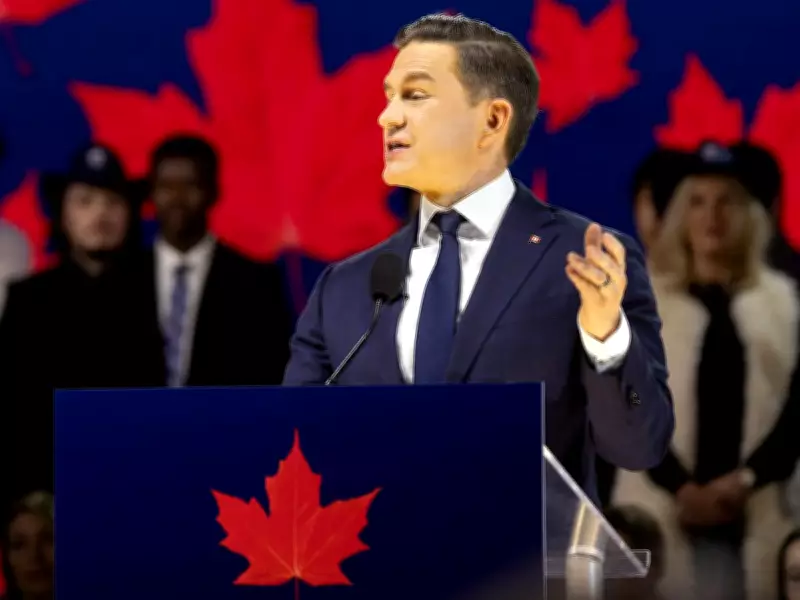
In a fiery address delivered to nearly 4,000 supporters at the National Conservative Convention in Calgary, Conservative Leader Pierre Poilievre launched a scathing critique of federal Liberal governments, blaming them directly for the resurgence of separatist movements across Canada. Speaking just ahead of a crucial leadership vote that would determine his political future, Poilievre argued that years of Liberal policies have created conditions that threaten the very fabric of national unity.
Economic Despair and Provincial Rights at Issue
Poilievre asserted that a series of Liberal administrations have systematically sown economic despair while running roughshod over provincial rights, creating fertile ground for separatist sentiment to take root. The Conservative leader specifically pointed to Quebec and Alberta as regions where movements that had been dormant or extinct during Stephen Harper's Conservative government have now re-emerged with renewed vigor.
"Liberals are in power and as night follows day, separatist movements are in resurgence in Quebec and here in Alberta," Poilievre told the enthusiastic crowd at Calgary's BMO Centre, which responded with repeated standing ovations and chants of support. "These movements which had been dormant or dead when Prime Minister Harper left office."

Beyond Simple Denunciation
The Conservative leader argued that simply denouncing those seeking to break up the country would prove insufficient. He suggested that Liberal regimes have actively eroded national pride through their policies and rhetoric, particularly affecting younger Canadians.
"We can simply attack people who feel this way or we can ask them 'why,' particularly young people," Poilievre stated. "For the last 10 years, Ottawa has told our young people that our history is filled with shame and horror, that we are a post-national country with no core idea and our youth will never own homes."
Specific Accusations and Historical Context
Poilievre repeated accusations frequently made by separatists and Alberta's United Conservative Party government that Ottawa abuses Alberta's energy sector and Quebec's provincial authority. He made the pointed observation that Canada has never experienced a national unity referendum or crisis while Conservatives held power in Ottawa.
"It's an interesting coincidence, isn't it?" he remarked to the convention audience. "We need to unite this house divided."
This historical claim overlooks the significant national unity crisis that erupted during the late 1980s around the Meech Lake Accord under Conservative Prime Minister Brian Mulroney, though Poilievre did not address this specific episode in his convention speech.
Current Separatist Landscape
The Conservative leader's comments come at a time when separatist sentiment has recently stirred in Quebec, while in Alberta, advocates for provincial independence from Canada are actively collecting signatures to force a referendum on the question. Although polls consistently show that a large majority of Albertans oppose separation, the movement championing it has created significant political ripples that extend beyond provincial borders.
Political Reactions and Broader Implications
Acting as an observer at the convention, Calgary Confederation Liberal MP Corey Hogan expressed disappointment with Poilievre's approach to the separation issue, suggesting the Conservative leader needs to take a stronger stand against those pushing for provincial independence.
In a notable departure from his otherwise critical tone toward the Liberal government, Poilievre did express willingness to collaborate with Liberals to thwart U.S. economic attacks on Canada, stating that "Conservatives always put our country ahead of our party."
The speech represents a significant escalation in Poilievre's political rhetoric as he positions himself and his party ahead of future electoral contests, framing national unity as a central issue that differentiates Conservative and Liberal approaches to governance.