Calls for Pause on B.C. Treaties Intensify
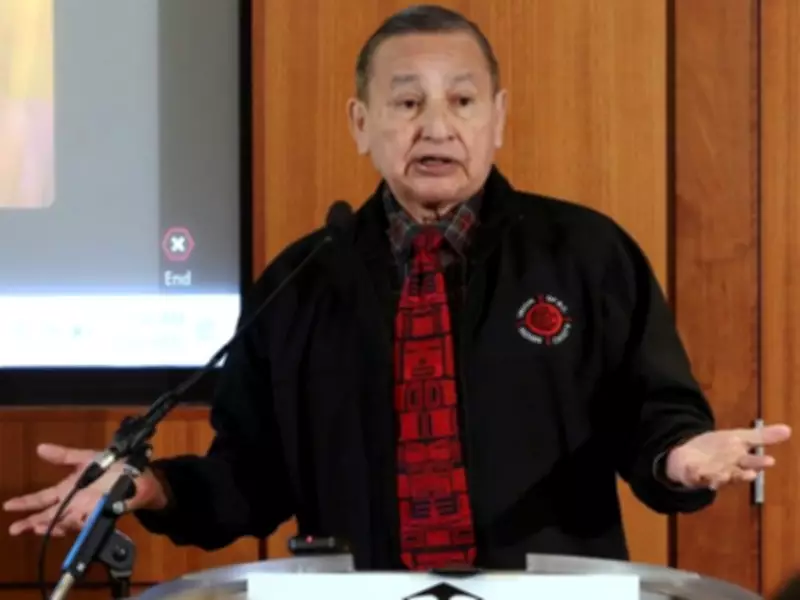
VICTORIA — The New Democrats are facing mounting pressure to halt progress on two Indigenous treaties currently before the legislature, as overlapping territorial claims and unresolved issues spark widespread opposition. Grand Chief Stewart Phillip of the Union of B.C. Indian Chiefs recently joined the chorus, urging a pause to allow for proper resolution of boundary disputes.
Haisla Nation Voices Concerns
The Haisla Nation this week targeted the proposed treaty with the Kitselas Nation, both located in northwestern British Columbia. In a statement, the Haisla emphasized that treaties are critical for reconciliation but must not come at the expense of other nations or leave key issues unresolved. They argued that the Kitselas treaty is proceeding despite unresolved territorial overlaps and without the consent of affected nations.
"This approach disregards the reality of overlapping and shared territories, fails to secure free, prior, and informed consent from all impacted Nations, places First Nations in conflict with one another, and advances legislation despite outstanding disputes and opposition," the statement read.

Wei Wai Kum and Allies Demand 180-Day Pause
A day earlier, the Wei Wai Kum First Nation, the Nine Allied Tribes, and the Lax Kw’allams Band gathered in Victoria to call for a 180-day pause on both the Kitselas treaty and a second treaty with the K’ómoks Nation on Vancouver Island. Chief Chris Roberts of Wei Wai Kum revealed that 80 percent of the land recognized in the K’ómoks treaty overlaps with territories claimed by neighbouring First Nations.
Roberts indicated that his nation is reviewing legal options and hinted at potential actions outside the courts. "People need to remember what we have in our territory," he said. "We have a B.C. Hydro dam that covers nearly 50 percent of Vancouver Island’s power needs. We have the Island Highway, which runs through our lands, our territory, and past reserves. We have an $800-million wind farm project we’re trying to advance."
Union of B.C. Indian Chiefs Joins Opposition
The previous week, the Union of B.C. Indian Chiefs had also called for a pause. Grand Chief Stewart Phillip stated, "Reconciliation cannot be achieved through incomplete or unilateral processes. Moving forward without resolving shared territory and overlap issues risks undermining relationships between Nations. Advancing treaty legislation with unresolved boundary issues is irresponsible and will be challenged." Phillip recently played a key role in persuading Premier David Eby to back away from changes to the Declaration on the Rights of Indigenous Peoples Act.
Broader Criticism from Conservatives
The Kitselas and K’ómoks treaties face criticism from other quarters as well. The B.C. Conservatives have accused the New Democrats of weakening treaty language on certainty and finality, which were original selling points for treaty-making in the province. The Opposition also questioned the decision to make these the first treaties in B.C. to incorporate the UN Declaration on the Rights of Indigenous Peoples (UNDRIP). UNDRIP is recognized in the text as an "authoritative source" for interpreting the treaty, similar to how the Declaration on the Rights of Indigenous Peoples Act (DRIPA) made all provincial laws subject to the UN declaration.
Arbitration as a Potential Solution
Vaughn Palmer suggests that it may be time to revive the idea of an arbitration process within B.C.'s Treaty Commission to resolve overlapping claims. Such a mechanism could provide a structured way to address disputes without stalling the entire treaty process. As tensions rise and legal challenges loom, the need for a better approach becomes increasingly urgent.
The growing opposition highlights the complexities of reconciling Indigenous rights with territorial realities. Without a clear resolution process, the risk of inter-nation conflict and legal battles threatens to undermine the very goals of reconciliation that treaties aim to achieve.