Media's Iran War Coverage Points to Disturbing Shift in Journalism Standards
Incomplete truths, when repeated frequently enough, can mislead audiences just as effectively as outright falsehoods, according to legal analyst Howard Levitt. This phenomenon represents a troubling transformation in how modern journalism operates, particularly in coverage of international conflicts like the ongoing tensions between Iran and Israel.
The Question of Good News in a World of Selective Reporting
Levitt begins by addressing a fundamental question posed by an anxious friend: Is there any good news in the world today? The answer, he suggests, is more affirmative than one might think, but much positive information goes unrecognized not because it doesn't exist, but because it's rarely presented as such. In our current era of constant information flow, the primary challenge is no longer a scarcity of facts but rather how those facts are selectively chosen, framed, and sometimes deliberately withheld from public view.
This selective approach points to a broader and more concerning evolution in contemporary journalism practices. According to Levitt, too many legacy media outlets have abandoned the traditional journalistic method of beginning with facts and working toward conclusions. Instead, they increasingly start with predetermined conclusions and work backward, assembling only those facts that support their established narratives.

The Corrosive Effect on Public Trust
The result extends beyond simple bias, which has always existed in media to some degree, to something more damaging: a steady erosion of public trust in what we're told constitutes "news." This erosion occurs because audiences increasingly recognize that they're receiving incomplete versions of events rather than comprehensive reporting.
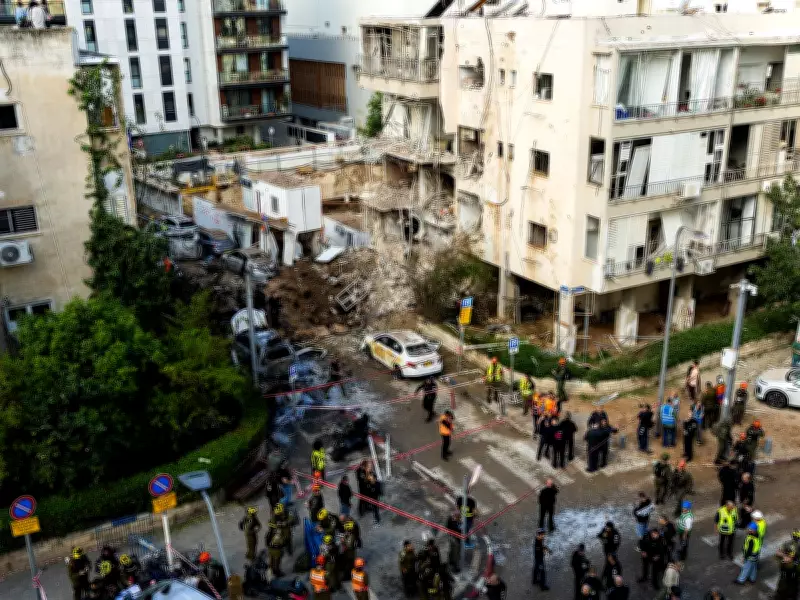
Recent coverage of international affairs provides a clear case study of this phenomenon. When reports surfaced warning of potential Iranian threats reaching the American mainland, the story spread with remarkable speed despite resting on thin and unverified claims. While early reporting has always been imperfect, what's new is the apparent lack of hesitation and verification. The journalistic obligation to verify information has too often been overtaken by the impulse to publish first and contextualize later, if at all.
The Framing of International Conflicts
The same pattern emerges in how international events are framed. Certain narratives receive emphasis while others are quietly minimized. Context appears or disappears depending on whether it reinforces the preferred storyline. The facts themselves aren't necessarily false; they're simply incomplete. And these incomplete truths, when repeated frequently enough through various media channels, can mislead audiences as effectively as outright falsehoods.
This isn't necessarily a conspiracy, Levitt argues, but rather a mindset that has taken root in much of today's media landscape. Particularly in coverage of international conflicts, there appears to be an embedded assumption about which parties occupy the moral high ground. Once that assumption becomes fixed, coverage adjusts around it. Facts that reinforce the predetermined moral framework are highlighted, while facts that challenge it are softened, buried, or ignored entirely.
Selective Reporting on Israel-Iran Dynamics
Over time, this approach produces a version of events that feels coherent and persuasive but is actually selectively constructed. Nowhere is this more evident than in reporting on Israel and its regional dynamics with Iran, according to Levitt's analysis.
To consume a significant portion of Western media coverage—with CBC serving as one of the clearest examples—one might reasonably conclude that Israel stands almost entirely isolated, both diplomatically and morally. Meanwhile, Iran is often treated as just one actor among many in a complicated regional dispute. Levitt argues that the reality is far less tidy and, in many respects, actually the reverse of this portrayal.

Across much of the Middle East, governments that once defined themselves in opposition to Israel have moved, quietly but unmistakably, toward cooperation and normalization. These shifts aren't ideological conversions but pragmatic calculations grounded in security concerns, economic interests, and shared regional threats. Simultaneously, Iran's leadership finds itself increasingly isolated not only internationally but internally—at odds with many neighboring countries, with the vast majority of its own population, and almost universally with its diaspora community.
The selective nature of media coverage often fails to capture these complex realities, instead presenting simplified narratives that align with predetermined conclusions about moral positions in the conflict. This approach, Levitt concludes, represents a fundamental shift in journalism that ultimately undermines public understanding and trust in media institutions.