Bill Maher Voices Bewilderment Over Strait of Hormuz Attacks
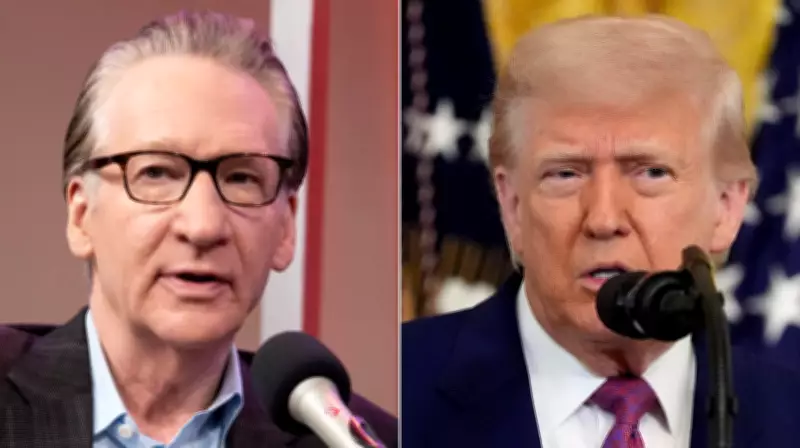
"Real Time" host Bill Maher expressed confusion on Friday regarding multiple oil tankers being attacked while attempting to navigate the critical Strait of Hormuz. This comes just one week after he praised President Donald Trump for initiating the conflict with Iran, admitting openly, "I don't understand this."
Questioning U.S. Military Superiority
Maher highlighted a seeming contradiction in U.S. military claims. "Trump says Iran has no Air Force, no missiles, and no navy," he stated. "He says there's 'nothing left' to bomb. Yeah, we have nothing left to bomb. Apparently, they have something left to bomb, which is the Strait of Hormuz. I don't understand this."
He continued to press the issue, questioning why the United States, with its proclaimed complete military dominance, cannot secure the one area where it is most needed. "We have complete military superiority, we're bragging about that, except for the one place where we apparently need complete military superiority. Do you understand this? Why can't we control the Strait of Hormuz, the one place we need to control in Iran?"

Expert Insights on Iran's Strategic Advantages
Guest Lloyd Blankfein, the former CEO of Goldman Sachs, pointed to Iran's geographical and tactical edges in the region. "I don't think it takes much effort to create an obstacle on a very narrow bottleneck there, so I think they don't have to have much firepower," Blankfein explained. He added, "It doesn't take much to fire cheap drones and menace ships so that they don't go through."
Military experts concur, noting Iran's capability to deploy mines or utilize low-cost attack drones effectively, leveraging the strait's narrow confines to disrupt global oil shipments.
Criticism of War Planning and Escalating Tensions
Fellow panelist Anthony Scaramucci, former White House communications director under Trump, attributed the challenges to "bad war planning." He revealed that the Trump administration had redeployed four U.S. Navy minesweepers to other global regions in September, potentially weakening local defenses.
The strategic waterway, through which approximately one-fifth of the world's oil flows, was closed by Iran following U.S. and Israeli airstrikes. The conflict has resulted in significant casualties, including at least 13 U.S. military service members and over 1,400 Iranians, among them dozens of schoolgirls.
Maher's Shifting Stance on the Conflict
Maher's recent comments mark a shift from his earlier positions. Last month, he suggested Trump deserved a Nobel Peace Prize if he could "somehow" get Iran, Cuba, and Venezuela "to fall." Just last week, he appeared to endorse the Iran war, despite a history of criticizing U.S. interventionist policies in the Middle East.
"Also, this week, war," Maher said at the time. "Did you hear about that thing? We bombed Iran and it's going on. Now, if you expect me to say I hate it, I don't. Sorry! When he puts boots on the ground, yeah, then I'll hate it. Now, I know too many happy Iranian Americans."
Political Reactions and Ongoing Developments
Maher also criticized former Vice President Kamala Harris for stating Trump "dragged America into a war that we don't want," a sentiment supported by numerous polls. "And who knows more about what the American people don't want?" Maher quipped sarcastically.
Contradictory statements have emerged from officials. Secretary of Defense Pete Hegseth controversially claimed on Friday that the Strait of Hormuz is "open," despite an Iranian military spokesperson asserting it is "undoubtedly" under their control. Hegseth argued the "only thing prohibiting transit" is Iran "shooting at shipping."
In a further twist, Maher claimed last week he would oppose the war if Trump deployed troops. Hours before his Friday show, U.S. officials announced an estimated 2,500 Marines are being dispatched to the Middle East in response to intensified Iranian attacks in the strait, underscoring the escalating crisis and the complex challenges in securing this vital maritime corridor.