Venezuela's Former President Confronts U.S. Legal Battle Amid National Shift
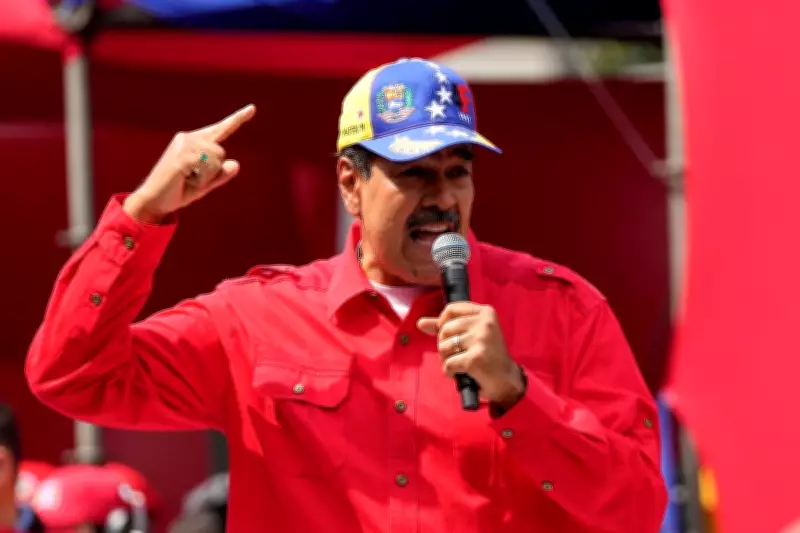
Nicolás Maduro, the former president of Venezuela, is preparing for another appearance in a United States court as he contests serious criminal charges leveled against him by American authorities. This legal confrontation unfolds while Venezuela itself appears to be progressing politically without his direct leadership, marking a significant moment in the nation's complex trajectory.
The Charges and Court Proceedings
The specific allegations Maduro faces include narcoterrorism conspiracy, money laundering, and corruption, with U.S. prosecutors asserting he led a "narco-terrorism partnership" with Colombian rebel groups. These charges, initially unsealed in 2020, carry potential sentences of decades in prison, though Maduro has consistently denied all accusations, labeling them as politically motivated attempts at regime change.
The upcoming court session represents a critical juncture in this prolonged legal saga, with Maduro's defense team expected to argue for dismissal based on jurisdictional grounds and claims of sovereign immunity. Legal experts note that while extradition remains unlikely given Venezuela's non-cooperation, the proceedings keep international pressure on Maduro's administration and its allies.

Venezuela's Political Landscape Without Maduro
Concurrently, Venezuela has been undergoing a gradual political transition. Following contested elections and economic turmoil, interim governance structures and opposition movements have gained ground, albeit amidst ongoing challenges. The country has seen shifts toward economic liberalization in some sectors and renewed diplomatic engagements, suggesting a move away from the centralized control characteristic of Maduro's tenure.
This evolution occurs despite Maduro retaining influence within certain political circles and the military, highlighting the fragmented nature of Venezuela's current governance. International observers report that while his physical presence in day-to-day politics has diminished, his legacy continues to shape policy debates and institutional dynamics.
International Implications and Regional Stability
The dual narrative of Maduro's U.S. court battle and Venezuela's internal changes carries broader implications for regional stability and U.S.-Latin America relations. The charges against Maduro exemplify the United States' aggressive legal approach to foreign leaders accused of crimes, a strategy that has sparked debates over extraterritorial jurisdiction and diplomatic repercussions.
Meanwhile, Venezuela's tentative steps toward political normalization offer a glimmer of hope for resolving its humanitarian crisis, though obstacles like sanctions, internal divisions, and external interference persist. The situation underscores the delicate balance between accountability for alleged crimes and the pragmatic needs of a nation in transition.
As Maduro heads back to court, the world watches not just a legal proceeding, but a symbol of Venezuela's ongoing struggle to redefine itself amid international scrutiny and domestic transformation.