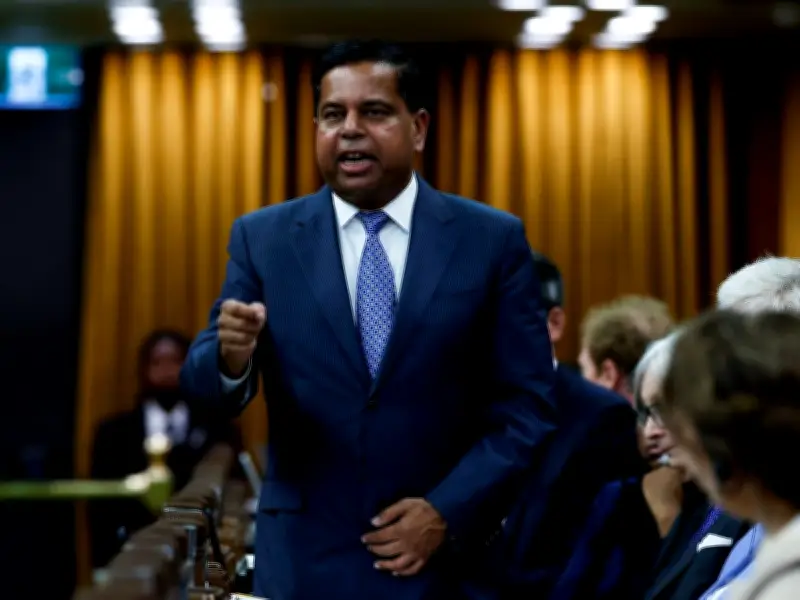
The majority Liberal government is pulling out the “guillotine” for one of its most contentious pieces of legislation, moving to give MPs until Friday to pass its controversial bill facilitating police and intelligence agencies’ ability to intercept and collect personal information.
Late Monday, Government House Leader tabled a sweeping motion that would effectively put an end to clause-by-clause debate of Bill C-22 at committee by Thursday night and put an end to the second reading stage. The motion then gives the government the ability to limit third reading debate to a single MP from each party.
That means that, if the motion is passed in the House of Commons, the Liberals can push through their embattled Bill C-22 by the end of the week when MPs go home for the summer recess. The motion is particularly aggressive in that it aims to curb debate on multiple debate stages of the bill.

Such time allocation and closure motions are colloquially referred to as a “guillotine” because they cut off debate after a certain amount of time.
What Bill C-22 Proposes
Bill C-22 proposes a new lawful access regime which would make it easier for police and intelligence agencies to intercept private communications or personal data as part of their investigations. Lawful access is one of the most intrusive powers afforded to police and intelligence agencies. Creating such a regime for the digital age in Canada has been the subject of fierce debate for decades.
Support and Opposition
The bill is strongly supported by police services across Canada and CSIS, who argue that their investigations into serious crimes like extortion, terrorism or child sex abuse material are significantly hampered because of Canada’s lack of a modern-day lawful access regime. But there has been a recent groundswell of opposition against the bill by civil liberties advocates and tech companies like Apple, Meta and Google who argue that the bill goes too far and could significantly undermine Canadians’ right to privacy.
The move is almost certainly going to be fiercely opposed by opposition parties, who have repeatedly called for further debate on the controversial bill.
Current Status
Bill C-22 is currently at committee study, where MPs have spent over a dozen hours debating roughly 10 of the over 100 amendments proposed by Liberals, Conservatives, the Bloc Québécois, the NDP and the Green Party. More to come.