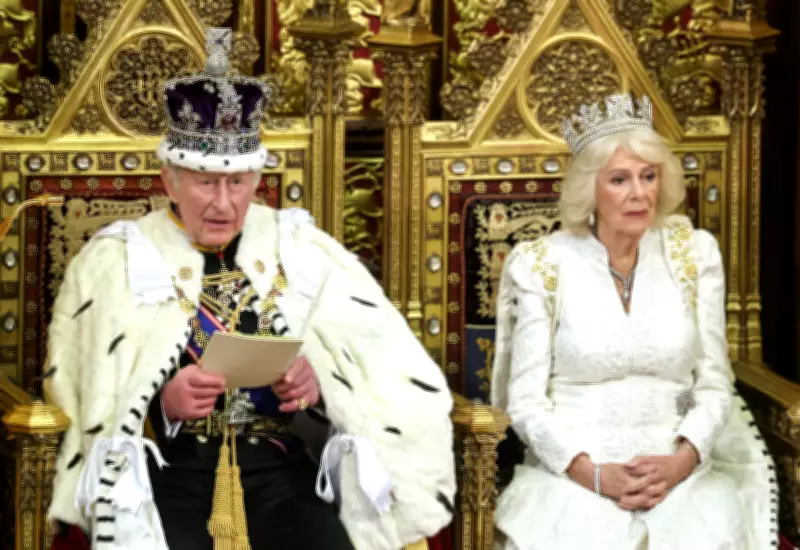
King Charles III delivered the King's Speech on Wednesday, laying out the United Kingdom government's legislative agenda for the upcoming session. The ceremony, steeped in tradition, took place at the Palace of Westminster in London, with Queen Camilla in attendance. This event comes at a politically turbulent time for Prime Minister Keir Starmer, whose leadership position is under threat amid internal party dissent and public dissatisfaction.
Key legislative priorities
The King's Speech outlined several key bills, including measures to boost economic growth, improve public services, and address climate change. Among the proposed legislation is a new energy security bill aimed at reducing reliance on foreign oil and accelerating the transition to renewable energy sources. Additionally, a crime and justice bill will focus on tougher sentencing for violent offenders and increased funding for police forces.
Economic reforms
The government plans to introduce a finance bill that includes tax incentives for small businesses and investments in infrastructure projects. The King also mentioned a new housing bill designed to increase affordable housing supply and streamline planning permissions. These measures are intended to stimulate the economy, which has been struggling with inflation and slow growth.

Health and social care
In the realm of health, the government announced a major review of the National Health Service (NHS) to address waiting times and staffing shortages. A social care reform bill will aim to provide better support for the elderly and disabled, though details remain sparse. The King emphasized the importance of mental health services, pledging additional funding for community-based care.
Political context
The speech was delivered against a backdrop of intense political scrutiny. Prime Minister Starmer faces a potential no-confidence vote from within his own Labour Party, with critics citing his handling of the economy and party divisions. The King's Speech is seen as a critical moment for Starmer to regain control and demonstrate his government's direction. However, political analysts suggest that the agenda may not be enough to save his leadership.
Opposition reactions
Opposition leaders criticized the speech as lacking ambition and failing to address the cost-of-living crisis adequately. Conservative Party leader Rishi Sunak accused the government of offering 'more of the same' without concrete solutions. Meanwhile, smaller parties like the Liberal Democrats and Scottish National Party called for more radical reforms, including proportional representation and increased devolution.
Historical significance
The King's Speech is a traditional event that marks the formal opening of Parliament. King Charles III, who ascended the throne in 2022, has sought to modernize the monarchy while maintaining its ceremonial role. This speech was particularly notable for its focus on digital privacy and cybersecurity, reflecting contemporary concerns. The King also paid tribute to the armed forces and the Commonwealth, underscoring the UK's global commitments.
As the political drama unfolds, the nation watches to see whether Starmer can weather the storm and implement the ambitious agenda outlined by the King. The coming weeks will be crucial for his government's survival and the future direction of British politics.