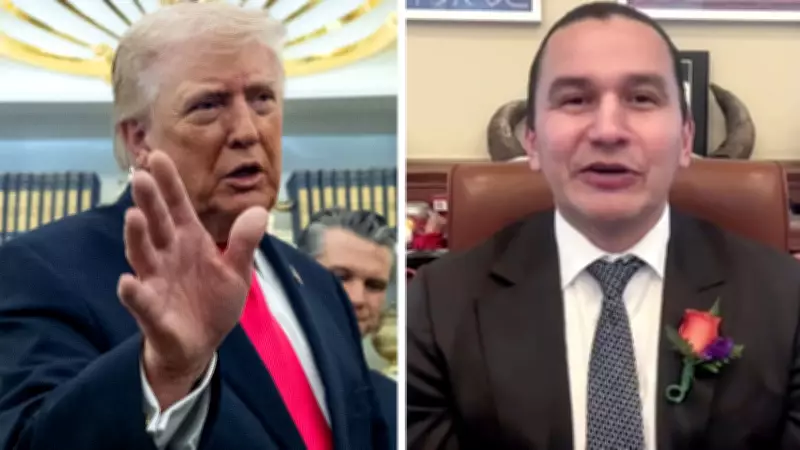
Manitoba Premier Condemns Iran Conflict as a 'Dumb War' Amid Budget Focus
Manitoba Premier Wab Kinew has sparked controversy by labeling the ongoing conflict in Iran as a "dumb war," suggesting it serves as a deliberate distraction from the release of the Epstein files. His remarks came as his government tabled the 2026 provincial budget, highlighting how international tensions are affecting the cost of living for Canadians.
Kinew's Critique and Budget Implications
During a press conference, Kinew emphasized that the war in Iran is not only futile but also strategically timed to shift public attention away from sensitive documents related to the Jeffrey Epstein case. He argued that such conflicts have tangible economic repercussions, particularly in Manitoba, where rising costs are a pressing concern. The premier detailed how global instability drives up expenses for essentials like energy and food, compounding financial strain on households.
"This is a dumb war," Kinew stated bluntly. "It's an effort to distract from the Epstein files, and it's hurting everyday Canadians who are already struggling with affordability." His comments underscore a growing sentiment among some politicians that international events can be manipulated to obscure domestic scandals.

Linking Global Events to Local Economics
The 2026 budget, presented by Kinew's administration, includes measures aimed at mitigating the impact of global conflicts on Manitoba's economy. Key initiatives focus on supporting low-income families, investing in renewable energy to reduce dependency on volatile international markets, and enhancing social programs. Kinew pointed out that wars like the one in Iran often lead to spikes in oil prices and supply chain disruptions, which directly inflate living costs in Canada.
He urged the federal government to prioritize diplomatic solutions over military engagements, warning that prolonged conflicts could exacerbate economic challenges. "We need to be smarter about how we respond to these crises," Kinew added. "Instead of getting drawn into distractions, we should focus on stabilizing our own economy and protecting our citizens."
Broader Context and Reactions
Kinew's remarks have ignited debate among political analysts and the public. Some applaud his willingness to connect international affairs with domestic issues, while others criticize him for oversimplifying complex geopolitical dynamics. The Epstein files, which contain details about high-profile individuals involved in sex trafficking, have been a focal point of media scrutiny, and Kinew's assertion adds a new layer to the discourse.
In Manitoba, the budget's emphasis on cost-of-living relief reflects broader concerns about inflation and economic uncertainty. By tying these issues to the Iran conflict, Kinew aims to raise awareness about the interconnectedness of global and local events. His government's proposals include tax cuts for prepared foods and increased funding for social services, though opposition parties have called for more aggressive measures.
As the situation evolves, Kinew's comments highlight the ongoing tension between addressing international conflicts and managing domestic priorities. They serve as a reminder that political leaders must navigate both spheres to effectively serve their constituents.