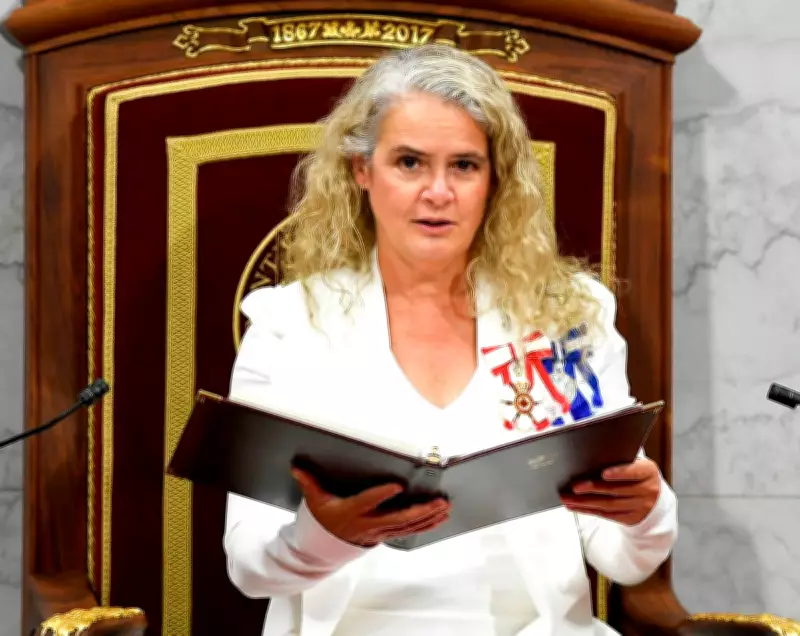
Julie Payette's Controversial Exit as Governor General
In an excerpt from his book, The Governors General: An Intimate History of Canada’s Highest Office, author John Fraser details how former astronaut Julie Payette descended into what he describes as "perpetual petulance" during her time as viceregal. Payette, who served as governor general from 2017 to 2021, faced significant criticism for her management style and workplace conduct, ultimately leading to her resignation. Fraser's account sheds light on the internal struggles and public scrutiny that marked her tenure, highlighting a dramatic fall from grace for the once-celebrated space explorer.
Anticipated Hostility in U.S.-Canada Trade Negotiations
Trade analysts are warning that Canada should brace for "hostility" in upcoming talks with the United States, set to begin in less than three months. One analyst, speaking on condition of anonymity, revealed that officials within the Trump administration view Canada's recent deal to allow Chinese electric vehicles into the Canadian market in exchange for lowered tariffs on canola exports as "shooting itself in the foot." This tension underscores broader economic disputes between the two nations, with potential implications for cross-border trade and diplomatic relations.
Language and Discrimination Case in Saskatchewan
A recent court decision in Saskatchewan has overturned a ruling by the Saskatchewan Human Rights Commission regarding a Starbucks incident. The commission had initially dismissed a case where a customer claimed discrimination after being served in English instead of her preferred language, Tagalog. However, the court found that the commission's decision was flawed, reigniting debates over language rights and racism in service industries. This case highlights ongoing legal and social challenges surrounding multiculturalism and accommodation in Canada.

Debate Over Canada's $90 Billion High-Speed Rail Project
The Liberal government's proposed $90 billion high-speed rail project, aimed at connecting Quebec and Ontario with trains twice as fast as current VIA Rail services, is facing intense scrutiny. Critics argue that such a massive investment could be better allocated to other transformative initiatives, such as expanding liquefied natural gas (LNG) exports or establishing a Canadian moon base. The project's feasibility and economic impact are central to political discussions, with opposition leaders questioning its priorities amid pressing national needs.
Political Risks in Poilievre's Opposition to High-Speed Rail
Conservative Party leader Pierre Poilievre's vocal opposition to the $90 billion high-speed rail project is seen as a strategic move to position himself against Prime Minister Mark Carney's perceived "moderate conservative" governance. According to former Conservative strategist Dan Robertson, this stance allows Poilievre to address economic credibility concerns but carries risks, as it may alienate voters who support infrastructure development. The debate reflects broader political dynamics as parties gear up for future elections, with infrastructure spending becoming a key battleground issue.