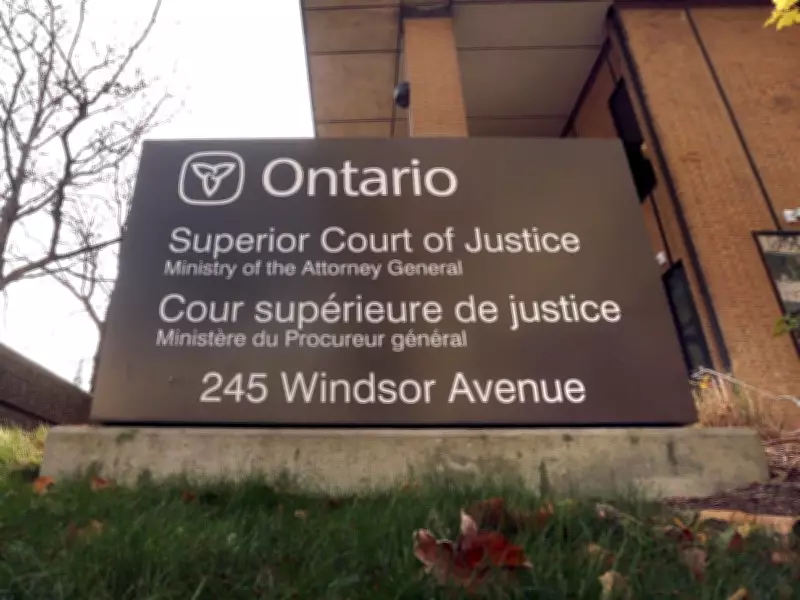
A Ghanaian work permit holder, identified only as E.A. due to a publication ban, was granted a conditional discharge by Justice Renu Mandhane of the Ontario Superior Court of Justice, allowing him to avoid a criminal record and potential deportation. The case, which involved a violent altercation over an unpaid loan, has sparked controversy over the leniency shown by the judge and the Crown prosecutor.
The Incident
E.A. lured a woman who owed him money into a basement to demand repayment. According to the victim, he put her in a chokehold, attempted to rape her, and took her phone as collateral. However, in court, only the theft of the phone was established. E.A. denied the allegations of attempted rape and choking, claiming the woman had a motive to fabricate the story. Security footage showed the two returning to the street, where they fought until E.A. pushed the woman to the ground and drove off, leaving her alone on a dark suburban road without a means to call for help.
Legal Proceedings
Despite the violent nature of the incident, both the defense lawyer and the Crown prosecutor agreed that E.A. should receive a conditional discharge. Justice Mandhane concurred, noting that E.A. was "relatively youthful" at 34, had no prior criminal record, and had been in Canada only since 2015. She also highlighted that he is married with three children, one of whom has autism, and that he has a valid work permit with a pending application for permanent residency. Mandhane stated that without a discharge, E.A. would be ineligible to remain in Canada.

Judge's Background
Justice Renu Mandhane previously served as chair of the Ontario Human Rights Commission, where she advocated for progressive policies, including racial equity in policing and public service hiring, and gender identity education. Since becoming a judge in 2020, she has faced criticism for her activist approach. In a previous case involving a Black man accused of possessing an illegal gun, she excluded the firearm from trial, citing racial profiling despite admitting no direct evidence. Other Ontario judges, such as Faisal Mirza, have similarly allowed defendants to avoid convictions in gun-related cases.
Reactions
The decision has drawn sharp criticism from those who argue that it prioritizes the offender's immigration status over the victim's safety and the severity of the crime. Supporters of the ruling contend that it reflects a compassionate approach that considers the broader consequences of a criminal record, including deportation and family disruption.