Iran's New Supreme Leader Recovers from Severe Injuries After Airstrike
DUBAI – Iran's newly appointed Supreme Leader, Mojtaba Khamenei, is currently in recovery from significant facial and leg injuries he sustained during the airstrike that claimed the life of his father earlier this year, according to three individuals with close ties to his inner circle. These sources, who requested anonymity due to the sensitive nature of the information, disclosed that Khamenei's face was disfigured in the attack on the supreme leader's compound in central Tehran, and he suffered a major injury to one or both of his legs.
Leadership Amid Recovery and Geopolitical Tensions
Despite these severe wounds, the 56-year-old leader is reportedly making progress in his recovery and remains mentally sharp. He has been actively participating in meetings with senior officials through audio conferencing and is involved in critical decision-making processes, particularly concerning the ongoing war and negotiations with the United States, as noted by two of the sources. This development comes at a pivotal moment for Iran, described as its gravest peril in decades, with high-stakes peace talks set to commence in Islamabad, Pakistan, this Saturday.
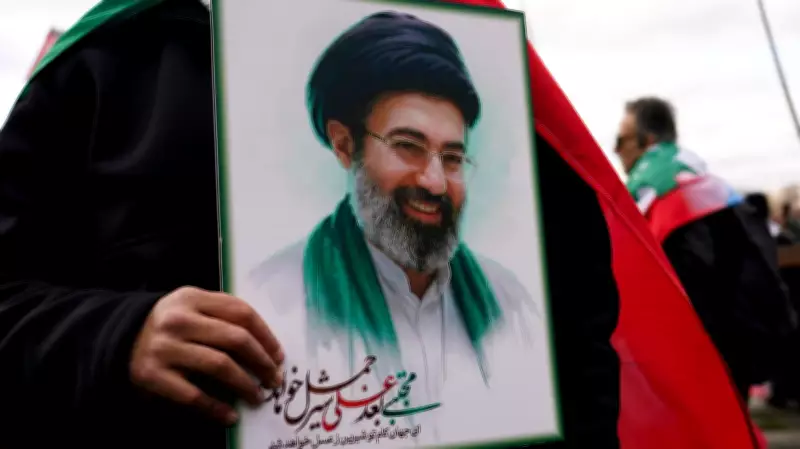
The accounts from those close to Khamenei offer the most detailed insights into his condition in recent weeks, although Reuters has not been able to independently verify these descriptions. Since the air attack on February 28, which marked the first day of the war launched by the U.S. and Israel and resulted in the deaths of his father, Ayatollah Ali Khamenei, as well as several family members, no photos, videos, or audio recordings of Mojtaba Khamenei have been made public. His appointment as supreme leader followed on March 8, yet his whereabouts, exact condition, and ability to govern remain largely shrouded in mystery.

Official Silence and External Confirmations
Iran's United Nations mission has not responded to inquiries regarding the extent of Khamenei's injuries or the reasons behind his absence from public view. However, a state television newsreader referred to him as a "janbaz," a term reserved for those severely wounded in war, shortly after his appointment. This aligns with a statement made by U.S. Secretary of Defense Pete Hegseth on March 13, who indicated that Khamenei was "wounded and likely disfigured." Additionally, a source familiar with U.S. intelligence assessments suggested that Khamenei may have lost a leg, though the CIA declined to comment on the matter, and the Israeli prime minister's office did not provide any responses.
Power Dynamics and Future Projections
Alex Vatanka, a senior fellow at the Middle East Institute, highlighted that regardless of the severity of his injuries, Mojtaba Khamenei is unlikely to wield the same overarching power as his father did. While he represents continuity within Iran's theocratic system, where the supreme leader holds ultimate authority over institutions like the Revolutionary Guards, it could take years for him to establish comparable automatic authority. Vatanka emphasized, "Mojtaba will be one voice but it will not be the decisive one. He needs to prove himself as the credible, powerful, overriding voice."
In this context, the Revolutionary Guards have emerged as a dominant force in strategic decisions during the war, despite Khamenei's previous involvement in top-level governance and his ties to senior Guards figures. His first communication as supreme leader came via a written statement on March 12, urging the closure of the Strait of Hormuz and warning regional countries about U.S. bases, with subsequent brief statements issued on occasions like the Persian New Year.
Public Speculation and Security Concerns
Khamenei's absence has sparked widespread discussion on Iranian social media and messaging apps, where conspiracy theories abound regarding his condition and who is effectively running the country. Memes such as "Where is Mojtaba?" featuring an empty chair under a spotlight have circulated online, reflecting public curiosity and uncertainty. Conversely, some government supporters, including a senior Basij militia member, argue that maintaining a low profile is prudent given the ongoing threat from U.S. and Israeli airstrikes, which have already decimated much of Iran's leadership.

Looking ahead, one source close to Khamenei's circle indicated that images of the supreme leader could be released within one to two months, with a potential public appearance contingent on his health and the security situation. As Iran navigates this critical juncture, the world watches closely to see how Mojtaba Khamenei's recovery and leadership will shape the nation's future amidst intense geopolitical pressures.