Iran's 1979 Revolution Anniversary Overshadowed by Domestic Anger and International Tensions
Iran marked the 47th anniversary of its 1979 Islamic Revolution on Wednesday, February 11, 2026, with state-organized rallies across the country. However, the commemorations occurred against a backdrop of significant domestic discontent and heightened geopolitical friction with the United States.
Public Displays and Symbolic Imagery
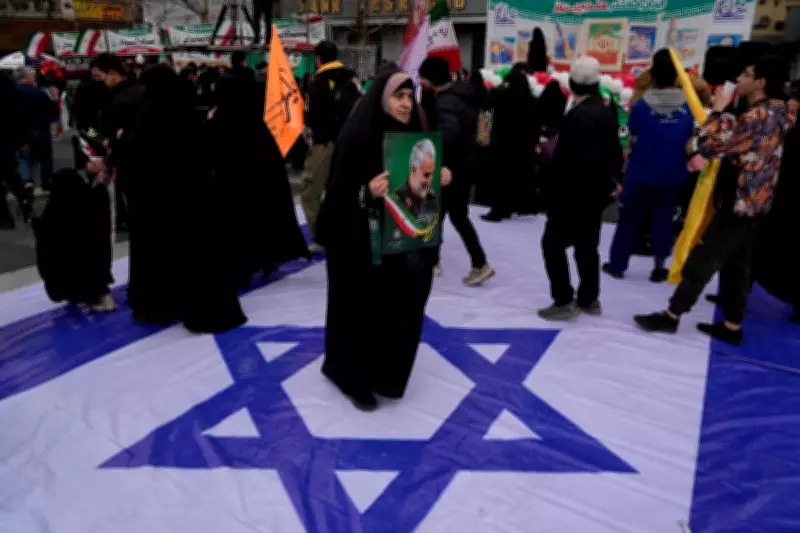
In Tehran, crowds gathered along Azadi Street, also known as Freedom Street, for the annual rally. Participants carried posters and banners featuring symbolic imagery. Notably, a woman was photographed holding a poster of the late General Qassem Soleimani, the commander of Iran's Revolutionary Guard Quds Force who was killed in a U.S. drone strike in Iraq in 2020. She stood on a banner displaying an image of the Israeli flag, a gesture reflecting ongoing regional hostilities.
Domestic Context: A Nation Under Pressure
The anniversary arrives at a time when the Iranian populace is grappling with the effects of a severe government crackdown on dissent. Reports indicate widespread public anger over economic hardships, political repression, and social restrictions. This internal pressure has created a tense atmosphere, contrasting sharply with the official narrative of unity and revolutionary spirit promoted during the celebrations.

International Dimension: Strained Relations with the U.S.
Simultaneously, Iran's relationship with the United States remains fraught with tension. The legacy of Soleimani's assassination continues to fuel animosity, and ongoing diplomatic disputes over Iran's nuclear program and regional activities contribute to a volatile international standoff. These external pressures compound the domestic challenges facing the nation.
The Dual Reality of the Commemoration
While state media portrayed the rallies as massive displays of popular support for the Islamic Republic, analysts suggest the events also served as a platform for the government to project strength and resilience in the face of both internal and external adversaries. The juxtaposition of revolutionary fervor with contemporary grievances highlights the complex and contested nature of Iran's political landscape in 2026.
The 1979 revolution fundamentally transformed Iran, establishing the current theocratic system. Its anniversary remains a cornerstone of state ideology, but this year's observance underscores how historical legacy is increasingly interwoven with present-day struggles for power, legitimacy, and stability.