Iran-US Impasse Deepens as Hormuz Toll Booth Emerges Amid Regional Escalation
DUBAI, United Arab Emirates — The diplomatic standoff between Iran and the United States hardened significantly on Thursday, with both nations adopting increasingly rigid positions that threaten to escalate the ongoing Middle East conflict to dangerous new levels. As thousands of additional U.S. troops moved toward the region, Tehran strengthened its control over the strategically vital Strait of Hormuz, creating what analysts describe as a "de facto toll booth" for international shipping.
Military Escalations and Economic Stranglehold
Sirens echoed across Israel warning of incoming Iranian missile barrages while Gulf nations worked frantically to intercept hostile fire. Heavy strikes were reported in Tehran and other Iranian cities as the conflict entered its most volatile phase yet. The United States has pursued shifting but ambitious objectives throughout the confrontation, including neutralizing Iran's missile and nuclear programs and ending Tehran's support for regional armed groups. At one point, Washington even advocated for the overthrow of Iran's theocratic government.
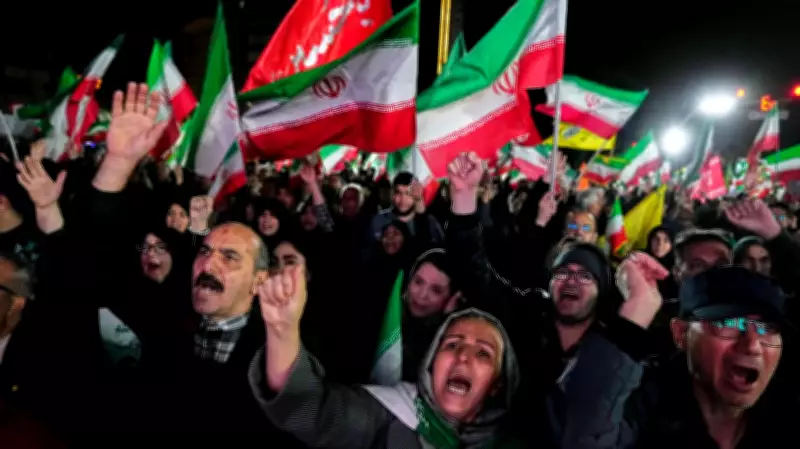
Despite significant losses from U.S.-Israeli campaigns that have killed top Iranian leaders and struck numerous targets, Iran continues its missile launches with no visible signs of internal uprising against the government. For Iranian leadership, merely surviving the sustained onslaught represents a form of victory, particularly as their control over the Strait of Hormuz wreaks havoc on global economies.

The Hormuz Toll Booth Phenomenon
Iran's tightening grip on the crucial waterway connecting the Persian Gulf to open ocean has transformed the strait into what industry analysts call a "de facto toll booth regime." While blocking ships perceived as linked to U.S. and Israeli war efforts, Tehran allows limited passage to other vessels, with at least two ships confirmed to have paid tolls settled in Chinese yuan.
Jasem Mohamed al-Budaiwi of the Gulf Cooperation Council confirmed Thursday that Iran is charging fees for safe passage through the strait. Iranian lawmaker Mohammadreza Rezaei Kouchi, quoted by Fars and Tasnim news agencies, stated that parliament is working to formalize this process, arguing that "we provide its security, and it is natural that ships and oil tankers should pay such fees."
The economic consequences have been severe, with Brent crude oil prices reaching $104 on Thursday—a staggering increase of more than 40% since the conflict began. German Defense Minister Boris Pistorius emphasized the global impact, stating plainly that "this war is a catastrophe for world's economies."
Diplomatic Deadlock and Conflicting Claims
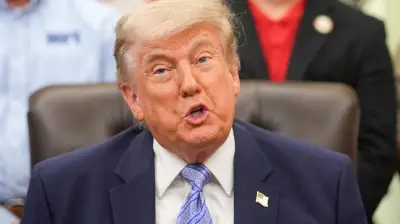
The diplomatic impasse appears complete, with both sides presenting contradictory narratives about negotiation efforts. The United States, using Pakistan as an intermediary, delivered a 15-point ceasefire proposal that includes reopening the Strait of Hormuz. President Donald Trump warned Tehran via social media to "get serious soon" on negotiations "before it is too late," claiming Iran has been "militarily obliterated, with zero chance of a comeback."
Iranian Foreign Minister Abbas Araghchi offered a starkly different account, stating in a state television interview that his government has not engaged in talks to end the war "and we do not plan on any negotiations." He acknowledged receiving U.S. messages through third parties but dismissed these as neither conversation nor negotiation. Press TV reported that Iran has its own five-point proposal demanding "sovereignty over the Strait of Hormuz."
Regional Violence and Human Toll
Military actions intensified across the region, with Israel claiming responsibility for killing Commodore Alireza Tangsiri, head of the Iranian Revolutionary Guard's navy, whom they accused of orchestrating bombing operations blocking the strait. Iran has not acknowledged the killing.

A wave of Israeli airstrikes targeted Iranian infrastructure early Thursday, with air defense systems activated in Tehran and heavy strikes reported around Isfahan—home to major military sites and nuclear facilities previously bombed by the U.S. In the United Arab Emirates, two people died from falling shrapnel during missile interceptions over Abu Dhabi, while Saudi Arabia intercepted multiple drones over its oil-rich Eastern Province.
The human cost continues to mount, with Iranian health officials reporting over 1,500 fatalities in Iran since the conflict began. Israel has suffered 17 civilian deaths plus three soldier fatalities in Lebanon, while at least 13 American troops have been killed. The conflict has claimed approximately 1,100 lives in Lebanon, where Israel targets Hezbollah militants, and 80 security force members in Iraq where Iranian-backed groups have entered the fighting.
As the USS Tripoli and accompanying ships carrying approximately 2,500 Marines approach the region, joined by 1,000 paratroopers from the 82nd Airborne Division trained for hostile territory operations, the stage is set for either dramatic escalation or last-minute diplomatic breakthrough in a conflict that continues to reshape the Middle East and global economy.