U.S. Intelligence Chief Faces Intense Questioning Over Iran Conflict Intelligence
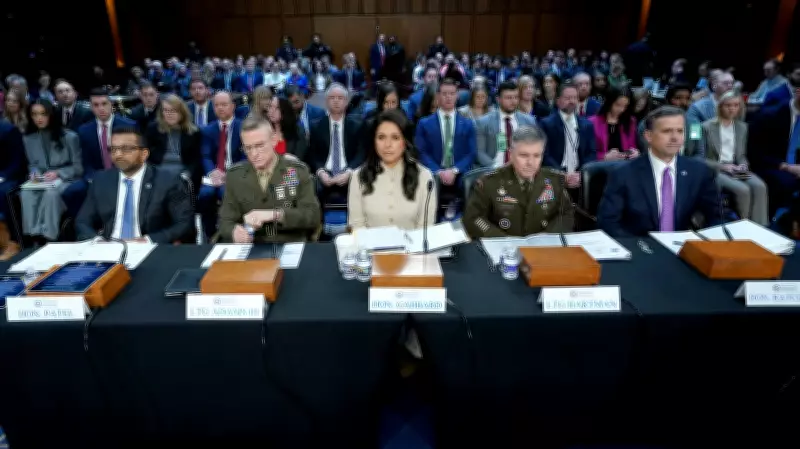
The nation's top intelligence official told lawmakers on Wednesday that Iran's regime remains functional but significantly weakened, while carefully avoiding questions about whether President Donald Trump received adequate warnings about the consequences of the ongoing military conflict. Director of National Intelligence Tulsi Gabbard's testimony before the Senate Intelligence Committee revealed tensions between intelligence assessments and presidential claims regarding the Iranian threat.
Iran's Nuclear Program Destroyed, Regime Persists
In her prepared remarks, Gabbard stated that U.S. military strikes against Iran last year had "obliterated" the country's nuclear program, with no evidence of reconstruction efforts since that time. She described the Iranian regime as "appears to be intact but largely degraded," suggesting continued governance capabilities despite significant damage to military and nuclear infrastructure.
The testimony proved particularly notable given President Trump's repeated assertions that military action against Iran was necessary to counter what he characterized as an imminent threat from the Islamic Republic. Gabbard carefully distanced the intelligence community from this assessment, stating at one point: "It is not the intelligence community's responsibility to determine what is and is not an imminent threat."

Democrats Press on Presidential Briefings
Democratic senators expressed frustration throughout the hearing as Gabbard repeatedly declined to discuss conversations with President Trump or reveal what intelligence briefings he received regarding potential consequences of military action. A persistent line of questioning focused on whether Trump understood that Iran might respond to U.S. strikes by attacking Gulf nations and effectively closing the vital Strait of Hormuz.
"We're trying to figure out if the president knew what the downside was of the Strait of Hormuz being closed," said Senator Mark Kelly, an Arizona Democrat. "Did he know this was going to happen or did he just disregard it?"
White House press secretary Karoline Leavitt asserted on social media that Trump had been "fully briefed" on the possibility of Iran closing the strategic waterway, noting that Pentagon planning for such a scenario had spanned decades. However, Trump's current strategy for securing the strait remains unclear after he acknowledged that NATO and most allies had rejected his calls for assistance.
Contradictions and Omissions in Testimony
Committee members noted discrepancies between Gabbard's written statement and her oral testimony. While her submitted materials stated that Iran's nuclear enrichment program had been "obliterated," this language was absent from her opening remarks. Senator Mark Warner, the committee's top Democrat, questioned whether this omission was intended to align with Trump's claims of an imminent Iranian threat.
Gabbard insisted she had simply shortened her remarks due to time constraints, but Warner expressed disappointment with the lack of transparency. "It's the only one time of year the public gets to hear from you guys in this kind of setting," he told intelligence officials.
Resignation and Domestic Concerns
The hearing occurred just one day after Joe Kent resigned as director of the National Counterterrorism Center, stating he could not "in good conscience" support the war and disagreed that Iran posed an imminent threat. CIA Director John Ratcliffe attempted to distance the administration from Kent's assessment, asserting that "the intelligence reflects the contrary."
Lawmakers also raised concerns about recent domestic terrorism incidents, including attacks at a Michigan synagogue and a Virginia university classroom. FBI Director Kash Patel fielded questions about these threats but provided few specifics about ongoing investigations.
Gabbard's Domestic Involvement Questioned
Beyond Iran-related matters, senators questioned Gabbard about her presence at an FBI search of Fulton County, Georgia's election hub in January, where agents seized voter data related to the 2020 presidential election. Warner characterized her involvement as part of an "organized effort to misuse her national security powers to interfere in domestic politics."

Gabbard responded that she attended at the president's request but did not participate in the operation, though she later acknowledged helping to oversee it. Her involvement raised concerns given that her office traditionally focuses on foreign rather than domestic threats.
The annual worldwide threats hearing, one of two such public sessions each year, typically offers rare insight into intelligence community operations. However, Wednesday's session yielded few revelations as officials carefully navigated questions about presidential briefings and the ongoing conflict with Iran. The House Intelligence Committee is scheduled to hold its own threats hearing on Thursday.