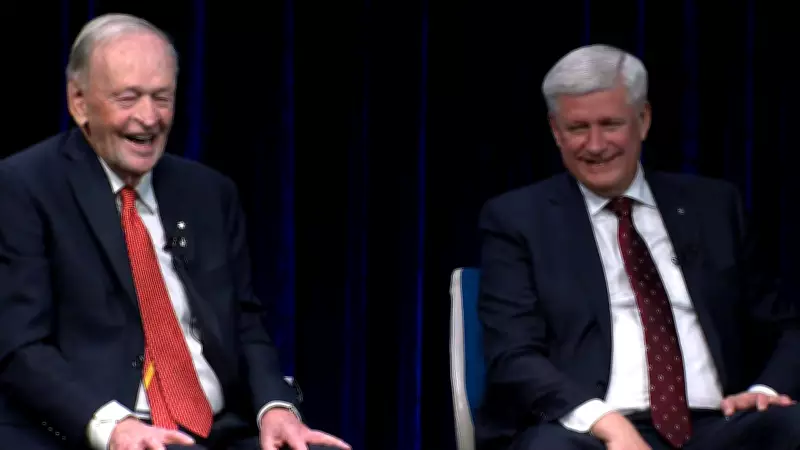
Former Leaders Harper and Chretien Address National Unity and Security in Candid Exchange
In a notable sit-down conversation, former Canadian Prime Ministers Stephen Harper and Jean Chretien delved into pressing political issues, with Harper explicitly stating he did not sign a petition supporting Alberta separation. The dialogue, which covered topics from domestic unity to international threats, highlighted the perspectives of two influential figures from different political eras.
Harper's Firm Rejection of Alberta Separatism
Stephen Harper, who served as prime minister from 2006 to 2015, clarified his position on Alberta's separatist movements, emphasizing his commitment to national cohesion. "I did not sign any petition advocating for Alberta's separation," Harper affirmed during the discussion. This statement comes amid ongoing debates about Western alienation and regional discontent within Canada's federal structure.
Chretien, a Liberal leader who was in office from 1993 to 2003, expressed bewilderment at the current separatist sentiments in Alberta, remarking, "I don't know what the hell is happening in Alberta with separatism." His comments reflect a broader concern about the stability of Confederation and the factors driving such movements.

Arctic Sovereignty and Unforeseen Threats
The conversation also turned to Canada's Arctic region, with Harper noting unexpected challenges to sovereignty. "I didn't anticipate them being our southern neighbour," he said, alluding to potential threats from nations like Russia or the United States. Chretien responded with reassurance, stating, "We stand on guard, don't worry," underscoring the importance of vigilance in protecting Canada's northern territories.
Combating Misinformation in the Digital Age
Both former prime ministers addressed the pervasive issue of misinformation on social media, acknowledging its impact on public discourse and democratic processes. They discussed the need for robust strategies to counter false narratives and promote factual information, a challenge that has grown since their tenures in office.
Broader Context and Implications
This exchange occurs against a backdrop of global shifts, with Chretien previously commenting on "the beginning of the end of the American empire," suggesting a changing international order that affects Canada's position. The dialogue serves as a reminder of the enduring relevance of experienced leaders in navigating complex national and global issues.
Harper's recent recognition, including receiving a gold medal from the Royal Canadian Geographical Society, adds weight to his insights on geographic and political matters. The discussion between these two political heavyweights offers valuable perspectives on:
- National Unity: The importance of addressing regional grievances to maintain Canada's integrity.
- Security Priorities: Emerging threats to Arctic sovereignty and the need for proactive defense measures.
- Digital Governance: The role of leadership in combating misinformation and fostering informed public debate.
As Canada faces evolving political landscapes, such conversations between former leaders provide insight into historical contexts and future challenges, emphasizing the need for dialogue and unity in addressing divisive issues.