GST Credit Expansion Faces Criticism as Political Maneuver
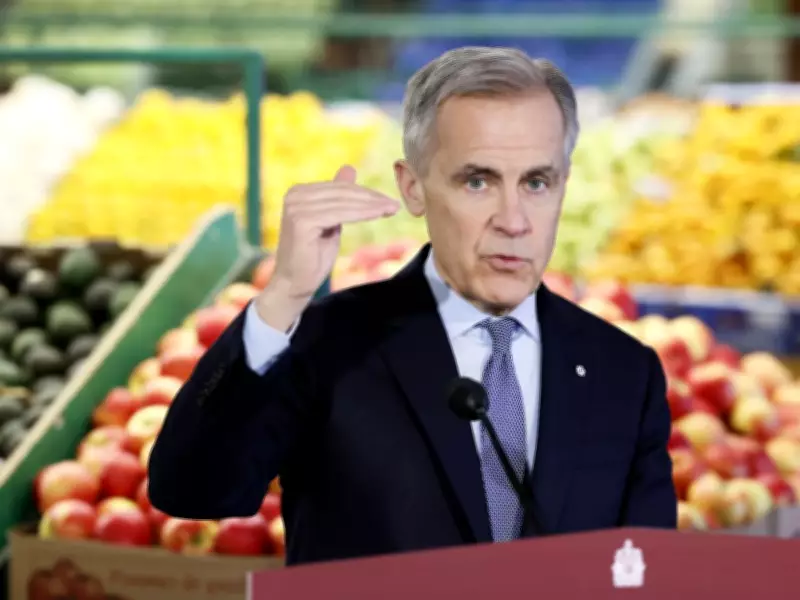
Prime Minister Mark Carney's recent announcement of a significant expansion to the GST credit program has sparked intense debate across Canada's political landscape. The new "Canada Groceries and Essentials Benefit" represents what critics describe as a transparent attempt to distract from what they view as the government's fundamental economic policy failures.
The Affordability Crisis Context
Canada continues to grapple with a severe affordability crisis that has persisted for multiple years. Essential costs including food, housing, electricity, heating, and gasoline have escalated dramatically, placing unprecedented strain on household budgets. Millions of Canadians now struggle to purchase basic necessities, with many families forced to live paycheck to paycheck as their disposable income evaporates.
The Liberal government, first under Justin Trudeau and now under Mark Carney, has presided over this entire period of economic hardship. Critics argue that the government's fiscal management and economic strategies have proven inadequate to address the root causes of the affordability crisis.

Details of the New Benefit Program
Carney's announcement includes several key components:
- A 25 percent top-up to the existing GST credit
- A one-time payment equivalent to 50 percent of this year's GST credit
- Additional funding of $20 million for food banks across the country
- A proposed "National Food Security Strategy" to strengthen domestic food production
The prime minister provided specific examples of how this would affect Canadian families. According to Carney, a family of four that currently receives approximately $1,100 annually through the GST credit would see their benefit increase to up to $1,890 this year, followed by about $1,400 annually for the subsequent four years.
Political Timing and Election Speculation
The timing of this announcement has raised questions about potential political motivations. Traditional political wisdom suggests that governments contemplating early elections often introduce popular policies and programs to attract voter support. When questioned directly about whether he was considering a "snap election," Carney offered no specific response, instead stating that reporters should not "draw that conclusion at all."
Political observers note that this non-denial denial leaves room for interpretation. Some analysts suggest the government may be floating a trial balloon to gauge public reaction to both the policy itself and potential election timing.
Criticism of the Policy Approach
Opponents of the GST credit expansion argue that it represents poor economic policy on multiple levels. Beyond the obvious fact that these benefits will be funded by taxpayers' own money, critics contend that the approach fails to address systemic issues driving the affordability crisis.
The policy has been characterized as a band-aid solution that distracts from what critics describe as Carney's "dismal failures" in fiscal management. Rather than implementing structural reforms to reduce costs and improve economic conditions, the government appears to be opting for temporary financial relief that does little to solve underlying problems.
Broader Implications for Economic Policy
This development raises important questions about the direction of Canada's economic policy under the current government. The affordability crisis has exposed fundamental weaknesses in the country's economic framework, yet the proposed solution focuses on redistribution rather than addressing production, supply chain, or regulatory issues that contribute to high costs.
As Canadians continue to struggle with daily financial pressures, the debate over appropriate policy responses will likely intensify. The GST credit expansion represents just one approach to addressing these challenges, but whether it constitutes genuine economic leadership or political posturing remains a subject of heated discussion among policymakers, economists, and ordinary citizens alike.