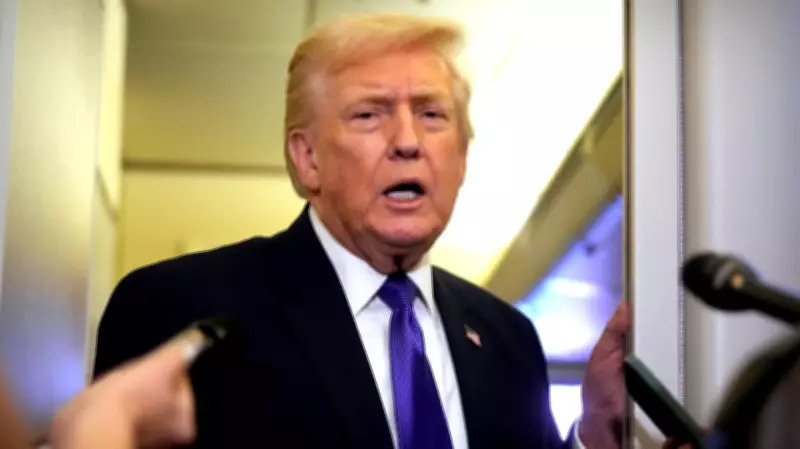
Bipartisan Tradition Shattered as White House Limits Governors' Invitations
WASHINGTON — A longstanding tradition of bipartisan cooperation among the nation's governors is facing a significant rupture this year. The annual gathering, which typically serves as a rare forum for political leaders from both major parties to collaborate, has been thrown into disarray following actions by the White House.
Exclusion Sparks Boycott and Cancellation
The National Governors Association announced it will no longer facilitate a formal meeting with President Donald Trump during the governors' scheduled Washington convening later this month. This decision came after the White House indicated plans to extend invitations exclusively to Republican governors for the association's annual business meeting on February 20.
In a coordinated response, eighteen Democratic governors declared they would boycott the traditional White House dinner that has been part of the gathering for years. "If the reports are true that not all governors are invited to these events, which have historically been productive and bipartisan opportunities for collaboration, we will not be attending the White House dinner this year," the Democratic governors stated collectively.

They emphasized their unity and commitment to their constituents, adding, "Democratic governors remain united and will never stop fighting to protect and make life better for people in our states."
NGA Leadership Responds to Partisan Divide
Oklahoma Governor Kevin Stitt, a Republican who chairs the National Governors Association, informed fellow governors in a letter obtained by The Associated Press about the White House's intention to restrict invitations. "Because NGA's mission is to represent all 55 governors, the Association is no longer serving as the facilitator for that event, and it is no longer included in our official program," Stitt wrote.
The governors' group, scheduled to meet from February 19-21, represents one of the few remaining venues where political leaders from both parties gather to discuss pressing community issues. White House press secretary Karoline Leavitt defended the administration's position, stating that President Trump has "discretion to invite anyone he wants to the White House."
"It's the people's house," Leavitt explained. "It's also the president's home, so he can invite whomever he wants to dinners and events here at the White House."
Historical Context and Organizational Disappointment
Brandon Tatum, the CEO of the National Governors Association, expressed disappointment in a statement last week, calling the White House meeting an "important tradition" and lamenting the administration's decision to "make it a partisan occasion this year." Representatives for Governor Stitt and the NGA declined to comment further on the letter.
In his communication to other governors, Stitt urged unity despite the divisive circumstances. "We cannot allow one divisive action to achieve its goal of dividing us," he wrote. "The solution is not to respond in kind, but to rise above and to remain focused on our shared duty to the people we serve. America's governors have always been models of pragmatic leadership, and that example is most important when Washington grows distracted by politics."
Growing Partisan Tensions and Lasting Impacts
Signs of partisan friction had already surfaced during last year's White House meeting, when President Trump and Maine Governor Janet Mills engaged in a heated exchange. Trump criticized the Democratic governor over her stance on transgender athletes in girls' and women's sports, threatening to withhold federal funding if she did not comply with his policies.
Mills responded defiantly, "We'll see you in court," while Trump predicted her political career would end for opposing his order. Governor Mills is currently running for the U.S. Senate, indicating the lasting impact of such confrontations.

The contentious atmosphere from last year's conference had lingering effects, with some Democratic governors choosing not to renew their dues to the bipartisan organization. This year's developments suggest a further erosion of the cooperative spirit that has long characterized the National Governors Association's gatherings.