Conservative Republicans Rebel Against DHS Funding Deal That Excludes Voter ID Demands
WASHINGTON – A brewing political storm is threatening to derail efforts to reopen the Department of Homeland Security and alleviate the severe security lines plaguing airports across the nation. Conservative Republicans are mounting a fierce rebellion against a possible deal that would fund DHS without including the sweeping voter identification proposal that President Donald Trump has insisted Congress must pass before the crucial November midterm elections.
White House Backing Meets Conservative Resistance
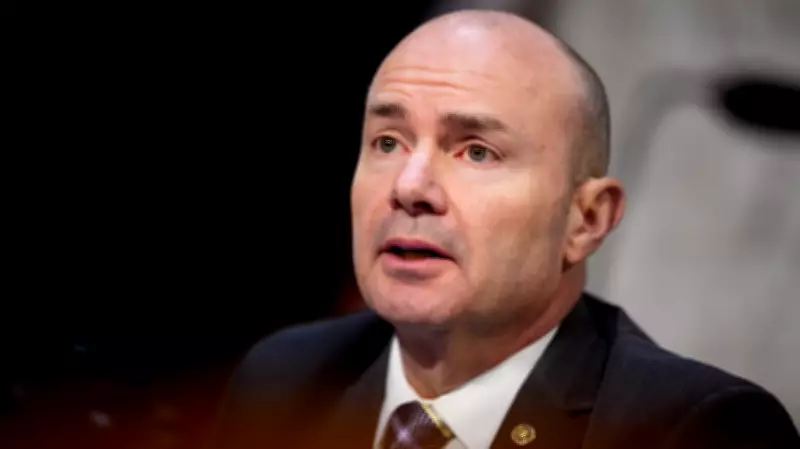
While the tentative agreement has received preliminary backing from the White House, key conservative figures are refusing to back down. The core of their opposition centers on a procedural maneuver that would separate DHS funding from the contentious election law changes. Senator Mike Lee (R-Utah), the leading advocate for the so-called SAVE America Act on Capitol Hill, has pointed out a critical flaw. He argues that the proposed scheme—to fund DHS immediately and then attempt to approve election changes through a later budgetary resolution—is fundamentally prohibited under established Senate rules.
The special "budget reconciliation" process, which allows the Senate to bypass the filibuster and pass legislation with a simple majority vote, explicitly prohibits provisions that are purely policy-oriented and do not have a direct, substantial impact on the federal budget. This includes measures like requiring voter ID or restricting mail-in voting, which are deemed to have only incidental budgetary effects.

"The core provisions about voter ID and about citizenship verification, those are pretty core policy issues, and neither I nor any of the experts I’ve consulted can see a clear path for any of those," Senator Lee stated unequivocally in an interview. His skepticism is echoed by colleagues like Senator Ron Johnson (R-Wis.), who flatly said "no" when asked if the plan being discussed by Senate GOP leadership is even feasible. "I’m trying to be realistic in terms of what you can do and what you can’t. I don’t see how that works," Johnson added.
A Risky Two-Step Legislative Gambit
Republican leaders are pursuing a high-risk strategy. They hope to immediately fund the majority of DHS, which has been partially shuttered since last month, leading to operational chaos at airports and widespread traveler frustration. Subsequently, they would attempt to pass the SAVE Act alongside funding for Immigration and Customs Enforcement (ICE) and its enforcement operations at a later date using the reconciliation process. This two-step approach is fraught with potential procedural challenges and political pitfalls.
President Donald Trump had initially rejected this bifurcated process over the weekend but has since reportedly changed his mind, according to Senator John Kennedy (R-La.). "I think we could save a lot of time if we knew specifically what the president has in mind," Kennedy remarked, highlighting the ongoing uncertainty. A White House official, speaking on condition of anonymity, indicated that conversations are ongoing but suggested "this deal seems to be acceptable."
Furious Backlash from the Right Wing
The right-wing House Freedom Caucus has issued a furious statement, accusing Republican senators of "gaslighting" the American public with the two-step plan. They argue that the voter registration and photo ID rules would inevitably be stripped from any reconciliation bill by the non-partisan Senate parliamentarian. "The American people are not stupid and will not accept more failure theater from Republicans in Congress," the caucus declared.
Senator Lee and the Freedom Caucus have insisted that the Senate could alternatively pass the SAVE America Act through a "talking filibuster" tactic designed to skirt the chamber's standard filibuster rules. However, Senate Majority Leader John Thune (R-S.D.) and numerous Senate procedure experts have been adamant that such a scheme would not succeed.

Senator Kennedy, who noted he initially proposed the reconciliation approach alongside Senator Ted Cruz (R-Texas), expressed a more nuanced view. "I’ve seen things that I didn’t think had a hope in hell, but the parliamentarian approved them, and vice-versa," he told reporters. Despite this, far more Republicans remain deeply skeptical. Senator Josh Hawley (R-Mo.) summarized the prevailing sentiment, stating plainly, "I think it would be pretty tough."
Democratic Demands Add Another Layer of Complexity
Complicating the legislative landscape further, the DHS funding deal would require 60 votes in the Senate to overcome a filibuster, meaning it needs support from Democrats as well—a prospect that is far from guaranteed. Democratic senators are insisting on codifying specific reforms to ICE as part of any funding package. These reforms include requirements such as mandating that federal immigration officials wear masks and proper identification badges.
While the White House has already expressed support for these measures in principle, some Democrats are pushing to have them enshrined in law. Senator Patty Murray (D-Wash.) argued, "The White House has already agreed with us on some of them. There’s no reason they can’t be in it." Her colleague, Senator Chris Coons (D-Del.), was even more direct, warning, "I’m not going to fund ICE if there aren’t really significant reforms."
This confluence of conservative rebellion, procedural hurdles, and Democratic demands creates a perfect storm, threatening to prolong the DHS funding impasse and the associated airport security disruptions as the midterm election season intensifies.