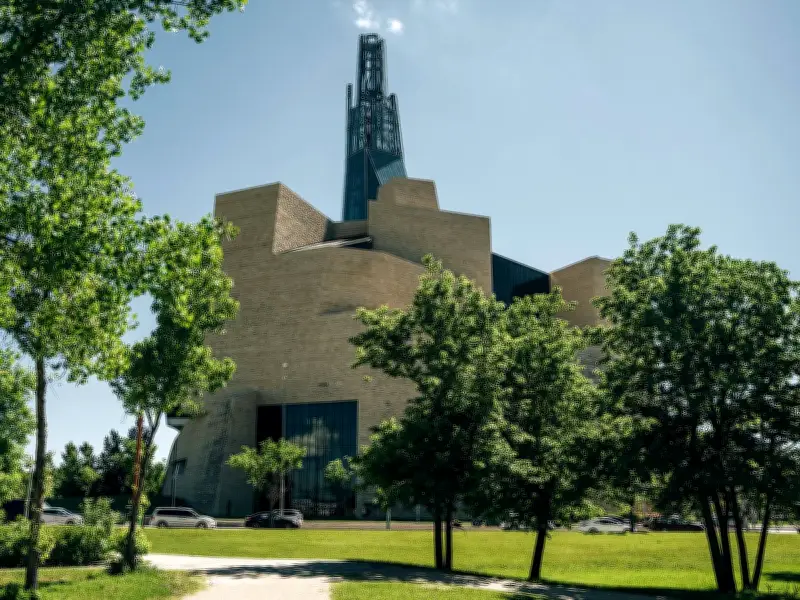
Gail Asper, the 66-year-old daughter of late media titan Izzy Asper, says her trust in the Canadian Museum for Human Rights has been absolutely broken, but she is not angry. Instead, she is energized and resolute, blaming the museum's Nakba exhibit debacle on bad leadership and calling for a leadership change to fix wayward institutions.
Background on the Nakba Exhibit
One week ago, “Palestine Uprooted: Nakba Past and Present” opened at the national, federally funded human rights museum in Winnipeg. The exhibit shares personal stories from Palestinian Canadians about displacement and dispossession, framed as human rights violations. The concept was first presented to the museum board several years earlier, when Gail raised concerns and urged inclusion of full historical context and the parallel story of the roughly 850,000 Jews expelled or forced to flee Arab and Muslim countries in the same 1947–49 period. The idea was mentioned occasionally afterward, but little more was said.
The real surprise came at the museum’s November annual meeting last year, when the exhibit was formally announced with no prior heads-up or meaningful consultation with the mainstream Jewish community. Nakba — “catastrophe” in Arabic — is the term Palestinians use to describe events around Israel’s 1948 war of independence, during which roughly 700,000 Arabs fled or were displaced from what became Israel. The exhibit offers limited historical context, with zero coverage of the Jewish refugee parallel, the Arab rejection of the UN partition plan, or the subsequent war.

Asper's Reaction and Concerns
While she hasn’t visited the physical exhibit, Gail has reviewed all the panels and videos. “Even before the exhibit opened, alarm bells were ringing,” she told Donna Kennedy-Glans. The exhibit’s website was “so clearly interested in one narrative at the expense of the other,” and the final version has done nothing to change her mind. “Our foundation, our family’s trust has been broken,” she said. “And it doesn’t mean it can’t be restored with different leadership and different board members, but right now, that’s why I was able to go out and protest this very museum.”
When Izzy Asper died suddenly of a heart attack in 2003 — just months after publicly announcing the museum vision — it was Gail who stepped up. The museum opened in 2014 after years of her leadership on fundraising and development. “As a national federal museum,” she said, “there’s a very high standard here. This isn’t a community-centred exhibit. I fought for the designation, for this to be a federal institution with all the imprimatur and gravitas that title entails, because I wanted to show Canadians that this isn’t just the opinion of Izzy Asper or, you know, me or anybody else. This is something that matters to Canadians, that human rights are so important to Canadians, and Stephen Harper was the prime minister that finally delivered this as the national federal museum.”
Impact and Calls for Accountability
Jewish groups have called on the rights museum board to rectify the Nakba exhibit failures and hold the CEO accountable. A Jewish board member resigned over the exhibit. Gail Asper's stance highlights the deep divide and the need for leadership change to restore trust. The exhibit remains open, but the controversy continues to fuel debates about historical context and representation in human rights institutions.