House Approves Funding Legislation, Temporarily Ends Government Shutdown
The United States House of Representatives successfully passed a critical government funding bill on Tuesday, effectively concluding a brief and partial government shutdown. However, this legislative action has simultaneously established the groundwork for a significant political confrontation concerning the Donald Trump administration's controversial immigration enforcement strategies.
Narrow Vote Highlights Partisan Divide
The final vote tally was remarkably close, with the bill passing by a margin of 217 to 214. This outcome revealed notable cross-party dynamics, as 21 Democrats broke ranks to support the measure, while an equal number of 21 Republicans voted in opposition. The legislation secures funding for several key federal agencies, including the Department of Defense, through the end of September. In a strategic move designed to pressure policy changes, the bill provides the Department of Homeland Security with only a 10-day funding extension.
Short-Term DHS Funding Aims to Force Enforcement Reforms
This abbreviated funding period for DHS is intended to compel legislative reforms targeting the operational tactics of Border Patrol and Immigration and Customs Enforcement. The bill emerged from intensive negotiations between Senate Democrats and the Trump administration, reflecting heightened tensions following recent events. The fatal shootings of two American citizens by immigration agents in Minneapolis last month have intensified scrutiny, prompting even some Republican lawmakers to acknowledge that the administration's enforcement efforts have exceeded acceptable boundaries.

In response to mounting criticism, the Department of Homeland Security announced this week that it will begin distributing body cameras to agents operating specifically in Minneapolis. Despite this concession, achieving consensus on comprehensive immigration enforcement reforms remains an formidable challenge. Lawmakers now face the very real possibility of a funding lapse for DHS next week, which would not affect the financial resources of ICE and other immigration agencies but would force the shutdown of other, more publicly popular departmental functions.
Critical Agencies Face Potential Shutdown
A funding interruption would specifically impact agencies such as the Federal Emergency Management Agency and the Transportation Security Administration, creating significant operational disruptions and public inconvenience. Republican leadership has expressed firm opposition to several Democratic reform proposals, including requirements for immigration agents to obtain judicial warrants before entering private residences and prohibitions against agents wearing masks during operations.
Sanctuary Cities Become Central to Debate
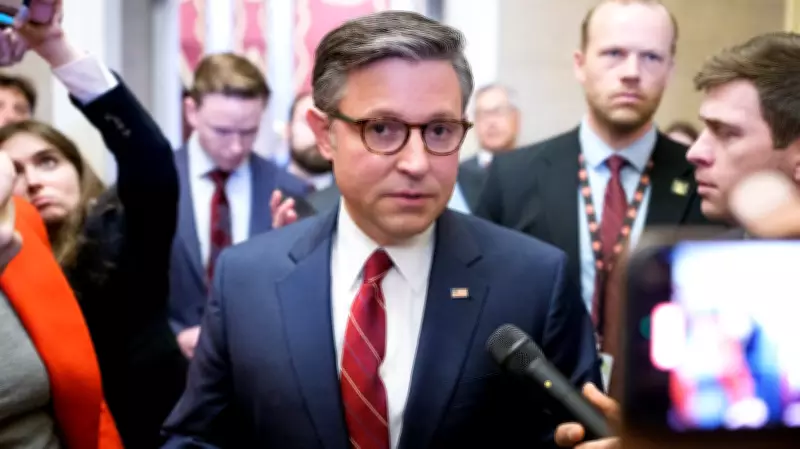
House Speaker Mike Johnson, a Republican from Louisiana, emphasized that Republicans would insist on requiring Democratic jurisdictions commonly referred to as "sanctuary cities" to cooperate with federal immigration enforcement efforts. "What must be a part of that discussion is the participation of blue cities in federal immigration enforcement. You can't go to a sanctuary city and pretend like the law doesn't apply there," Johnson stated on Tuesday. Numerous states and localities have implemented measures that prevent local police from inquiring about individuals' immigration status during routine encounters, based on the rationale that immigrants will be less likely to cooperate with law enforcement if they fear potential deportation.
Moderate Republicans Advocate for Judicial Oversight
Representative Brian Fitzpatrick, a moderate Republican from Pennsylvania, argued that reforming ICE tactics represents an essential legislative priority. He expressed conditional support for prohibiting masks and implementing certain restrictions on administrative warrants, particularly concerning house raids, provided that the judicial system receives adequate resources to manage the increased workload. "We just need to have the judicial resources to accommodate," Fitzpatrick explained. "So that's got to be part of this, is adding a number of judges that can review this stuff."

Democratic Leadership Divided on Funding Approach
Top Democrats demonstrated significant internal division regarding the funding bill. Representative Rosa DeLauro, a Democrat from Connecticut, contended that the short-term DHS extension provided Democrats with crucial leverage to demand substantive changes to ICE operations. Conversely, Representative Jim McGovern, a Democrat from Massachusetts, argued vehemently against providing any additional funding to DHS. "I talk to Republican colleagues all the time who privately confess to me that this is a disaster," McGovern declared before the vote. "This president and this administration is taking this country in the wrong direction. We have people that are being murdered in our streets by U.S. federal agents. When is enough going to be enough?"
Criticism Extends to Disaster Response Management
Further criticism emerged from Representative Jared Moskowitz, a Democrat from Florida, who opposed additional DHS funding partly due to the agency's perceived failure to expedite disaster aid requests nationwide. Moskowitz called for the dismissal of DHS Secretary Kristi Noem, invoking President Trump's television persona from "The Apprentice." "Where's the president from 'The Apprentice'? Where's that guy who America tuned in night after night to watch him fire people," Moskowitz remarked. "All of a sudden, now he thinks firing is a weakness."
The passage of this funding legislation has temporarily stabilized government operations but has undoubtedly set the stage for a contentious and complex debate over immigration policy and enforcement practices in the coming days.