Israel Recovers Final Hostage Remains, Paving Way for Ceasefire's Next Phase
The Israeli military announced on Monday that it has recovered and identified the remains of police officer Ran Gvili, the final hostage in Gaza. This development clears a significant hurdle, allowing the Israel-Hamas ceasefire to advance into its second phase, which will focus on the complex tasks of rebuilding the devastated territory and disarming the militant group that has ruled it for nearly two decades.
An Incredible Achievement and a Solemn Promise Fulfilled
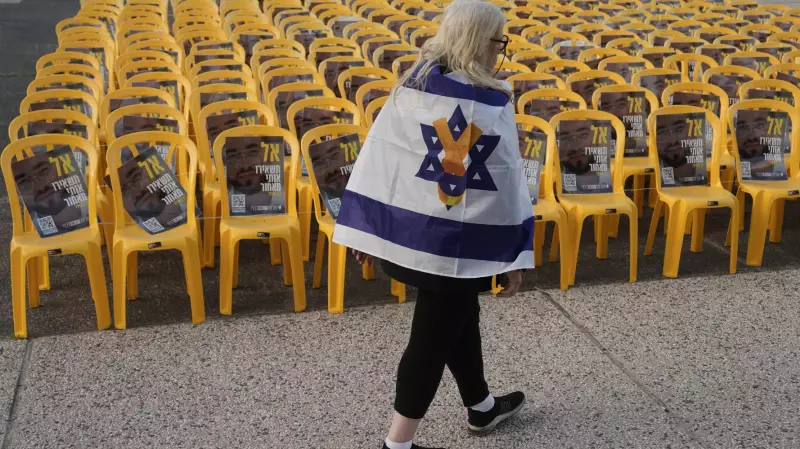
Prime Minister Benjamin Netanyahu hailed the recovery as "an incredible achievement" for Israel and its soldiers. In statements to Israeli media, he affirmed, "I promised we would bring everyone home and we have brought everyone home." Gvili, a 24-year-old officer affectionately known as "Rani," was killed during the Hamas-led attack on October 7, 2023, which sparked the war. He was among the first individuals taken into Gaza during that assault, which resulted in approximately 1,200 deaths and 251 hostages taken.
The announcement followed a "large-scale operation" conducted by the Israeli military in a cemetery in northern Gaza over the preceding day. Gvili's family had previously urged the government not to proceed to the ceasefire's second phase until his remains were recovered and returned. With this condition now met, Hamas has stated it is committed to all terms of the first phase of the U.S.-brokered truce, which took effect on October 10, 2025.

The Path Forward: Governance, Disarmament, and Humanitarian Access
The second phase of the ceasefire is expected to confront far thornier issues. These include transitioning to a new governance structure in Gaza and the critical process of disarming Hamas. Netanyahu's office indicated that with the search concluded, Israel would move to open the Rafah crossing between Gaza and Egypt. This crossing, seen by Palestinians as a vital lifeline to the outside world, has been largely shut since May 2024, except for a brief period in early 2025.
Palestinians in Gaza expressed hope that this development would lead to tangible improvements. Abdel-Rahman Radwan, a Gaza City resident, stated, "We hope this will close off Israel’s pretexts and open the crossing," noting his mother, a cancer patient, requires treatment outside Gaza. Ahmed Ruqab, a father of six living in a tent in the Nuseirat refugee camp, called on mediators and the United States to pressure Israel to allow more aid and caravans into the territory, saying, "We need to turn this page and restart."
Ongoing Tensions and a Plea for Press Freedom
Despite the ceasefire, violence has persisted. On Monday, Israeli forces fatally shot a man in Gaza City's Tuffah neighborhood, near the area of the military's search operation for Gvili, according to Shifa Hospital. Another man was killed in the Bureij refugee camp, though the circumstances remain unclear. The Gaza Health Ministry, part of the Hamas-led government, reports that more than 71,400 Palestinians have been killed since 2023, with over 480 killed since the latest ceasefire began. These records are generally viewed as reliable by U.N. agencies and independent experts.
Separately, the Foreign Press Association petitioned Israel's Supreme Court on Monday, demanding that journalists be allowed to enter Gaza freely and independently. The FPA, representing dozens of global news organizations, argued that the current restrictions—which limit reporters to brief, military-supervised visits—are unjustified, especially as aid workers move in and out. The judges are expected to rule in the coming days on this critical press freedom issue.
A Complex Exchange and Lingering Questions
Prior to Gvili's recovery, the ceasefire had already facilitated the return of 20 living hostages and the remains of 27 others to Israel, most recently in early December. In exchange, Israel has released the bodies of hundreds of Palestinians to Gaza. However, many Palestinians question whether moving into the second phase will genuinely improve conditions, pointing to ongoing bloodshed and severe challenges in securing basic necessities.

The recovery of Ran Gvili's remains marks a somber but pivotal moment, closing one chapter of a devastating conflict and theoretically opening another focused on reconstruction and long-term stability. The world now watches to see if the promised next steps—opening borders, increasing aid, and beginning disarmament—will materialize amidst the profound human toll and political complexities that define the Gaza Strip.