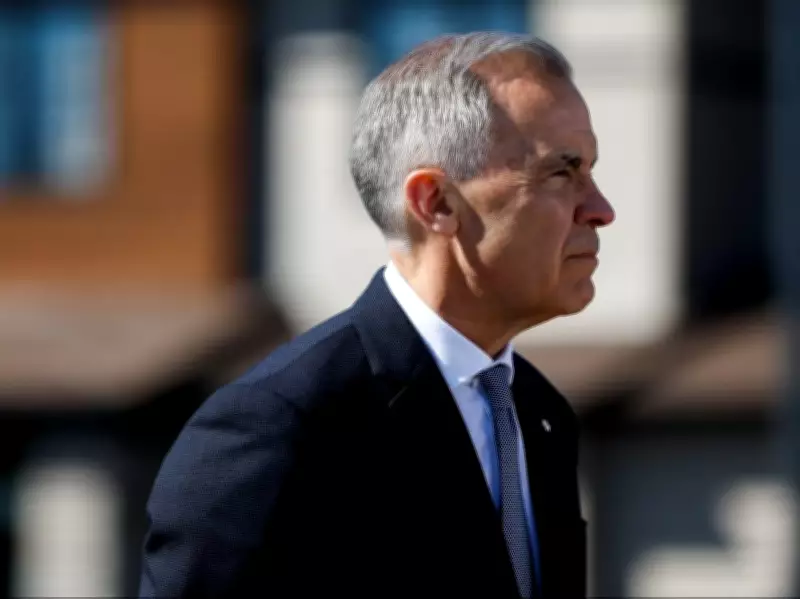
The chances Prime Minister Mark Carney will have to sell his assets to comply with the federal conflict of interest act, as recommended by the House of Commons ethics committee Thursday, are between slim and none, and slim just left town.
Committee Recommendation Not Binding
The committee's report, which is not binding on the government, was drafted when a majority of its members were opposition MPs, as opposed to Liberals. That will no longer be the case now that the Liberals have a majority government, one of many ways majorities are less transparent than minorities.
As proof, the Liberals on the ethics committee filed a dissenting report rejecting the recommendation requiring any PM, not just Carney, to sell off all their controlled assets within 60 days of taking office, in favour of the current practice of putting those assets into a blind trust, administered by a trustee.

The Problem with Blind Trusts
The problem with blind trusts is that they are not really blind because the individual knows what is in them and the idea a trustee is going to make dramatic changes to the portfolio is unrealistic. Carney has established an ethics screen, approved by the ethics commissioner, to avoid conflicts of interest administered by two people he appointed — privy council clerk Michael Sabia and chief of staff Marc-Andre Blanchard.
The screen requires him to recuse himself from government decision-making involving Brookfield Asset Management, Brookfield Corporation, Stripe Inc. and 100 other companies, unless it applies to a broad class of individuals or investors, as opposed to him personally. But in the real world Carney's cabinet, Liberal MPs and public servants are all aware of his assets and the idea that will never influence government decisions, even if Carney does not vote or participate in them, is unrealistic.
Weak Conflict of Interest Act
To be clear, Carney is complying with the conflict of interest act as it is written. The problem is the act itself is weak. Its maximum fine is $500 and for many violations there is no penalty, other than a public report by the ethics commissioner. It does not have any provisions for a politician who commits an apparent conflict of interest — almost as serious as an actual conflict.
The committee does recommend fixing that loophole, imposing stiffer financial penalties, and prohibiting public office holders from investing in companies using tax havens.