As tensions continue to escalate throughout the Gulf region, a striking divergence has emerged between the White House and Tehran regarding the status of diplomatic negotiations to end the ongoing conflict. President Donald Trump has publicly asserted that U.S. diplomats and Iranian government officials are engaged in what he describes as "productive" discussions aimed at de-escalating the situation. However, Iranian authorities have categorically denied these claims, stating there is "no dialogue" occurring between Washington, D.C., and Tehran, and alleging that Trump's narrative is a strategic maneuver designed to soothe a volatile stock market and suppress rapidly climbing oil prices.
Brennan's Blunt Assessment on Credibility
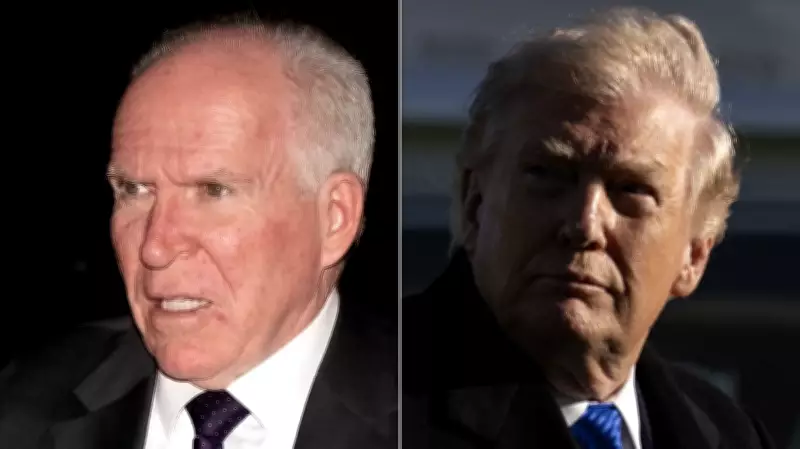
During a recent episode of the MSNBC program "The Weeknight," former CIA Director John Brennan, who served under President Barack Obama, delivered a candid and controversial analysis. When co-host Symone Sanders-Townsend expressed skepticism about accepting the word of Iran's "authoritarian regime" at face value, Brennan offered a contrasting perspective that captured significant attention.
"I would tend to believe Iran more than President Trump," Brennan declared, prompting Sanders-Townsend to respond with a stunned, "That's crazy."

Critique of Presidential Truthfulness
Brennan elaborated on his position by directly criticizing President Trump's well-documented propensity for exaggeration and misinformation. "He could not acknowledge the truth even when he is slapped in the face with it repeatedly," Brennan asserted, referencing the president's historical approach to factual accuracy. The former intelligence chief characterized Trump's current stance as one of desperation, suggesting the president is actively searching for an exit strategy from a crisis largely of his own making.
"It's clear that he is flailing right now," Brennan continued. "He's trying to figure out how he's going to get out of this debacle that he has created. And so he's going to make these claims about negotiations, suggesting that the Iranians are signaling a desire to make a deal on our terms. I don't think there is anything close to the truth in that statement."
Potential for Indirect Communications
While dismissing the existence of formal, authoritative negotiations between the two governments, Brennan did acknowledge the possibility of backchannel communications occurring through intermediaries. He indicated that third-party nations might be attempting to mediate the dispute.
"They may be talking to people indirectly, and we know that the Turks and the Egyptians are trying to find some way to mediate this problem," Brennan told Sanders-Townsend. "So there could be some distant members of Parliament out there speaking individually. But I don't believe there's anybody speaking authoritatively right now on behalf of the Iranian government with the Trump administration."
Timing of Announcements Fuels Suspicion
The scheduling of President Trump's diplomatic updates appears to lend credence to Iran's accusations regarding his motivations. Notably, the president announced an extension to his ultimatum for Iran to reach an agreement immediately before Wall Street opened for trading on Monday morning, a move that triggered a significant surge in the Dow Jones Industrial Average.
Furthermore, Trump established a new deadline for the following Friday, a time strategically chosen after the closure of most weekend trading activity. This pattern of aligning major foreign policy statements with market hours has intensified scrutiny and reinforced perceptions that economic considerations, rather than genuine diplomatic progress, may be influencing the administration's public communications on the Iran conflict.
The ongoing dispute over the very existence of negotiations highlights the profound lack of trust between the current U.S. administration and Iranian leadership, with a former top U.S. intelligence official now publicly questioning the veracity of the president's claims in favor of Tehran's account.