The European Union has officially launched membership talks with Ukraine and Moldova, following the new Hungarian government's decision to drop its opposition. This move initiates a lengthy process that could span several years.
A Historic Moment for Ukraine and Moldova
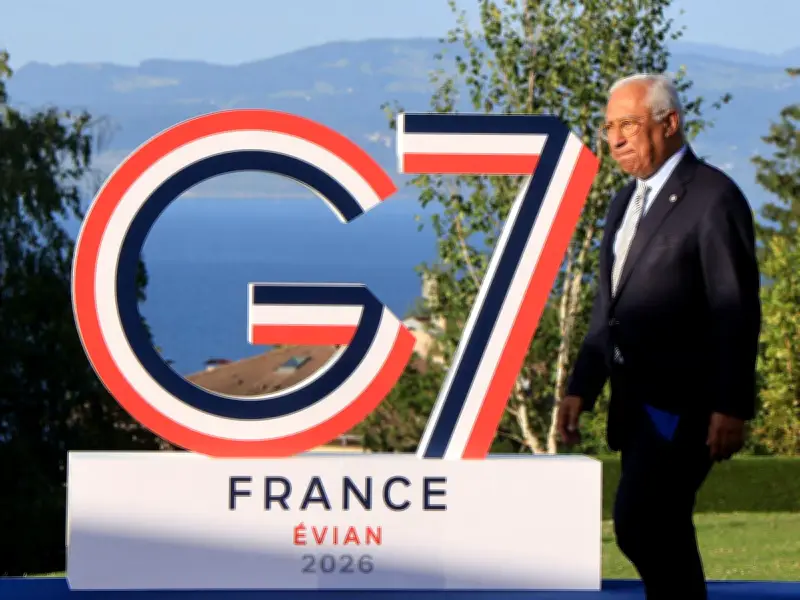
European Council President Antonio Costa described the development as a historic step. Speaking to reporters at the Group of Seven meeting in Evian, France, he said: “Today, we are taking a historic step toward Ukraine’s future within the EU.” He added that a unified and resolute G7 is crucial to ending the war and achieving a just and lasting peace.
The decision carries profound symbolic significance for both former Soviet states, especially as Russia intensifies its attacks on Kyiv more than four years into the full-scale invasion. Moldova has also faced persistent Russian efforts to undermine its pro-European ambitions.

Hungary’s Shift Paves the Way
The breakthrough came after Viktor Orban was ousted as Hungarian leader, allowing his more pro-EU successor, Peter Magyar, to quickly reach an agreement with Ukraine to lift Budapest’s veto. EU countries had already given their assent days earlier, and the move was formalized on Monday.
Hungary’s new foreign minister, Anita Orban, stated that the country is “returning with a new commitment to a European future.”
EU Expansion as a Strategic Priority
Advancing EU enlargement has become a key priority for the bloc, which is increasingly concerned about Russian and Chinese influence in neighboring countries. The EU has not expanded in 13 years, its longest period without growth, leaving aspiring members uncertain about the bloc’s ability to deliver on its promises.
For Ukraine, EU membership has emerged as a primary potential source of security guarantees, especially as U.S.-led peace talks have stalled and NATO membership remains off the table. Just hours after a phone call between Vladimir Putin and Donald Trump, a Russian drone and missile strike hit a historic UNESCO-protected Orthodox cathedral in Kyiv.
Long Road Ahead
Irish Foreign Minister Helen McEntee called it a “really momentous day.” Her country will assume the EU’s rotating presidency in July.
Ukraine and Moldova became official candidates in 2022, shortly after Russia’s full-scale invasion. In 2024, the EU symbolically opened membership talks, but Orban vetoed the start of actual dialogue. Since then, both countries have been gradually implementing regulatory and legislative reforms in anticipation of negotiations.
On Monday, the EU opened the first of six “clusters” that all candidates must complete before joining. EU Enlargement Commissioner Marta Kos said the goal is to open the remaining clusters in July.
Despite this progress, Ukraine and Moldova face uncertain paths to membership. Many EU members are cautious about admitting Ukraine quickly due to Russia’s war and the need for comprehensive reforms. Ukraine’s large agricultural sector could also claim billions in EU subsidies, a sensitive issue given the bloc’s strained budget.