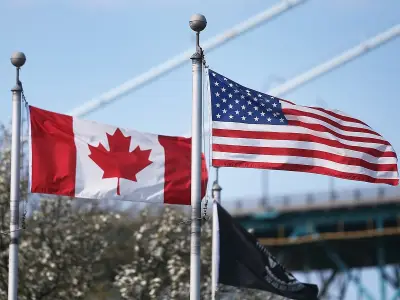
The federal ban on foreign ownership of Canadian housing is set to expire in six months, and the real estate industry is hopeful that Ottawa will let it lapse. However, experts caution that ending the prohibition may not rescue the struggling market.
Record Inventory and Slow Sales
Research firm Urbanation reports that standing inventory in the Greater Toronto-Hamilton Area hit a record high in the first quarter of this year, with just 246 newly built units sold in a metro area of about 7.1 million people. For the first time in three decades, no new condo projects were launched in a quarter.
Nationally, the Canadian Real Estate Association noted May sales were up 5.5% from April but still down 5.1% from a year ago. Activity in the resale market remains far below the peaks of 2022, which originally spurred calls for limits on foreign ownership.

Government Intervention and Criticism
Ottawa and British Columbia have teamed up on a $1.45 billion initiative to buy 2,200 condos on the market in the province as part of a subsidized rent-to-own program. Some critics call this a bailout for an overbuilt real estate industry.
The bigger question is whether such measures will truly help the housing industry or if the market should simply be allowed to correct itself. The risk of hitting rock bottom could mean years of halted construction, given the time lag between high-rise sales and occupancy.
Expert Analysis on Ban's Impact
Robert Kavcic, a senior economist with Bank of Montreal, said it's hard to discern the impact of the foreign-buyer ban because it is incremental relative to the entire housing market. "The biggest picture context is just the whole market correcting, and sales exceptionally weak, and prices falling," said Kavcic, adding that the ban is a "rounding error" next to other market conditions.
He suggests other measures, such as Ontario's 25% speculation tax on foreign nationals purchasing a home, have had a larger impact. Toronto also has its own 10% tax on foreign nationals, and British Columbia has a similar tax. "The market was so drum tight and even crowding out a few incremental buyers took some steam out," Kavcic said about the taxes imposed around 2017.
Kavcic does not believe bringing back foreign buyers will significantly close the gap between buyers and sellers, but his consensus is that it "doesn't hurt" sales, though the market will need much more help.
Real Estate Industry Hopes
Despite the limited expected impact, the real estate community is pressing for the ban to lapse. The Prohibition on the Purchase of Residential Property by Non-Canadians Act was passed in 2022, banning most foreign ownership with some exemptions. Initially set to expire on Jan. 1, 2025, it was extended for two years. Since then, housing market conditions have worsened.