Democrats' Minneapolis Immigration Strategy Risks Political Backlash
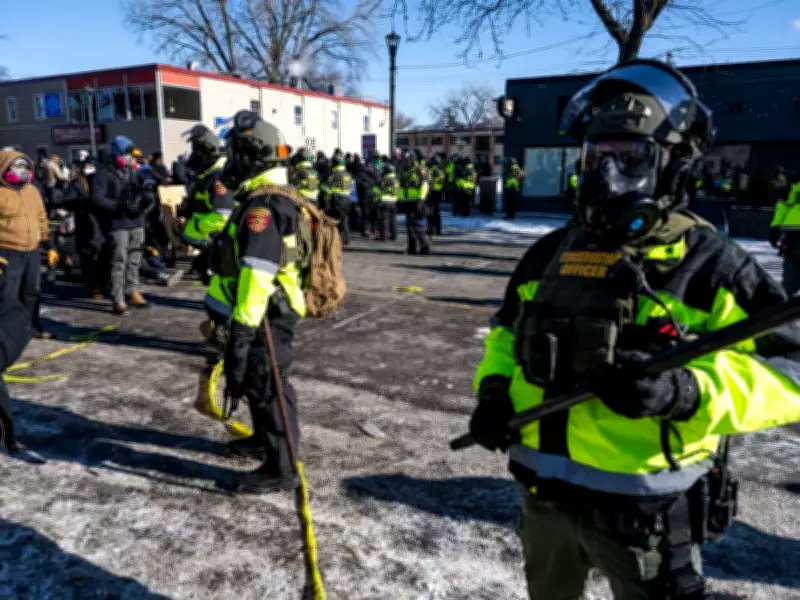
The volatile situation surrounding federal immigration enforcement in Minneapolis, Minnesota, represents more than just spontaneous unrest. It emerges from a deliberate convergence of political obstruction, media amplification, and administrative missteps that have created precisely the chaotic environment critics warned against.
A Perfect Storm of Political Obstruction
For months, Democratic officials in blue states and cities have systematically worked to block cooperation with Immigration and Customs Enforcement (ICE) while publicly pressuring the administration to scale back deportations entirely. This political stance has collided with the practical realities of immigration enforcement, creating dangerous operational conditions.
While "mass deportation" rhetoric has featured prominently in political discourse, public support for immigration enforcement has consistently been more nuanced. Americans overwhelmingly favor removing illegal immigrants who commit serious crimes—including rape, assault, arson, and murder—rather than supporting indiscriminate sweeps.

The Enforcement Paradox
Early in the administration, enforcement largely reflected this public sentiment, with criminal offenders as the priority. However, as blue jurisdictions increasingly refused to cooperate with ICE, this targeted strategy became increasingly difficult to sustain.
In jurisdictions that work with federal authorities, local police can flag immigration status after arrests and transfer dangerous offenders to ICE custody safely within jail facilities. In sanctuary cities, this option disappears entirely, forcing ICE agents to pursue targets in public spaces through:
- Knocking on doors in residential areas
- Making street arrests in visible locations
- Triggering public confrontations that often escalate
These public enforcement actions naturally produce protests, viral videos, and disturbing images that dominate media coverage, creating a paradox where Americans express support for law and order but recoil from seeing it enforced in real time.
Media Amplification and Administrative Missteps
The situation reached a critical point following two fatal encounters in which American citizens were shot by federal agents under disputed circumstances. These incidents placed the administration on the defensive and handed political momentum to opponents.
Media narratives quickly expanded from individual incidents to sweeping indictments of law enforcement itself. Late-night host Jimmy Kimmel offered a particularly vivid example, portraying federal agents as "mask-wearing goons" committing "one atrocity after another" in Minneapolis. His monologue described families being terrorized, "babies being tear-gassed," and Americans being targeted for minor infractions.
Equally significant were the Department of Homeland Security's own missteps, including prematurely labeling cases as acts of domestic terrorism, which made critical media narratives easier to sell to the public.
The Political Reckoning
The administration has been forced to recalibrate its approach, removing Border Patrol Chief Gregory Bovino from his Minnesota post and placing increased scrutiny on Homeland Security Secretary Kristi Noem. Border czar Tom Homan, long viewed as the most disciplined voice on enforcement, has been brought to the forefront to emphasize investigations, lawful process, and de-escalation where possible.
For voters trying to assess the situation honestly, the dynamic proves deeply frustrating. State and local officials obstruct federal law, enforcement becomes riskier and more visible, and then federal agents shoulder blame when situations deteriorate. Public opinion, as CNN analyst Harry Enten recently noted, shows ICE's approval ratings have sharply declined amid this turmoil.
Historical Parallels and Political Risks
Democrats clearly sense political momentum, believing obstruction is paying dividends. However, history offers a sobering warning. In 2020, police were vilified, departments faced defunding campaigns, and law enforcement briefly became politically radioactive. Then crime surged, public opinion snapped back, and Democrats found themselves underwater on policing issues for years.

Minneapolis may follow a similar trajectory. While Democrats may win immediate political battles by turning ICE into a temporary villain and shifting attention away from illegal immigration, they risk losing the broader war. When consequences materialize—whether through increased crime or enforcement breakdowns—voters tend to remember who dismantled enforcement mechanisms rather than who defended them.
The ultimate success of any recalibration will depend significantly on Minnesota's leaders and Minneapolis officials. Their choices in the coming months will determine whether the current chaos represents a temporary disturbance or a lasting political liability for those who championed obstruction over cooperation.