Senate Democrats Issue Demands for ICE Overhaul as Shutdown Deadline Looms
In a high-stakes political maneuver, Senate Democrats have officially presented a series of demands aimed at curbing the operations of Immigration and Customs Enforcement (ICE) and President Donald Trump's aggressive immigration enforcement policies. With funding for approximately half of all federal agencies set to expire after midnight on Friday, Democratic leaders are using the threat of a partial government shutdown as leverage to compel Republican agreement on significant immigration reforms.
Specific Demands and Political Strategy
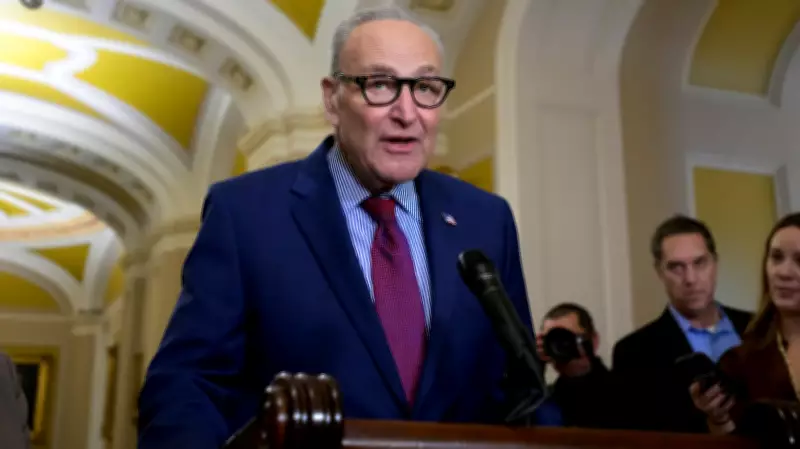
Senate Minority Leader Chuck Schumer (D-N.Y.) outlined the Democratic proposals on Wednesday, emphasizing that Congress must take immediate action to address what he described as chaotic and dangerous immigration enforcement practices. The demands include:
- Ending roving immigration patrols, particularly following fatal incidents in Minneapolis this month that claimed the lives of two American citizens
- Establishing a uniform code of conduct for federal immigration agents
- Requiring that all ICE agents wear body cameras during operations
- Banning the use of masks by federal agents during enforcement actions
"This is not border security," Schumer declared regarding Trump's immigration raids, which have targeted both citizens and noncitizens. "This is not law and order. This is chaos created at the top, and felt in so many of our neighborhoods." He went further to characterize ICE activities as "state-sanctioned thuggery."

A Calculated Approach to Immigration Reform
The Democratic demands represent a strategic narrowing of policy proposals designed to achieve two critical objectives: unifying the Democratic caucus and appealing to Republican senators who have expressed concerns about the often-violent tactics employed by federal immigration agents. Notably absent from the list are more extreme measures that some progressive Democrats have advocated, such as completely withdrawing ICE agents from U.S. cities or demanding the removal of Homeland Security Secretary Kristi Noem.
This calculated approach reflects the delicate political balancing act Democrats face as they attempt to address immigration enforcement concerns while maintaining enough Republican support to pass legislation. The funding deadline creates additional pressure, with money for the Department of Homeland Security and several other federal departments expiring on Friday, leaving lawmakers with minimal time to negotiate a solution.
The Shutdown Calculus and Political Consequences
The potential government shutdown presents complex challenges for both parties. While ICE would continue operating during a shutdown thanks to funding from Trump's Big Beautiful Bill, other critical agencies including the Transportation Security Administration and Federal Emergency Management Agency would experience funding lapses. This could lead to significant disruptions, including potential flight delays as air traffic controllers work without pay.
Democrats are specifically asking Senate Majority Leader John Thune (R-S.D.) to separate DHS funding from five other funding bills passed by the House of Representatives last week. Thune remained noncommittal on Wednesday, telling reporters, "These are all hypotheticals at this point, and I will reserve optionality to consider that."
Internal Democratic Divisions and Strategic Considerations
Within the Democratic caucus, tensions exist between different strategic approaches. Some centrist Democrats, including Senator Jeanne Shaheen (D-N.H.), have expressed willingness to consider a short-term funding patch to maintain DHS operations at current levels while negotiations continue. However, other Democrats argue that funding the agency without implementing ICE reforms would diminish their leverage and risk backlash from the party's base.

"I don't think there's a lot of appetite for promises, given this administration's past behavior," said Senator Martin Heinrich (D-N.M.), reflecting skepticism about temporary solutions. Senator Chris Murphy (D-Conn.) added that simply replacing Homeland Security leadership wouldn't address fundamental policy issues, noting that "the name on the door doesn't seem to have anything to do with the policy" as long as Stephen Miller, architect of Trump's immigration policies, remains in the White House.
Historical Context and Political Stakes
The current standoff occurs against the backdrop of the previous government shutdown, which ended in late November when centrist Democrats essentially relented. That shutdown resulted in significant political damage to President Trump, whose approval ratings declined after controversial actions during the stoppage, including attempts to dismantle White House infrastructure and freeze food benefits for low-income Americans.
Democratic leaders maintain that the current situation differs from past spending fights with the Trump administration. The national outcry over fatal shootings by masked federal agents in Minneapolis has galvanized their position, creating what Senator Brian Schatz (D-Hawaii) described as unprecedented unity within the caucus. "Nobody should mistake our willingness to negotiate for a lack of moral or political clarity," Schatz emphasized following Wednesday's caucus meeting.
As the Friday deadline approaches, both parties face significant political risks. Democrats must balance their reform demands against the potential consequences of a government shutdown, while Republicans navigate internal divisions between conservative hardliners and more moderate members concerned about immigration enforcement methods. The outcome will likely have substantial implications for immigration policy, government operations, and the political landscape heading into future elections.