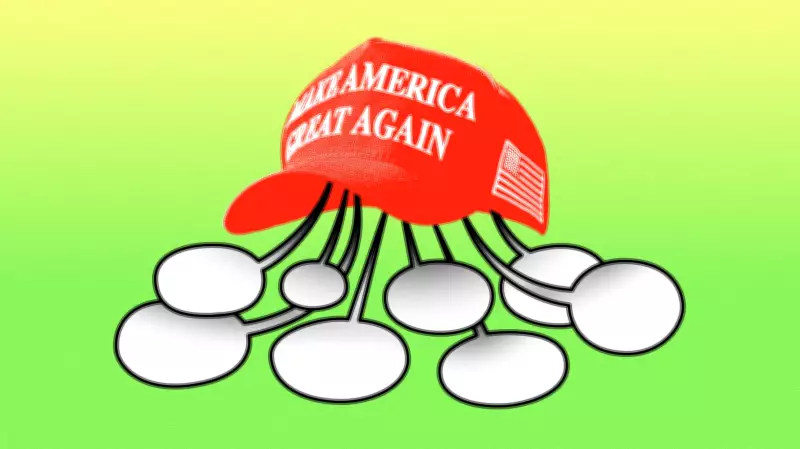
In the current political climate, followers of Donald Trump and the Make America Great Again movement are often recognizable by their bright red MAGA hats or oversized Trump 2028 yard signs. However, with soaring gas prices, a deeply unpopular war in Iran, and Trump's recent criticism of Pope Leo XIV, not all MAGA supporters are as vocal about their allegiance—even if they still privately align with the movement's ideals. While a red MAGA hat is a clear indicator of Trump support, experts point to quieter, coded phrases that MAGA-aligned individuals use to convey their message and beliefs.
The Rise of MAGA-Coded Language
HuffPost recently interviewed left-leaning political content creators who encounter these phrases daily from followers and trolls. They highlight how such language serves as a subtle tool for spreading MAGA ideology without overt displays. Here are the key MAGA-coded phrases to watch for and why they have become so widespread.
'I Don’t Know About All That'
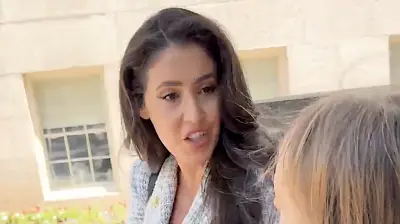
Anna Connelly, a political content creator based in Minnesota, identifies "I don’t know about all that" as a quintessential MAGA-coded phrase. She explains that when someone presents facts on divisive topics that separate MAGA supporters from others, this response is often used to immediately discredit the information.

"You’ll always hear, 'Oh, well, I don’t know about all that,'" Connelly added. This phrase typically leads to subject changes or ends uncomfortable conversations, reflecting what she describes as a lack of critical thinking.
"When you’re having a conversation, and then it abruptly stops with the 'Well, I don’t know about all of this,' it’s because they can’t go further with that conversation," Connelly said. "They have heard these lines repeated on Fox News or elsewhere, and that’s what they believe. When presented with contrary evidence, they can’t proceed."
'Traditional Family Values'
Jess Britvich, a political content creator from Pittsburgh, notes that "traditional family values" is a phrase frequently used by conservative politicians and family members. On the surface, it seems innocuous—who wouldn’t support caring for one's family? However, Britvich warns that it often masks anti-LGBTQ rhetoric and reinforces strict gender hierarchies.
"It’s always cloaked in this anti-LGBTQ rhetoric. It’s about who belongs where in society—these strict gender hierarchies," Britvich said. The phrase promotes outdated roles of a dominant husband and submissive wife, and its impact extends beyond language into policy.
"We start seeing that trickle into policy, because it’s not just individual choices in the home; it’s how those choices make restrictions on reproductive rights and anti-trans legislation more palatable on a national scale," Britvich explained. She also points out that such phrases are increasingly tied to religious language, blurring the lines with white Christian nationalism.
'DEI Hire' And 'Merit-Based System'
Britvich highlights phrases like "DEI hire" and references to a "merit-based" hiring or education system as MAGA dog whistles. Calling someone a DEI hire disparages their qualifications based on identity, while "merit-based" subtly invokes the same idea.
"I feel like that’s another one trying to undo all of the progress we’ve made in terms of civil rights," Britvich said. The Trump administration has sought to end diversity, equity, and inclusion programs, labeling them "racially discriminatory." Yet research shows DEI programs benefit Black and brown communities, disabled individuals, veterans, and women by increasing representation in predominantly white spaces.
It’s crucial to note that the playing field remains uneven for Black and brown people, who face discrimination in schools, healthcare, and workplaces.
'Marry A Provider'
On social media, phrases like "marry a provider" are becoming more common, especially when women discuss desires like attending a Pilates class instead of working. Britvich cites trends such as "he might not know what’s under the tree, but he paid for it" around Christmas, which blame feminism for women's exhaustion without addressing root causes like capitalism.

"These kinds of statements blame feminism for the exhaustion many women feel at work and at home, but that’s misguided," Britvich said. They promote a strict patriarchy while ignoring solutions like paid family leave, universal childcare, or better maternal health.
"It just says, marry a provider and give up your economic freedom," Britvich added, highlighting how this rhetoric undermines women's autonomy.
'Protect Women'
Connelly identifies "protect women" as a phrase that often signals anti-trans sentiments. In contrast, "believe women" is typically associated with progressive causes like holding men accountable for sexual harassment and assault.
"So, that is a fascinating difference," Connelly said. "Protect women" doesn’t actually mean protecting women; instead, it’s a coded way of saying "don’t protect trans kids."
Britvich, who works with the National Women’s Law Center on trans youth and sports campaigns, notes that over 70% of people believe they have never met a transgender individual. This lack of personal interaction makes it easier to "other" trans people through media narratives.
The Role of Fear-Based Language
Much of the MAGA-coded language is fear-based, resonating online by preying on emotions and lack of nuance. "All this misinformation, all of these dog whistles or MAGA-coded things, they lack nuance and they prey on your emotions," Britvich explained. "They’re usually trying to portray some fear of the 'other,' which is one of the worst human emotions I think there is."
Trump’s history of attacking people based on race or nationality—such as comments about Somalis, Haitian immigrants, and Mexican "bad hombres"—exemplifies this. Anti-trans legislation further "others" marginalized groups, while subtle phrases like those above capitalize on this fear to influence policy and public perception.
"These grifters really know how to phrase things in a certain way [and] appear like they have some level of expertise when they really don’t," Britvich concluded, underscoring the pervasive nature of these coded messages in today's polarized discourse.