Cuba Issues Mass Pardon for 2,010 People as U.S. Pressure Mounts
The government of Cuba has announced a sweeping pardon for 2,010 individuals, a significant act of clemency that comes at a time when the United States is escalating its pressure on the island's administration. This decision, reported by The Associated Press on April 2, 2026, highlights the complex political dynamics between the two nations, with Cuba taking a notable step amid ongoing international scrutiny.
Context of the Pardon and U.S. Relations
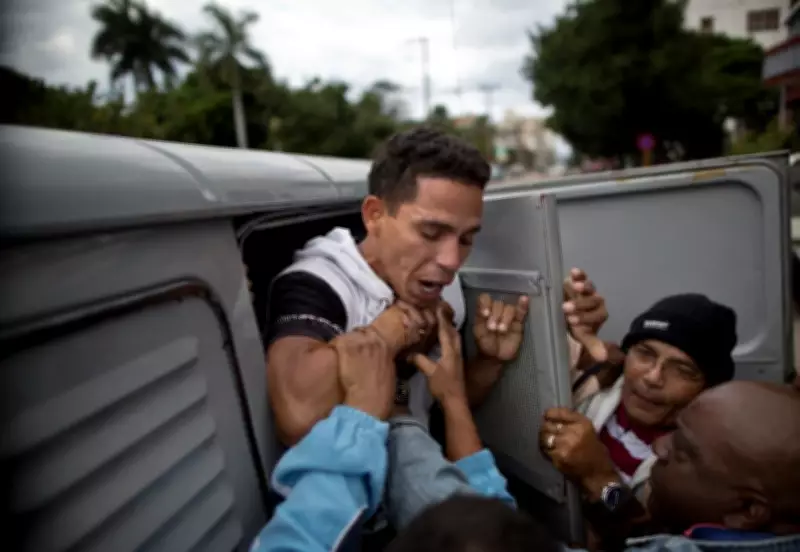
The pardon follows a history of tensions, including incidents such as the detention of opposition activists, as seen in a December 10, 2014 file photo from Havana. In that event, security officers detained demonstrators from the Women in White pro-democracy group during a march on International Human Rights Day, while pro-government supporters rallied with patriotic songs and slogans. This backdrop underscores the human rights concerns that have often fueled U.S. criticism and pressure on Cuba's government.
The timing of this mass pardon is particularly noteworthy, as it coincides with increased U.S. efforts to influence Cuban policies. The United States has long advocated for democratic reforms and improved human rights on the island, and this pardon could be interpreted as a response to such external pressures, though the Cuban government has not explicitly stated this as a motive.

Implications for Cuban Society and International Relations
By pardoning over two thousand people, Cuba may be aiming to address internal dissent or improve its international image. This move could potentially ease some domestic tensions, as it releases individuals who may have been detained for political reasons or minor offenses. However, it also raises questions about the criteria used for the pardons and whether they signify a broader shift in governance.
From an international perspective, this action might be seen as a gesture to mitigate U.S. pressure, possibly opening doors for diplomatic discussions or easing sanctions. The U.S. has historically used economic and political leverage to push for changes in Cuba, and this pardon could be a strategic maneuver by the Cuban government to navigate these challenges while maintaining sovereignty.
Broader Global and Regional Context
This development occurs within a wider global landscape where issues of human rights and government accountability are increasingly prominent. In other news, events such as protests in Toronto, environmental incidents in Prince Rupert, and legal cases across Canada reflect similar themes of social justice and governance. Cuba's pardon adds to this narrative, illustrating how nations respond to both internal and external pressures in unique ways.
As the situation evolves, observers will be watching to see if this pardon leads to tangible improvements in U.S.-Cuba relations or if it remains a symbolic act. The Cuban government's next steps will be crucial in determining whether this move fosters greater openness or is merely a temporary measure amid ongoing geopolitical strains.