Conservatives Urge Carney to Maintain Committee Balance, Avoid 'Stacking the Deck'
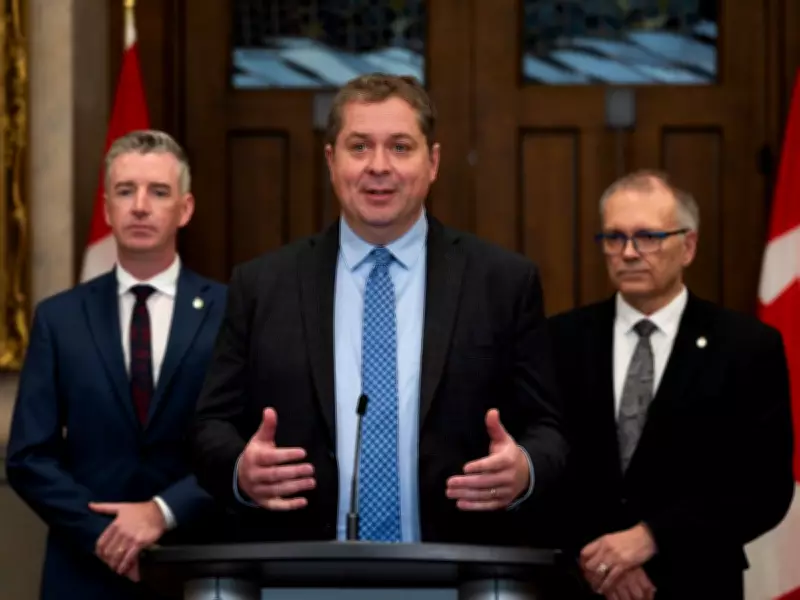
OTTAWA — Opposition Conservatives are issuing a strong call to the Liberal government, urging Prime Minister Mark Carney not to overhaul the fundamental structure of parliamentary committees following his party's recent attainment of majority status. Conservative House Leader Andrew Scheer emphasized the critical importance of preserving established traditions during a press conference held at Parliament Hill's West Block on Thursday.
Unprecedented Political Territory
Scheer described the current political landscape as "unprecedented territory," referencing the Liberal government's transition from minority to majority status this week. This shift occurred primarily through three successful byelection victories combined with significant floor-crossing events, where four Conservative MPs and one New Democrat MP joined the Liberal ranks.
The Conservative leader highlighted how committee membership has historically been determined through inter-party negotiations based on election results. "We are calling on Liberals not to stack the deck," Scheer declared, urging the government to "uphold the tradition" that committee composition should reflect the outcome of the most recent general election.

Seat Count Transformation
The political mathematics reveal a dramatic transformation:
- Following last April's general election, the Liberals held 169 seats (minority status)
- Conservatives maintained 144 seats
- Bloc Quebecois controlled 22 seats
- New Democrats held 7 seats
Entering this week's byelections, the Liberals needed just one additional seat to reach the 172-seat majority threshold. Their triple victory in those races, combined with the four Conservative defections and one NDP crossover, propelled them to 174 seats. Meanwhile, Conservative Leader Pierre Poilievre saw his caucus diminish to 140 members, with the NDP reduced to six representatives.
Accusations of 'Backroom Deals'
Poilievre has vehemently criticized Carney's majority achievement, characterizing it as the product of "backroom deals." Scheer echoed this sentiment during his Thursday remarks, stating, "Never before has the prime minister fundamentally tried to change the nature of the government that he was elected on from the people through these kinds of backroom deals."
The Conservative House Leader emphasized that committees serve as essential parliamentary bodies where legislation undergoes detailed examination, amendment, and where Members of Parliament can initiate important studies on national issues.
Carney's Committee Reform Signals
Earlier this week, Prime Minister Carney indicated his intention to reconfigure committee structures to align with the Liberals' new parliamentary majority. The Prime Minister expressed frustration with what he described as opposition "showboating" during certain committee meetings, suggesting that such behavior has hindered legislative progress.
Opposition MPs have traditionally utilized committee procedures to:
- Force delays on government legislation
- Propose substantive amendments
- Scrutinize policy implementation
Since Carney assumed office last year, Liberal officials have repeatedly accused Conservative members of obstructing numerous government bills. The Conservatives have countered these allegations by criticizing the government's management of its own legislative agenda.
Shifting Political Dynamics
Interestingly, since the beginning of 2026, the Conservative opposition has adopted a notably more collaborative approach. This strategic shift appears designed, at least partially, to avoid providing the Liberal government with justification for calling a snap election. Conservative leadership has publicly expressed willingness to support government legislation where common ground exists, marking a departure from earlier confrontational tactics.

The ongoing committee composition debate represents a critical test for parliamentary norms and the balance of power between government and opposition in Canada's democratic system. As Scheer concluded, "We are in unprecedented territory," highlighting the exceptional nature of the current political circumstances surrounding committee governance and representation.