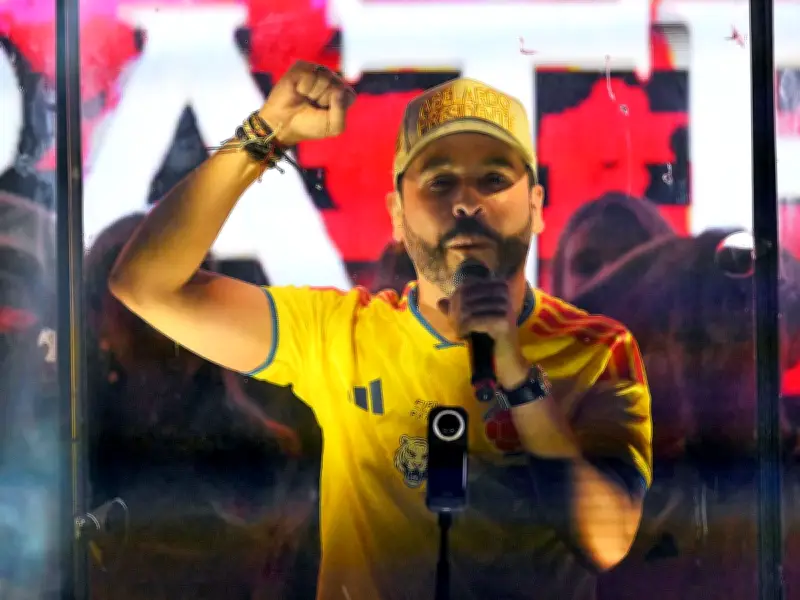
BOGOTA, Colombia — Trump loyalist Abelardo de la Espriella secured a surprising victory in the first round of Colombia’s presidential elections on May 31, 2026, as voters embraced his promised “iron fist” approach to organized crime, inspired by El Salvador’s popular strongman Nayib Bukele.
Election Results and Runoff
De la Espriella, a lawyer and political outsider, defeated leftist continuity candidate Senator Iván Cepeda by 43.7 percent to 40.9 percent. The two will face a runoff election on June 21. Third-place candidate Senator Paloma Valencia, backed by former President Álvaro Uribe, received only 6.9 percent of the vote and immediately endorsed de la Espriella.
Security Concerns Dominate
The results, defying traditional polls, reveal a deeply polarized nation. Colombians’ primary concerns were public security, corruption, and the economy. The first quarter of 2026 was the most violent since the 2016 peace agreement with the FARC guerrillas. Conflict in northeastern Colombia displaced about 80,000 people in 2025, the highest level in a decade.

Javier Florez of the think tank Fundación Ideas Para la Paz told the National Post that Colombians are “gripped by a fear that the security conditions will continue to deteriorate.”
Contrasting Security Strategies
The candidates proposed diametrically opposed security fixes. Cepeda is a key architect of President Gustavo Petro’s “Total Peace” initiative, which sought simultaneous negotiations with various armed groups. The program has fallen short, with armed groups using the opportunity to expand their networks. Cepeda admitted disappointment but promised to continue negotiations, arguing that the conflict cannot be ended through military force alone.
In contrast, de la Espriella has run on an “iron fist” approach, proposing the construction of ten mega-prisons and the militarization of territory. However, Felipe Botero of Universidad de los Andes noted that the details of his proposed militarization remain unclear.
Regional Voting Patterns
Cepeda and his running mate, Aida Quilcué, placed first in the rural regions of southern and western Colombia experiencing the worst violence, suggesting that those most affected by insecurity have not given up on dialogue. According to Florez, insofar as the election has been a referendum on the government’s security strategy, the largest group of Colombians voted for “a rejection of and rupture with the policy of negotiations with armed groups.”