Clintons Agree to Testify in House Epstein Probe Amid Partisan Tensions
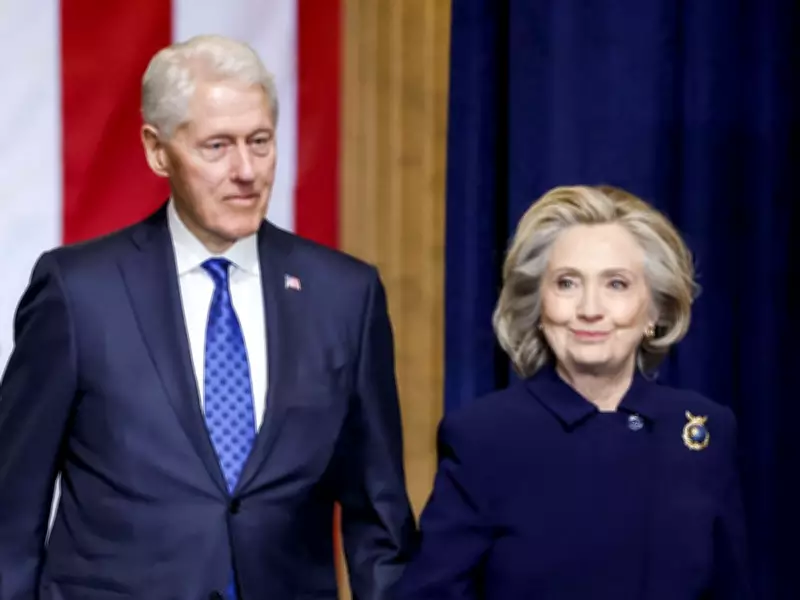
Former U.S. President Bill Clinton and his wife, former Secretary of State Hillary Clinton, have agreed to testify before a U.S. House committee investigating the Jeffrey Epstein scandal. This decision comes after they initially refused to appear, heading off a potential vote to hold the couple in contempt of Congress.
Background of the Investigation
The House Rules Committee had advanced resolutions accusing the Clintons of defying subpoenas to appear in person and explain their links to Epstein. The disgraced financier, who died in custody in 2019, had connections with numerous high-profile figures in business, politics, and academia.
Angel Urena, a spokesman for Bill Clinton, stated on social media platform X that "The former President and former Secretary of State will be there. They look forward to setting a precedent that applies to everyone." This announcement marks a significant development in the ongoing probe.

Political Controversy and Partisan Divisions
Democrats have criticized the investigation, arguing that it is being weaponized to attack political opponents of President Donald Trump. Notably, Trump himself has longstanding associations with Epstein but has not been called to testify. Democrats claim the probe lacks legitimate oversight purposes and instead serves partisan interests.
Republicans, however, maintain that the Clintons' past connections to Epstein justify in-person questioning under oath. These include Bill Clinton's use of Epstein's private jet in the early 2000s for Clinton Foundation-related humanitarian work.
Initial Refusal and Written Statements
In letters where they initially refused to appear in Washington, the Clintons argued that the subpoenas were invalid because they lacked a clear legislative purpose. Instead, they submitted sworn written statements detailing their knowledge of Epstein and his associate Ghislaine Maxwell, who is serving a 20-year prison sentence for sex trafficking.
Bill Clinton acknowledged flying on Epstein's plane but stated he never visited his private island. Hillary Clinton said she had no meaningful interactions with Epstein, never flew on his plane, and never visited his island.
Broader Implications and Ongoing Scandal
The Epstein affair continues to cast a long shadow over Washington, entangling some of the most prominent names in U.S. politics and highlighting sharp partisan battles. Neither Trump nor the Clintons have been accused of criminal wrongdoing related to Epstein's activities, but the scandal remains a focal point of political scrutiny.
A contempt vote targeting the Clintons could have exposed divisions among congressional Democrats. Some Democrats have privately acknowledged that their party has long argued no one should be beyond scrutiny in efforts to uncover the full scope of Epstein's crimes.
This development underscores the complex interplay of politics, justice, and public accountability in high-profile investigations, with potential ramifications for future congressional oversight and bipartisan cooperation.