House Oversight Committee Votes to Hold Clintons in Contempt Over Epstein Subpoena Defiance
In a significant development on Capitol Hill, the House Oversight Committee voted on Wednesday to hold former President Bill Clinton and former first lady Hillary Clinton in contempt of Congress. This action stems from their refusal to comply with subpoenas demanding depositions regarding their connections to the late financier and convicted sex offender Jeffrey Epstein.
Bipartisan Support for Contempt Resolution
The committee's vote saw notable bipartisan backing. For the resolution against Bill Clinton, nine Democrats joined all Republican members in support. In the case of Hillary Clinton, three Democrats voted in favor. This cross-party alignment underscores the seriousness with which lawmakers are treating the issue of subpoena compliance, even as it unfolds within a highly charged political environment.
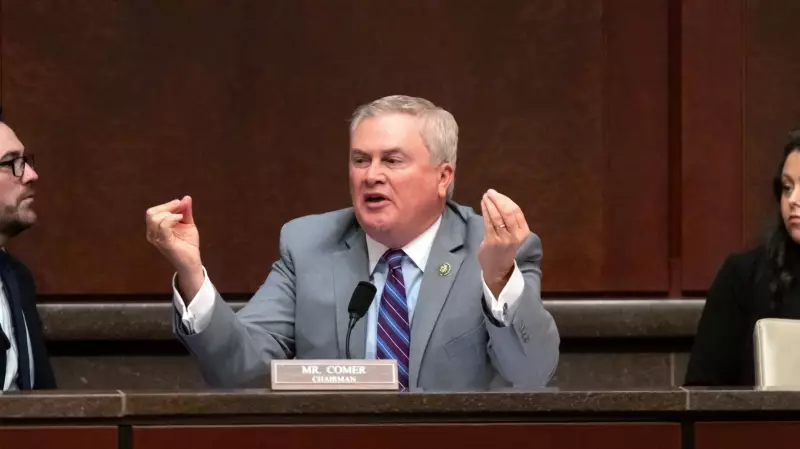
Committee Chair James Comer, a Republican from Kentucky, emphasized the necessity of the Clintons' testimony before the vote. "The Clintons' testimony is critical to understanding Epstein's sex trafficking network and the ways he sought to curry favor and influence to shield himself from scrutiny," Comer stated. He criticized the Clintons' legal team for what he described as uncooperative tactics, including proposals for an untranscribed interview in New York, which he viewed as attempts to delay proceedings.

Political Context and Republican Strategy
The focus on the Clintons arrives at a politically sensitive moment for Republicans. They are navigating internal pressures between loyalty to former President Donald Trump, who has dismissed the Epstein matter as a "Democrat hoax," and demands from their base for full transparency regarding Epstein's files. This vote may serve as a strategic diversion, shifting attention amid these tensions.
Comer highlighted the contrast in compliance, noting that while the Trump administration's Justice Department has been slow to release Epstein-related documents as required by law, the Clintons outright defied committee deadlines for depositions. "The response we received was not cooperation, but defiance, marked by repeated delays, excuses, and obstruction," Comer asserted.
Legal Ramifications and Next Steps
If the full House of Representatives approves the contempt resolution, it will be referred to U.S. Attorney Jeanine Pirro for potential prosecution. This could lead to criminal charges against the Clintons, with prison time a possible consequence. Historically, two former officials from Trump's first term were imprisoned for defying subpoenas issued by Democrats during the Biden presidency, setting a precedent for such actions.
Comer indicated that the Clintons would have a two-week window to comply with the subpoenas before the full House vote, offering them "another opportunity" to avoid further escalation.
Democratic Criticisms and Broader Concerns
Democrats on the committee expressed mixed views. While acknowledging that individuals should generally comply with subpoenas, they accused Republicans of selective enforcement. Representative Robert Garcia, the committee's top Democrat from California, pointed out the disparity in urgency between the Clinton subpoenas and those targeting the Justice Department for Epstein files. "It's interesting that it's this subpoena only that Republicans and the chairman have been obsessed about putting all their energy behind," Garcia remarked.
The Justice Department recently reported uploading only about 12,000 of over 1 million files from its Epstein investigation, despite a congressional law passed last year mandating all documents be made available online in a searchable database by December 19. Epstein died by suicide in prison in 2019 while facing federal sex trafficking charges.

Amendments and Additional Votes
During the proceedings, several Democrats argued for consistency in holding all relevant figures accountable. Representative Summer Lee, a Democrat from Pennsylvania, proposed an amendment to hold Attorney General Pam Bondi in civil contempt, suggesting the committee was "cherry-picking" targets. "If this committee wants to be taken seriously, we would be addressing all the bad actors in this investigation, not cherry-picking," Lee stated. However, the committee voted down this amendment.
The final vote tally included Democrats such as Maxwell Frost (Florida), Raja Krishnamoorthi (Illinois), and Ayanna Pressley (Massachusetts) supporting the Bill Clinton subpoena, while only Lee, Melanie Stansbury (New Mexico), and Rashia Tlaib (Michigan) voted for the Hillary Clinton subpoena.
This vote marks a pivotal moment in the ongoing investigation into Epstein's network, highlighting the complex interplay of legal obligations, political maneuvering, and public accountability in Washington.